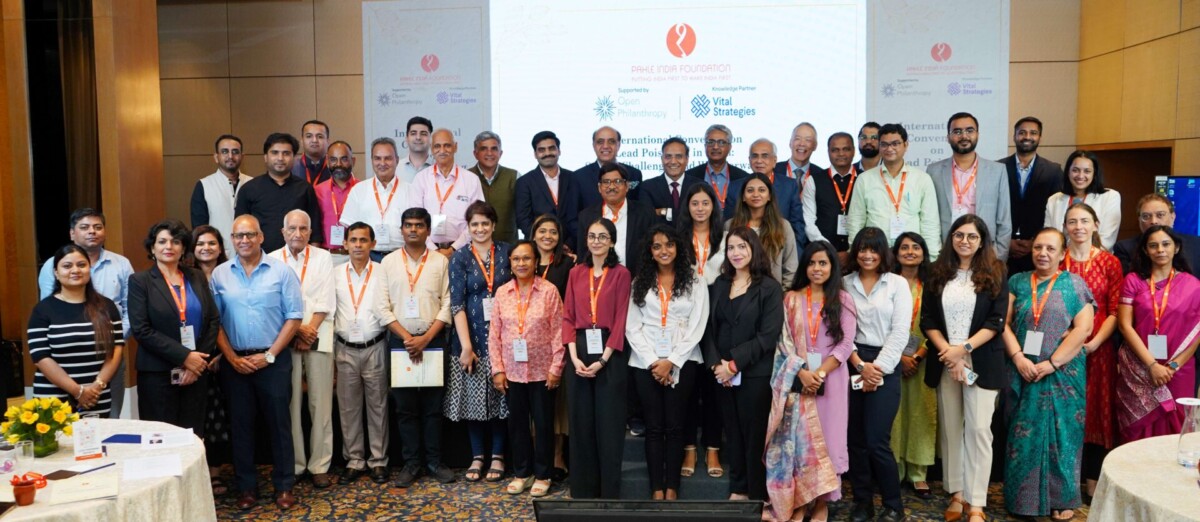
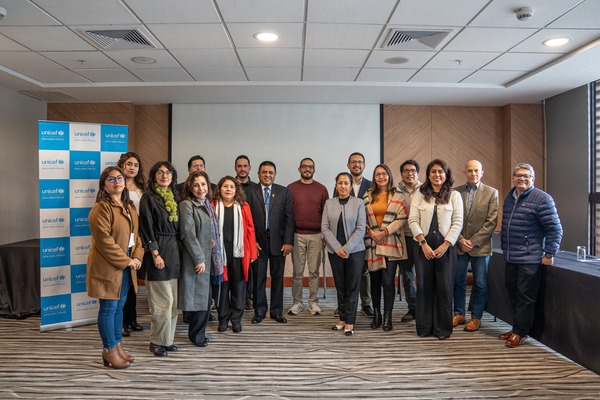
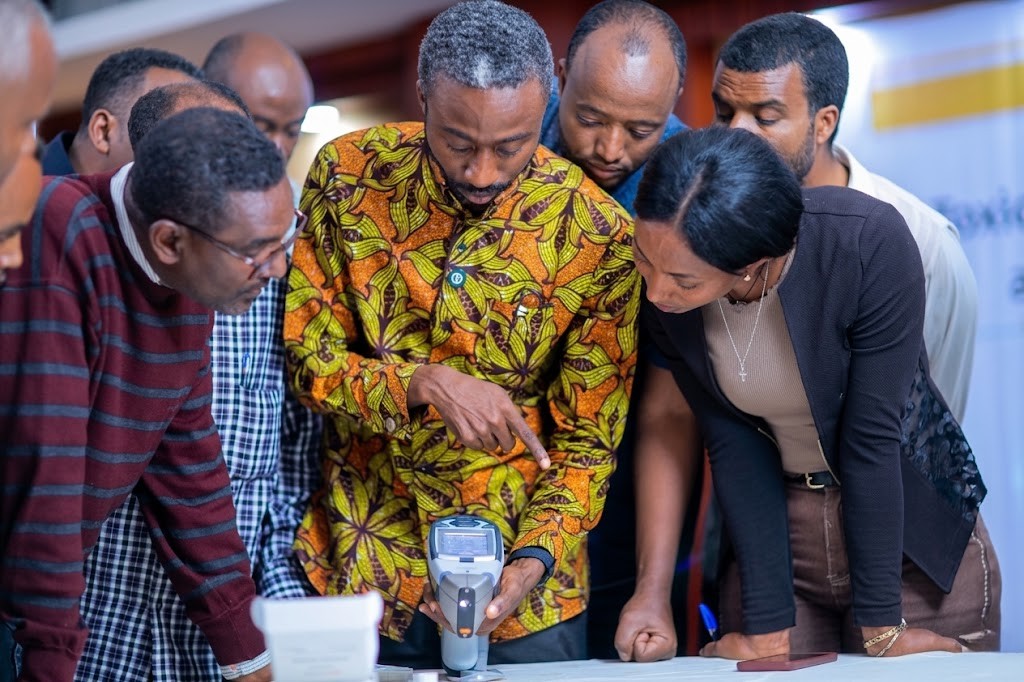
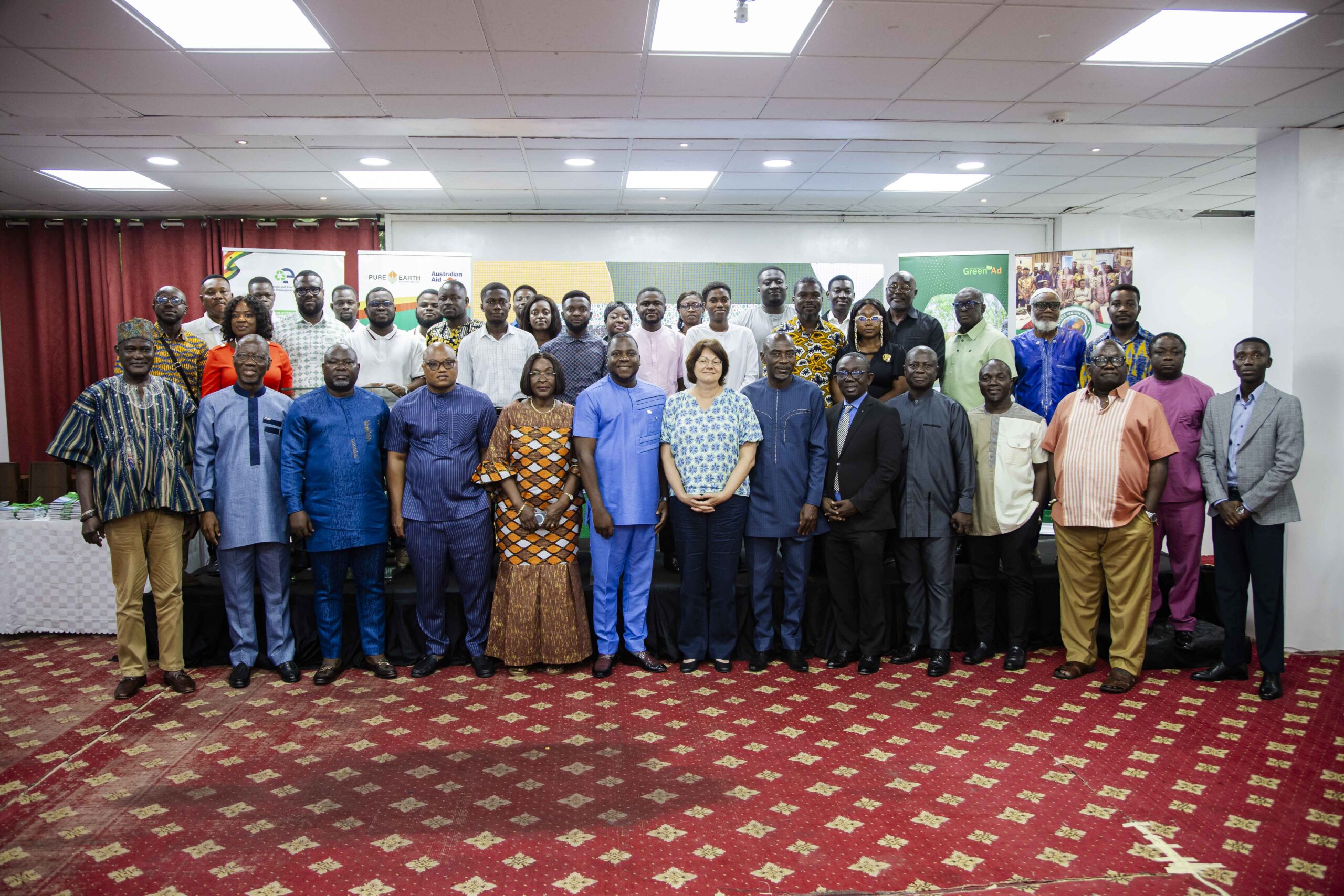
Stakeholders at the Decade of E-waste Management event in Accra
On June 9, 2026, Pure Earth joined government agencies, development partners, recyclers, environmental experts, academia, media, and civil society organizations to commemorate a significant milestone: A Decade of E-Waste Management in Ghana.
The event reflected on ten years of collective efforts to address the environmental and public health impacts of electronic waste (e-waste) while looking ahead to the broader challenge of heavy metal pollution in Ghana.
The commemoration began with a series of media engagements on JoyNews TV and GHOne TV, where Pure Earth highlighted its decade-long contribution to improving e-waste management in Ghana and drew attention to the often-overlooked link between e-waste and toxic heavy-metal pollution.
During the interviews, our Regional Program Director, Rev. Dr. Esmond Wisdom Quansah, discussed Pure Earth’s journey from introducing practical solutions for safer recycling practices to advancing evidence-based interventions to address lead and mercury exposure in vulnerable communities such as Agbogbloshie, Afienya, and others. The media engagements provided an opportunity to raise national awareness on how improper e-waste handling contributes to environmental contamination and serious health risks, particularly to children.

From the far right, Administrator of E-waste Fund, Mr. Anthony Akwetea- Mensah, Executive Director of Green Advocacy Ghana, Mr. Yaw Amoyaw, and Regional Program Director, Pure Earth, Rev. Dr. Esmond Quansah.
Over the past ten years, Pure Earth has played a pioneering role in supporting safer recycling practices within Ghana’s informal e-waste sector. One of the most notable achievements was the establishment of the Agbogbloshie Recycling Centre, which introduced Ghana’s first mechanized cable-stripping technology. The innovation demonstrated that protecting livelihoods and reducing pollution can go hand in hand. By providing safer alternatives to open burning, the initiative helped recyclers recover valuable materials while minimizing toxic emissions. The success of the project informed broader stakeholder interventions, contributing to the formalization of safer recycling systems and supporting national efforts to reduce open burning practices associated with e-waste.
As Pure Earth’s work evolved, it became increasingly clear that e-waste represented only one aspect of a much larger environmental health challenge. Through environmental assessments and biomonitoring studies conducted across Ghana, Pure Earth has documented exposure to toxic heavy metals, particularly lead and mercury, in communities located near informal industries, battery recycling operations, mining areas, and other pollution hotspots.
According to the Institute for Health Metrics and Evaluation’s Global Burden of Disease Study (2023), an estimated 3.5 million deaths occur globally each year due to lead exposure. In Ghana, lead pollution is commonly linked to e-waste activities, industrial operations, and the informal recycling of used lead-acid batteries (ULABs). Studies have shown that children living in communities near battery recycling sites and mining areas often record blood lead levels far above internationally accepted safety thresholds.
The health consequences are profound. Lead exposure can permanently impair cognitive development, reduce educational attainment, and limit future economic productivity. Mercury and Lead exposure threaten neurological development, particularly among unborn children, while contaminating food systems and ecosystems upon which communities depend.
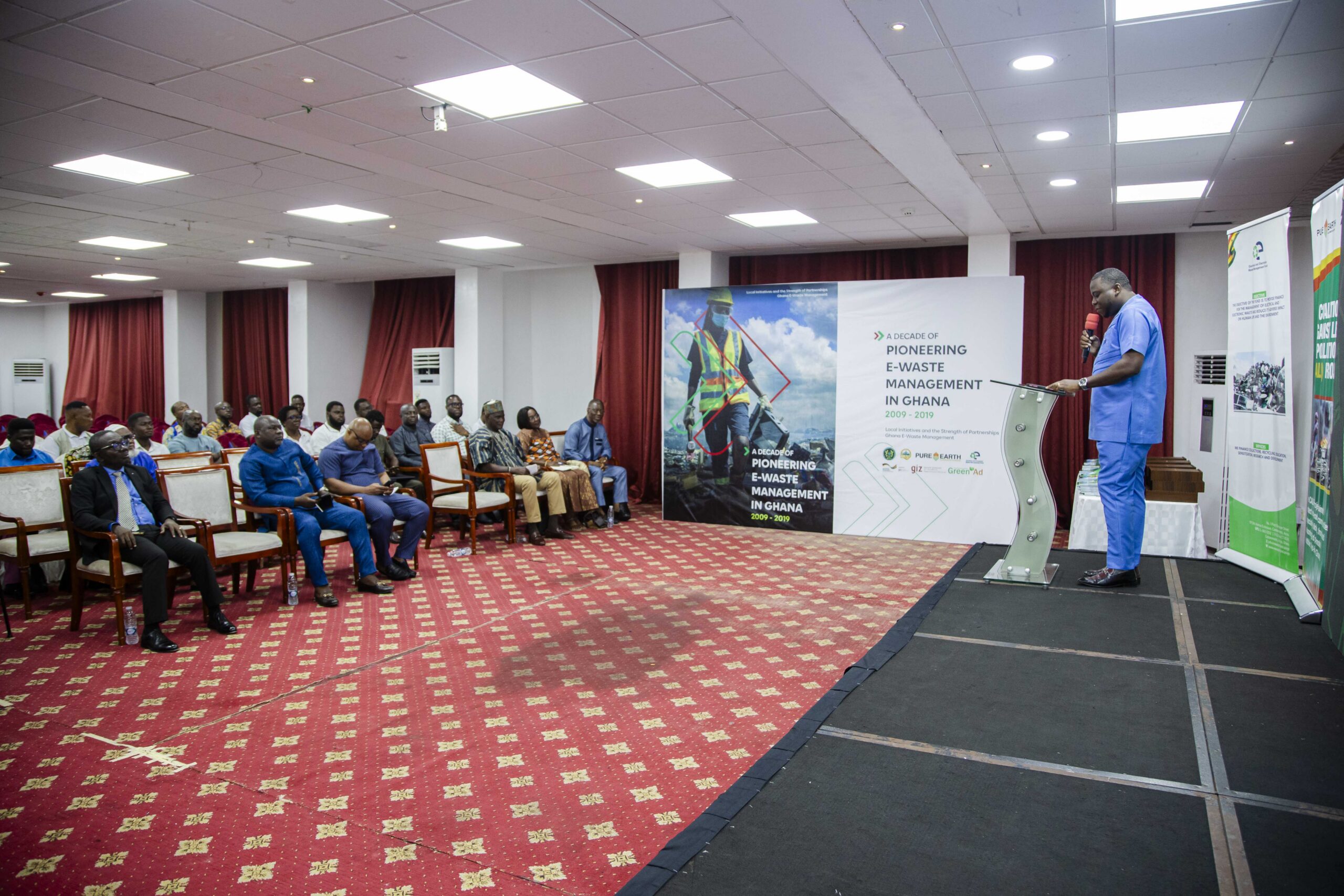
Rev. Dr. Esmond Wisdom Quansah, delivering his speech at the Decade of E-waste Management event.
Delivering the keynote address at the main event, Pure Earth’s Regional Director emphasized the urgent need to expand efforts beyond e-waste management and tackle heavy metal pollution more comprehensively.
“Lead does not respect boundaries. It travels through dust, soil, and water, entering the bodies of children who have never been near a recycling site. High blood lead levels impair cognitive development, undermine classroom performance, and reduce long-term economic productivity. Mercury threatens the neurological development of the unborn and contaminates the food chains that communities depend upon.”
Rev. Dr. Quansah’s speech underscored the reality that toxic pollution is often invisible, yet its impacts can last a lifetime. He highlighted Pure Earth’s commitment to protecting children and communities through science-based interventions, policy support, community engagement, and strategic partnerships.
“Our mission is simple: to solve pollution, save lives, and protect the planet. In Ghana, that mission began at a burning cable yard. Today, it extends to every community where a child’s blood carries lead that was never meant to be there.”
The address concluded with a call for stronger collaboration among government institutions, civil society organizations, private sector actors, and development partners to accelerate action against toxic pollution.
“The evidence is strong. The partnerships are in place. What is needed now is collective, sustained action. The decade behind us was about understanding the problem. The decade ahead must be about solving it, because the children in Ghana’s classrooms today deserve a future free from invisible poison.”
The highlight of the event was the presentation of an award recognizing Pure Earth as a pioneer in Ghana’s e-waste sector. The award acknowledged Pure Earth’s decade-long contribution to advancing safer recycling practices, reducing environmental contamination, supporting policy development, and protecting vulnerable populations from exposure to toxic pollutants. The recognition reflects the impact of collaborative efforts with government agencies, recyclers, community leaders, development partners, researchers, and civil society organizations who have worked together to improve environmental health outcomes across Ghana.
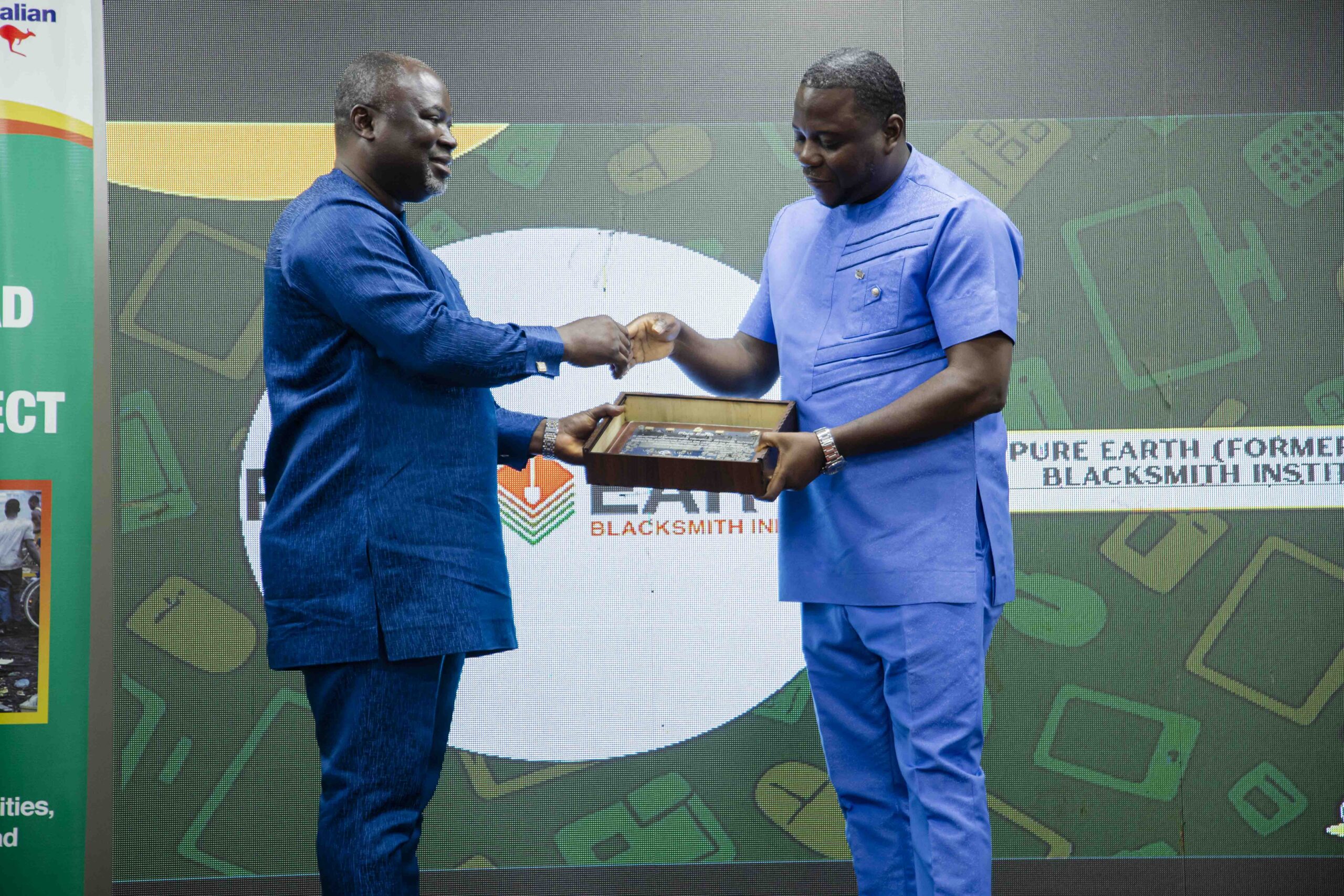
Award received by our Regional Program Director
While significant progress has been made over the last decade, much work remains. The lessons learned from e-waste management have provided a strong foundation for addressing the broader challenge of heavy metal pollution. Moving forward, Pure Earth remains committed to working alongside partners to identify pollution hotspots, strengthen environmental health policies, support safer industrial practices, and protect future generations from preventable toxic exposures. The Decade of E-Waste Action celebration was not only a reflection on past achievements but also a renewed commitment to ensuring that every child in Ghana has the opportunity to grow, learn, and thrive in a healthy environment free from toxic pollution.
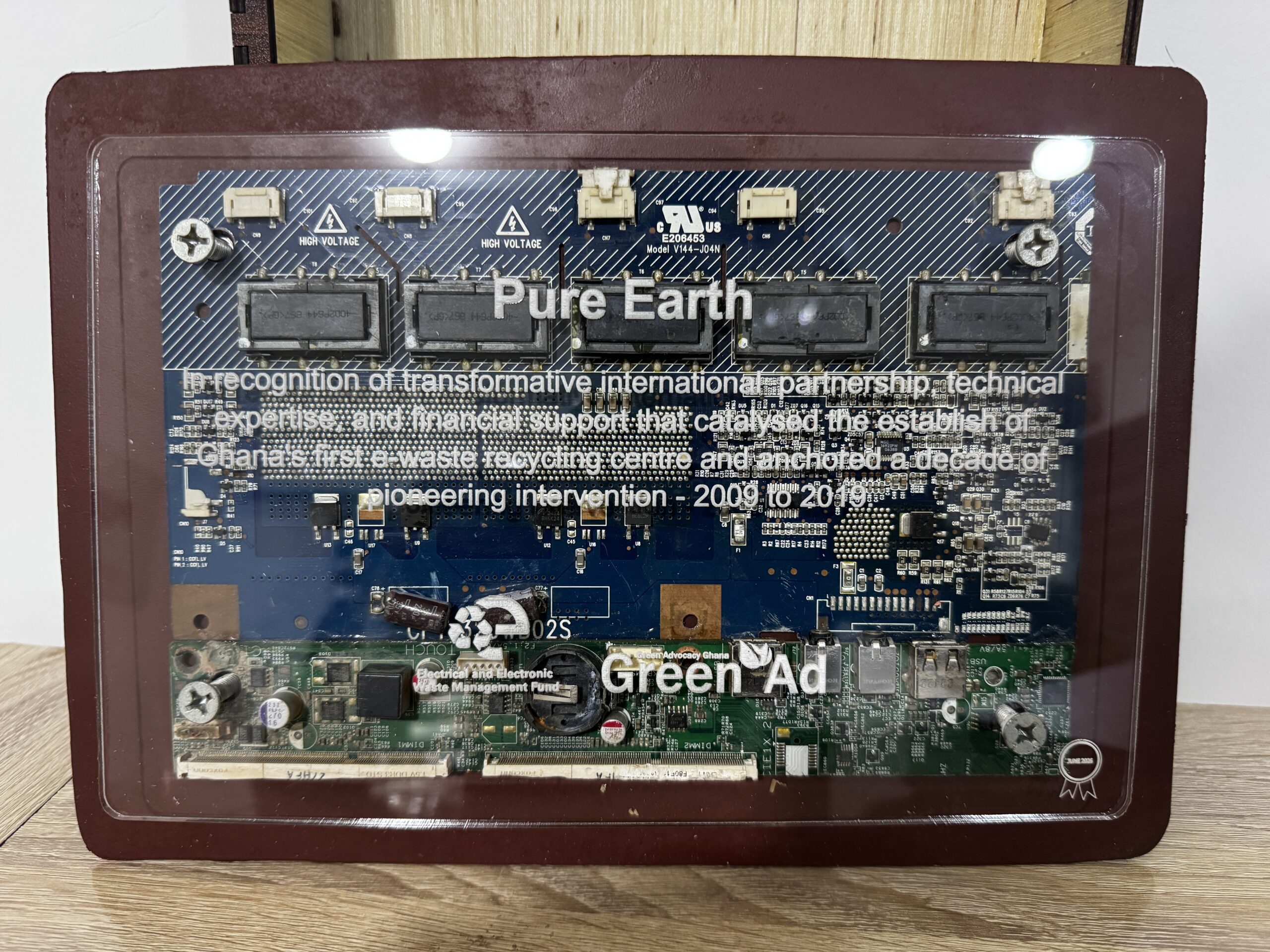
Award presented to Pure Earth
Watch the news report by Nadima Umar Uthman- Link