
- This event has passed.
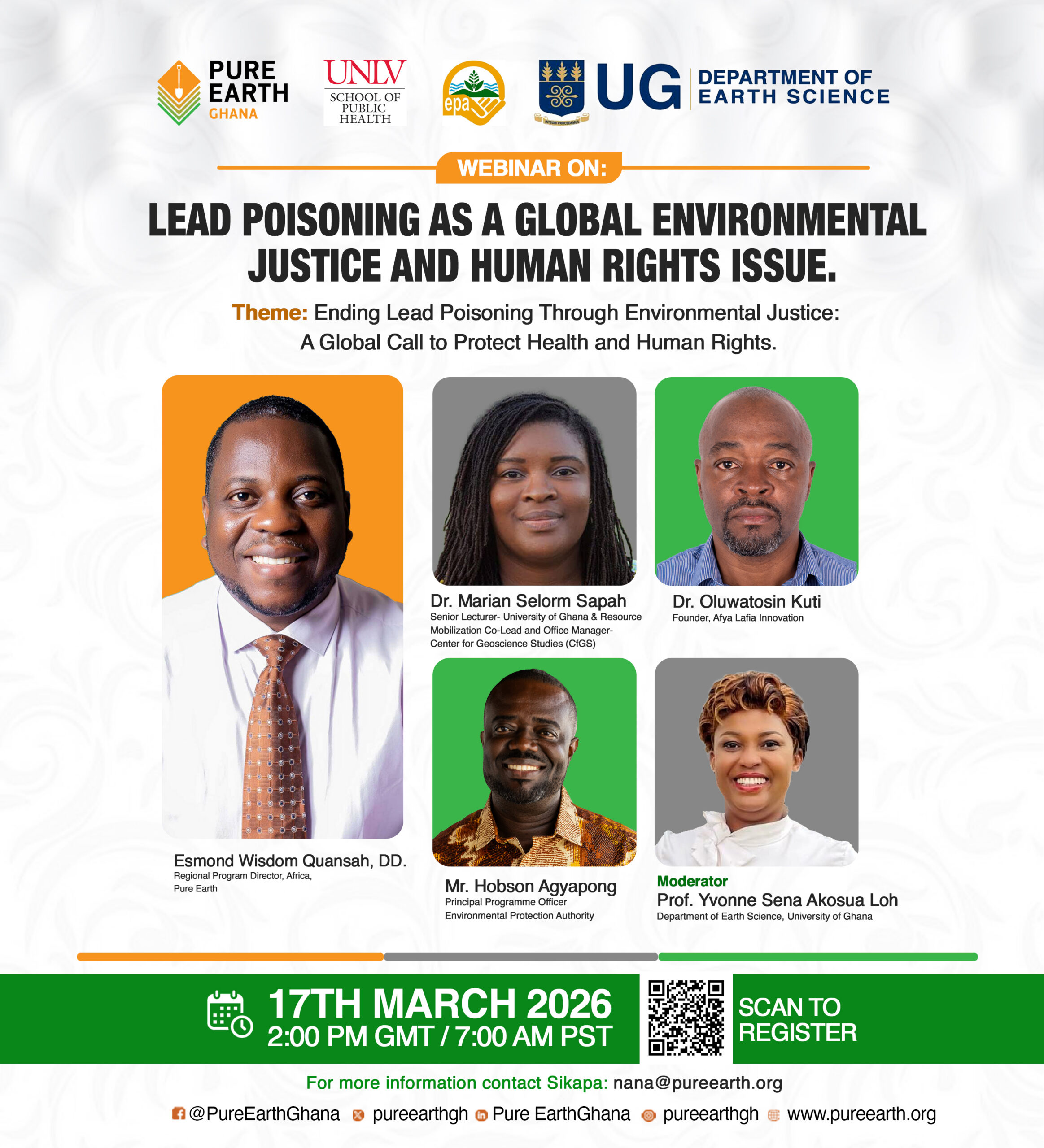
Lead Poisoning as a Global Environmental Justice and Human Rights Issue.
March 17 @ 2:00 pm - 4:00 pm
Lead (Pb) poisoning remains one of the most widespread yet under-recognized environmental health crises globally, disproportionately affecting children and marginalized communities in low- and middle-income countries (LMICs) (Chen et al, 2025). Despite being entirely preventable, Pb exposure continues through contaminated consumer products, informal recycling of lead-acid batteries, polluted soils, industrial emissions, unsafe housing, and legacy contamination from historical practices.
From an environmental justice perspective, Pb poisoning exemplifies systemic inequities: populations least responsible for pollution often bear the heaviest burden of exposure and harm. Informal workers, low-income households, women, and children are routinely exposed to Pb in environments where regulatory protections are weak, enforcement is limited, or economic necessity overrides health safeguards (Howarth & Eiser, 2024). From a human rights standpoint, Pb exposure violates fundamental rights, including the right to health, the right to a safe and clean environment, the rights of the child, and the right to development (Centre for International Environmental Law, 2015).
International human rights frameworks recognize states’ obligations to prevent environmental harm that undermines human dignity and wellbeing. Yet Pb poisoning persists largely due to governance gaps, regulatory failures, and insufficient political prioritization (World Health Organization, 2024). This webinar seeks to elevate Pb poisoning from a purely technical or health issue to a global justice and rights-based concern, fostering cross-sector dialogue and mobilizing coordinated action at national and international levels.
- An estimated one in three children globally is exposed to unsafe levels of lead, with the highest burden in LMICs.
- Lead exposure contributes to irreversible neurological damage, reduced IQ, behavioural disorders, poor educational outcomes, and long-term economic losses.
- Communities affected by lead poisoning often lack access to healthcare, legal remedies, clean environments, and political representation.
- Existing interventions are fragmented, underfunded, and insufficiently anchored in rights-based and equity-focused approaches.
Without urgent, coordinated action grounded in environmental justice and human rights, lead poisoning will continue to perpetuate intergenerational poverty, inequality, and preventable disease.
Speakers.
- Esmond Wisdom Quansah, DD.- Regional Program Director, Africa, Pure Earth
- Dr. Marian Selorm Sapah- Senior Lecturer, University of Ghana & Resource Mobilization Co-Lead and Office Manager- Center for Geoscience Studies (CfGS)
- Dr. Oluwatosin Kuti- Founder, Afya Lafia Innovation
- Mr. Hobson Agyapong- Principal Programme Officer, Ghana Environmental Protection Authority.
Moderator
Prof. Yvonne Sena Akosua Loh- Department of Earth Science, University of Ghana.
Theme: Ending Lead Poisoning Through Environmental Justice: A Global Call to Protect Health and Human Rights.
Webinar registration link
Enquires: Sikapa: [email protected]/ Laurencia: [email protected]