
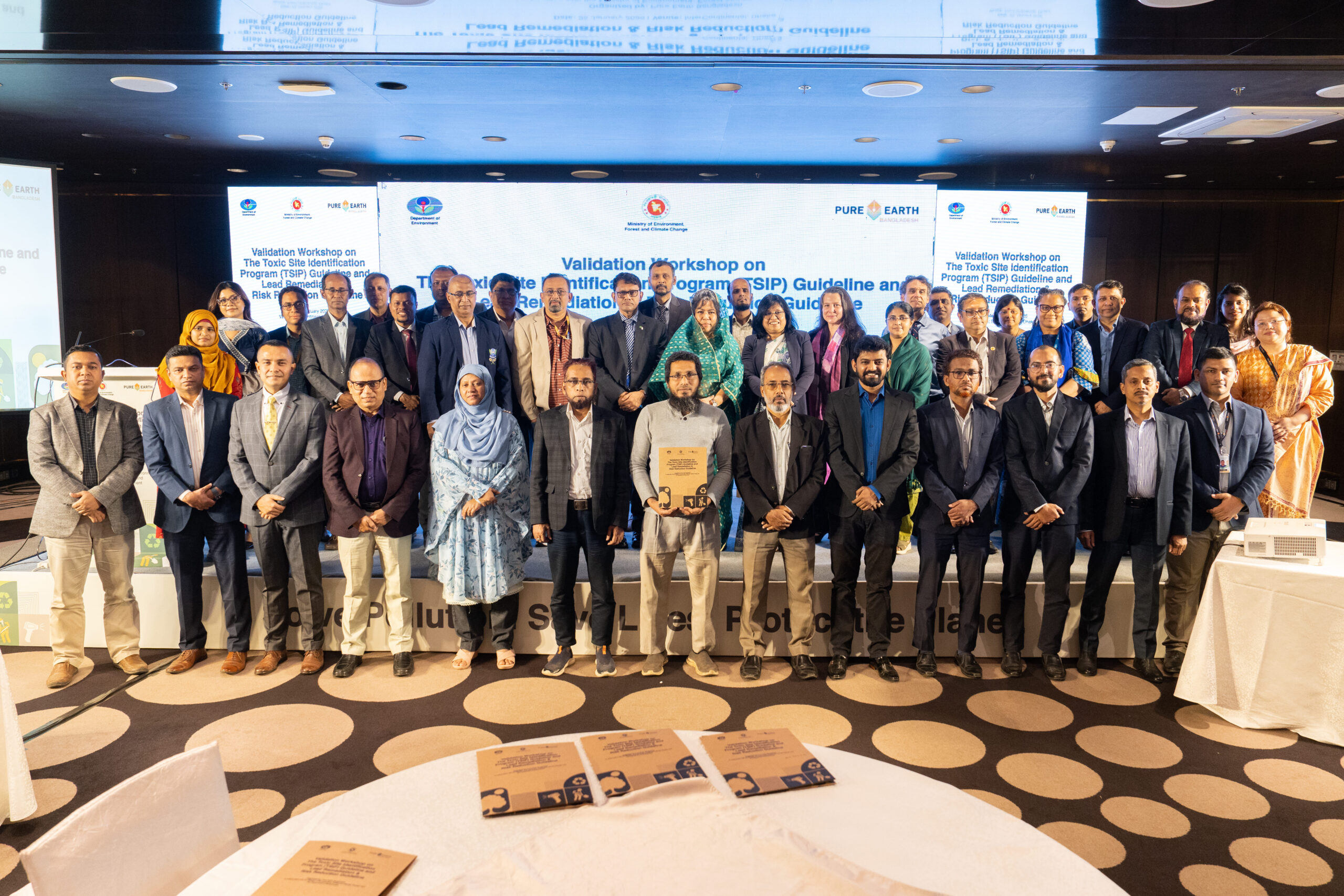
On 25 January 2026, Bangladesh took a significant leap in tackling one of its most serious public health threats- lead pollution, which has quietly affected millions of children and families across the country. At a rigorous Validation Workshop held at Hotel InterContinental Dhaka, organized by Pure Earth Bangladesh in collaboration with the Ministry of Environment, Forest and Climate Change (MoEFCC) and the Department of Environment (DoE), two national guidance documents were formally validated to strengthen how the country identifies, prioritizes, and remediates lead-contaminated sites.
The event marked a shift from ad hoc responses to a standardized, risk-based national approach that is founded in evidence, practicality, and Bangladesh’s institutional realities.
Why These Guidelines Matter
Bangladesh is among the countries most affected by lead exposure globally. Millions of children are exposed to unsafe levels of lead, undermining their health, cognitive development, and future economic potential. Much of this exposure stems from legacy contamination, particularly from informal and unregulated recycling of used lead-acid batteries.
Recognizing this challenge, MoEFCC and DoE, working with Pure Earth and with support from the French Facility for Global Environment (FFEM), have been strengthening the country’s national capacity to address lead pollution at its source. The validation of the Toxic Site Identification Program (TSIP) Guideline and the Remediation and Risk Reduction Guideline for Lead-Contaminated Sites, therefore, represents a crucial step in turning that capacity into sustained action. The TSIP guideline outlines a standardized protocol for identifying toxic sites and prioritizing them for clean-up, whereas the Remediation guideline details a step-by-step process for site decontamination and rehabilitation.
A Collaborative Validation Process
The workshop brought together more than 50 participants, including senior government officials, technical experts, development partners, private sector representatives, and academics. Representatives from government agencies such as the Directorate General of Health Services (DGHS), Dhaka North City Corporation (DNCC), National Board of Revenue (NBR), Department of Inspection for Factories and Establishments (DIFE), and Soil Resource Development Institute (SRDI) attended the event, along with development partners including icddr,b, UNICEF, and ESDO.
Unlike many policy documents, these guidelines were not developed behind desks. They emerged from a rigorous, consultative process that included field application, residential training for government officials, and structured technical feedback. This ensured that the final documents are not only scientifically sound but also practical, implementable, and fit for purpose within Bangladesh’s regulatory system.
Shared Ownership and Sustained Partnerships
Speaking at the event, Dr. Md. Kamruzzaman ndc, Director General of the Department of Environment, emphasized that standardized procedures are essential for protecting public health and the environment.
“The validation of these guidelines will fundamentally strengthen the DoE’s ability to systematically identify and mitigate contaminated sites, particularly those caused by informal battery recycling,” he noted.
The guidelines provide DoE with clear methodologies to identify contaminated sites, assess risks, prioritize interventions, and implement remediation or risk-reduction measures, moving from reactive responses to proactive environmental governance.
Lessons from the Ground: Evidence That Demands Action
Drawing on Pure Earth’s field experience in Bangladesh, Ms. Mitali Das, Country Director of Pure Earth Bangladesh, highlighted the severity of contamination uncovered during remediation projects. At several sites, soil lead concentrations reached as high as 70,000 parts per million (ppm), far exceeding the U.S. EPA screening level of 200 ppm. Children living nearby recorded blood lead levels up to 47 µg/dL, while global health authorities stress that no level of lead in the blood is safe.
Alongside remediation, she emphasized the importance of prevention, noting that without proper management of used batteries and industrial waste, new contaminated sites will continue to emerge.
From Validation to Legal Instrument
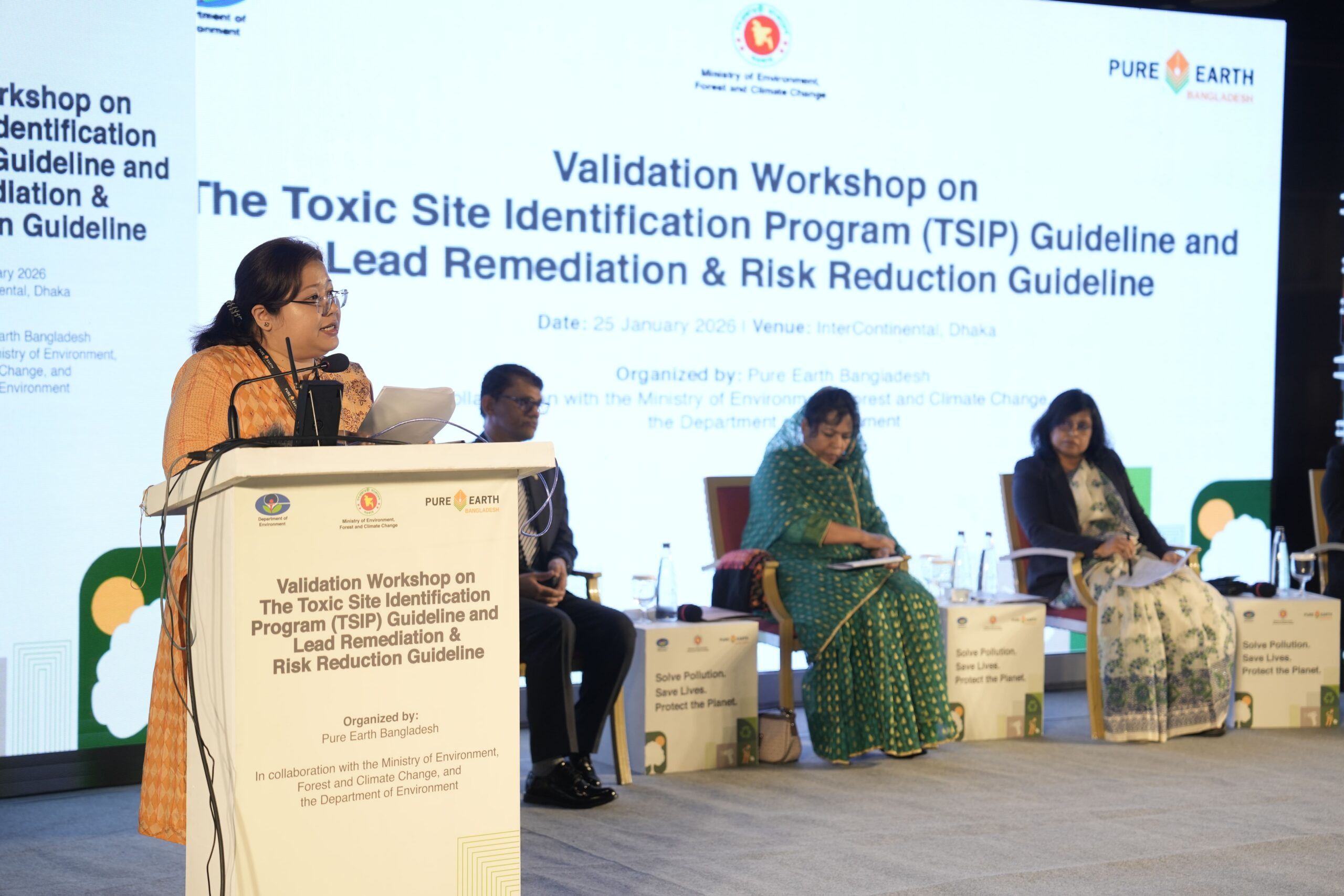
Dr. Farhina Ahmed, Ministry of Environment, Forest and Climate Change (MoEFCC), highlighted the devastating impacts of lead poisoning and the urgency to build preparedness, noting:
“Within 10 years, if we fail to manage the disposal of used batteries, it will turn into an epidemic situation for the country. After this workshop, we will be looking forward to formalizing it and making it a legal instrument to use.”
Dr. Ahmed also expressed her appreciation to Pure Earth and its partners for their extensive efforts in developing the guidelines, while mentioning her expectation that they would serve as a foundation for future policy formulation and contribute to the establishment of a comprehensive framework to address heavy metal pollution nationwide.

This commitment to translating validated guidance into an officially recognized and enforceable framework was echoed by other senior officials. Dr. Fahmida Khanom, Additional Secretary, Ministry of Environment, Forest and Climate Change (MoEFCC), emphasized the importance of aligning the guidelines with supporting policies and regulatory instruments to ensure effective implementation. She further underscored the need to shift from a reactive approach to one that prioritizes preparedness, noting:
“Neurodevelopmental damage is irreversible, but through identification of ULAB sites and prevention, we can reduce the poisoning of lead. It’s all about preparedness.”
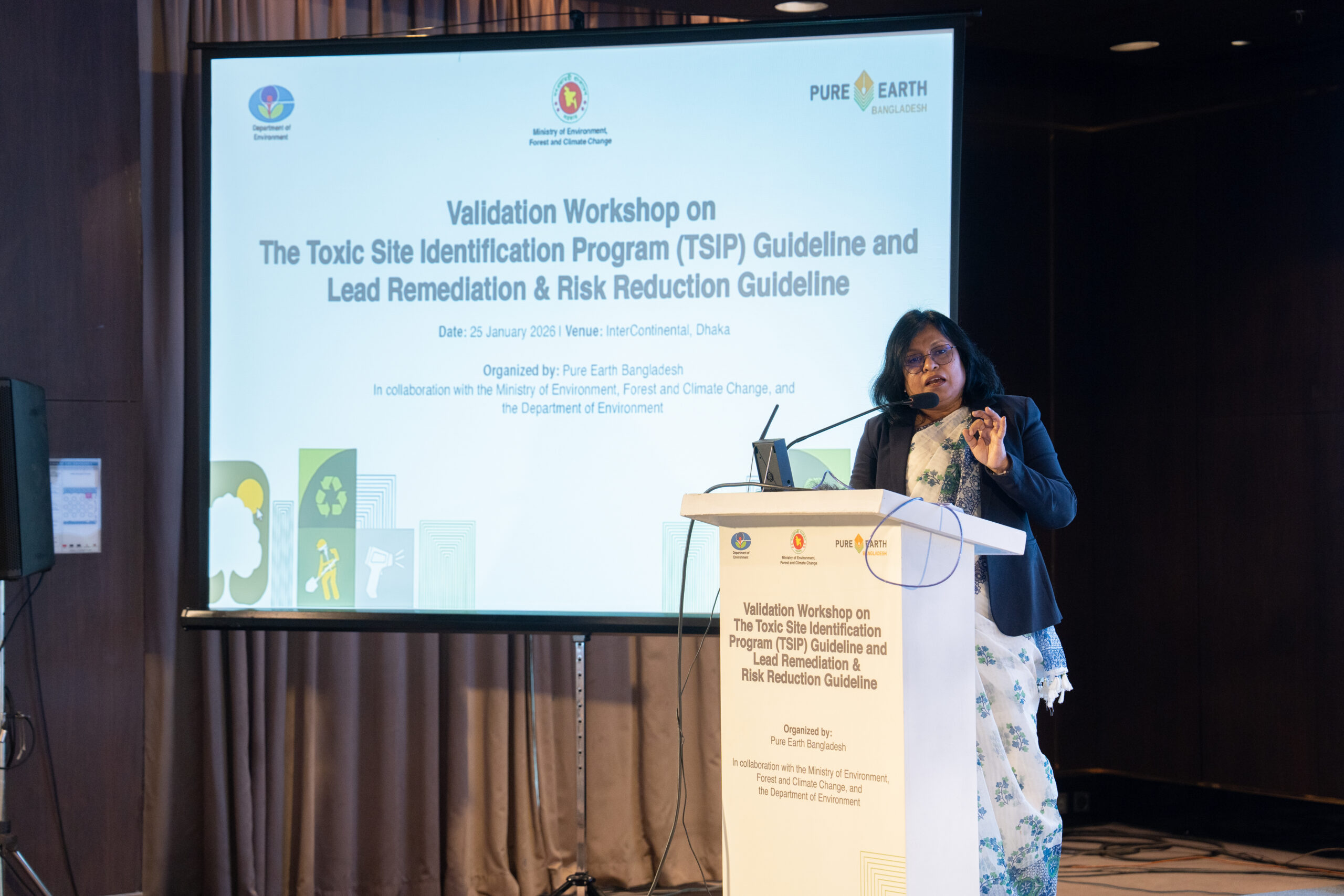
In Frame: Dr. Fahmida Khanom, Additional Secretary of MoEFCC, delivering her speech as the Special Guest.
Shared Ownership and Sustained Partnerships
Technical presentations by Aftab Uz Zaman Khan, Program Manager at Pure Earth, and Robert Kurkjian, Technical Expert from Pure Earth USA, walked participants through the core principles of the guidelines, key refinements based on training feedback, and pathways for nationwide implementation.
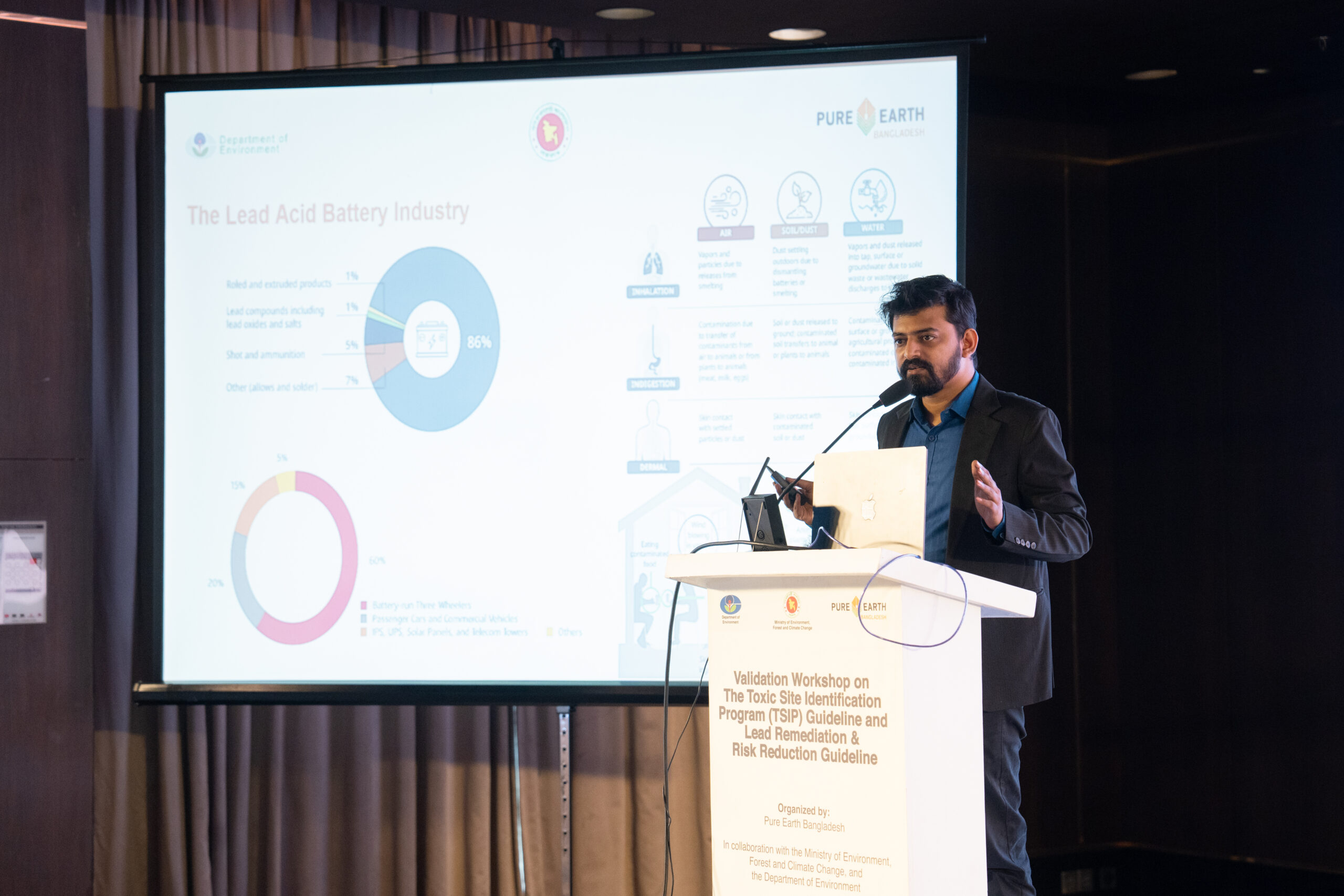

In Frame: Technical presentations by Aftab Uz Zaman Khan, Program Manager at Pure Earth, and Robert Kurkjian, Technical Expert from Pure Earth USA
Kurkjian walked participants through Pure Earth’s global TSIP process, showing how 350 toxic hotspots have been investigated in Bangladesh, 288 of them ULAB sites. He outlined the step-by-step process of site investigation, from desk review and field visits to sampling, data analysis, and prioritization using the Toxic Site Risk Index, always emphasizing the health and safety of field teams. He also shared the 13-step Investigation, Remediation, and Risk Reduction framework, illustrated by four Bangladesh case studies where context-specific remediation methods significantly reduced lead risk. Throughout, he reinforced a simple but powerful message:
“We are doing this for our children, for our future, and for a lead-free Bangladesh by 2035.”
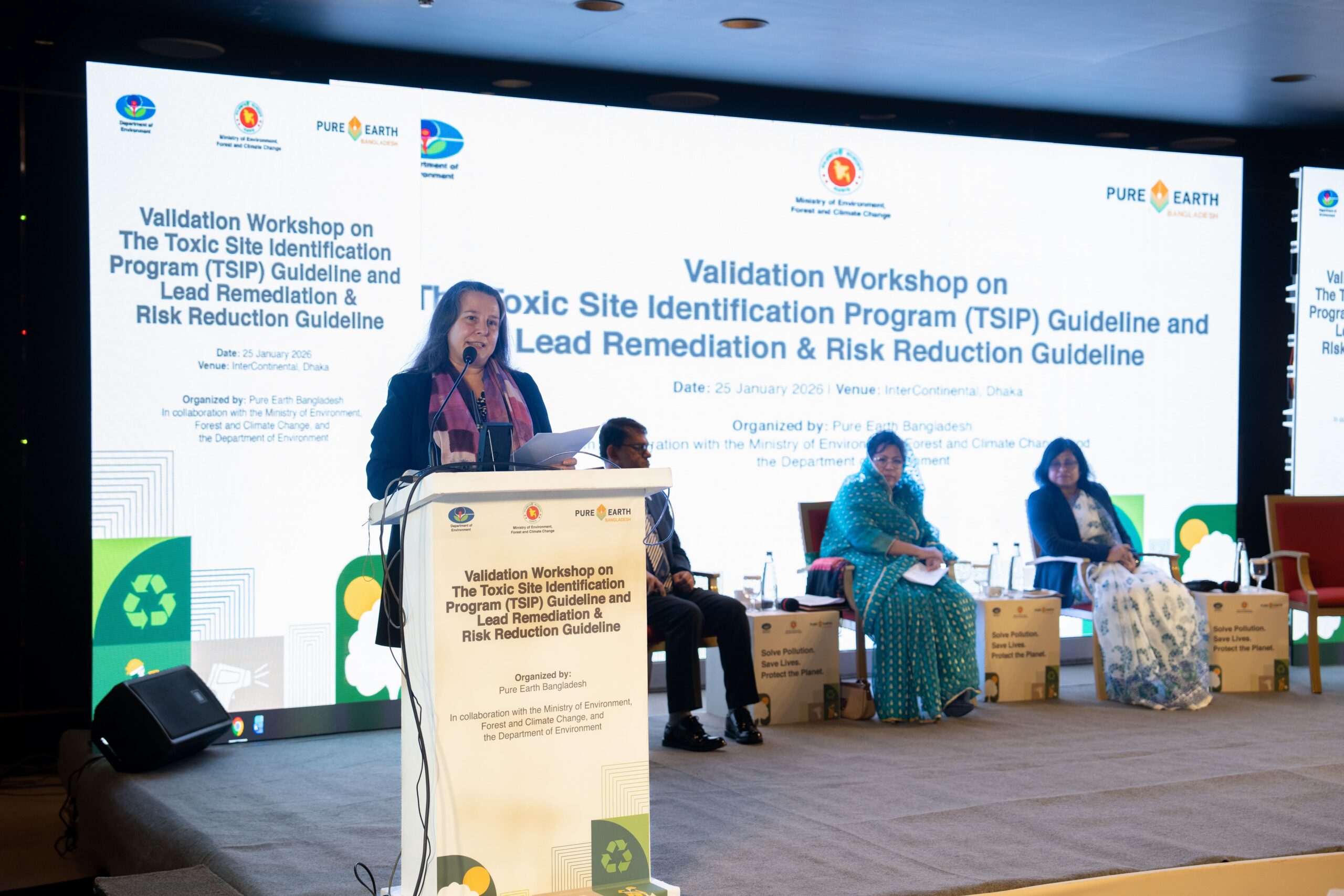
Reflecting on Bangladesh’s broader leadership, Ms. Lara Crampe, Program Director for Asia at Pure Earth USA, noted the country’s progress, from site remediations to the development of the National Strategy for a Lead-Free Bangladesh. She reaffirmed Pure Earth’s commitment to supporting government efforts through equipment, systems, and tailored technical assistance, emphasizing that long-term success depends on institutional ownership and sustained capacity building.
Moving from Commitment to Action
The workshop concluded with a shared understanding: validation is only meaningful if it leads to action. Participants identified clear next steps for institutional adoption, inter-agency coordination, and nationwide application of the guidelines.
For Pure Earth, this moment reinforces why we do this work. From mapping contaminated sites to supporting remediation and strengthening government systems, our role is to help translate knowledge into action. Together with the Government of Bangladesh and a growing network of partners across public health, environment, and development, we will continue to push for solutions that are preventive, scalable, and rooted in local realities, so that children are protected not just today, but for generations to come.
The challenge of lead pollution will not be solved overnight. But the validation of these guidelines shows what is possible when evidence, political will, and collaboration come together. With this foundation in place, Bangladesh has taken another decisive step toward breaking the cycle of lead exposure and building a safer, healthier future for its people.