
Pure Earth researchers tested 56 kohl, kajal, and surma eyeliners available for purchase in the United States and found that more than half contained dangerous levels of lead, including some with extremely high concentrations. These findings are detailed in a new report from Pure Earth’s Innovation Lab, Lead in Traditional Eyeliner: Sampling within the United States Cosmetics Market, which confirms that these products may pose serious health risks to consumers.
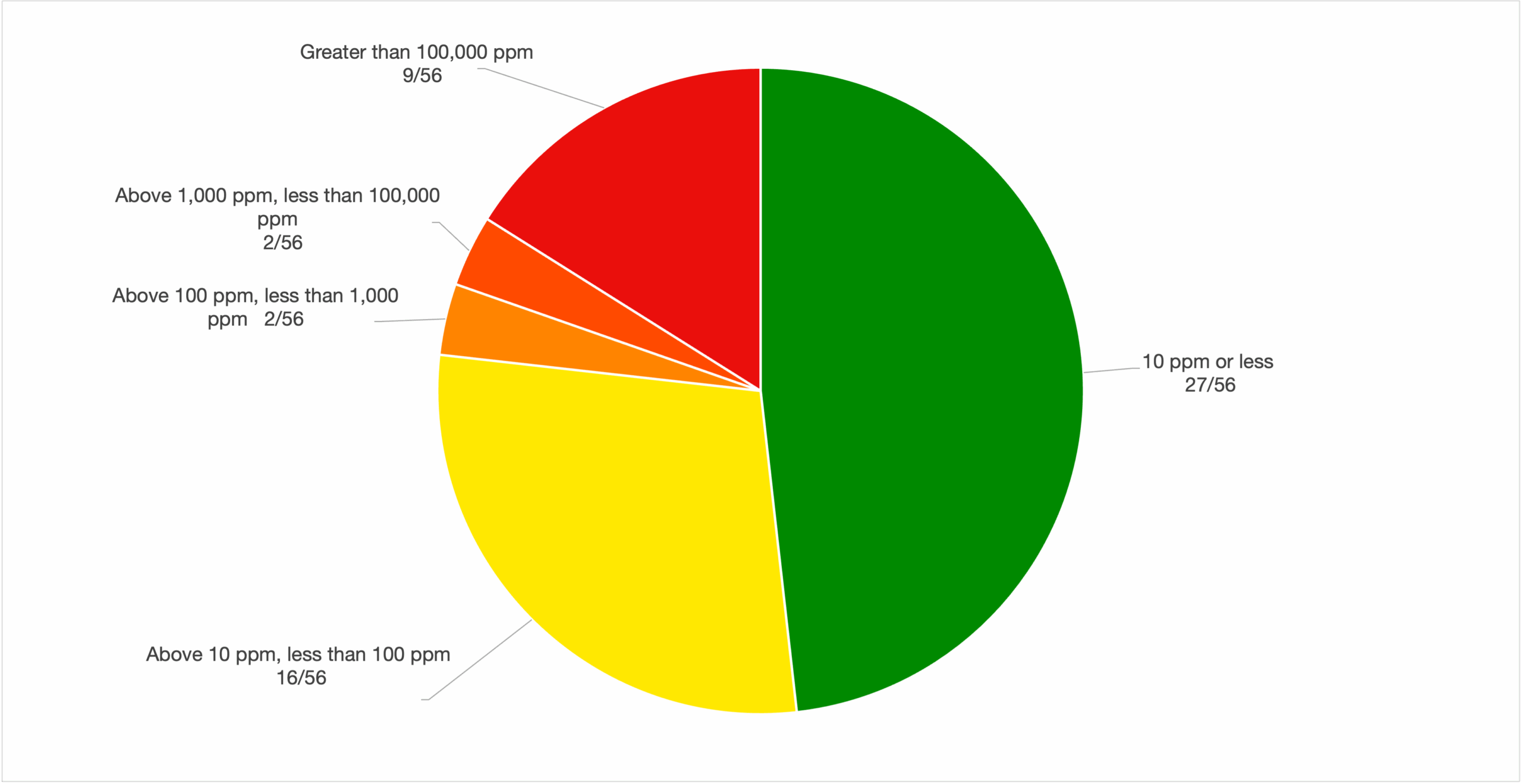
Of the 56 samples tested, most purchased online, 29 exceeded the FDA’s 10 ppm lead threshold, nine contained more than 100,000 ppm lead, and three exceeded 350,000 ppm. Exposure to highly lead-contaminated eyeliners can result in lead poisoning, with potentially severe neurological and cardiovascular impacts.
The findings were highlighted today by Consumer Reports, a non-profit organization focused on consumer safety, in an article that emphasizes ways consumers can reduce exposure to lead from these products. They’ve launched a petition calling on the FDA to strengthen marketplace monitoring and enforcement.
Traditional eyeliners such as kohl, kajal, and surma have long been documented sources of lead exposure, particularly among communities from Asia, North and West Africa, and the Middle East. These products are often used by both women and men, and in some cultures are applied to infants and children for health or spiritual protection. Typically sold in powder or cream form, they may contain crushed lead sulfide (galena) as a primary ingredient. In recent years, their availability in the U.S. has expanded through social media and global online marketplaces, including TikTok Shop.
While this was a small scoping study and is not representative of the entire U.S. market, the findings raise serious concerns. “Our study clearly shows that eyeliners with dangerous levels of lead are being sold in the U.S., including products labeled ‘lead-free’ and products marketed for use on children,” said Chris Kinally, Ph.D., a Pure Earth researcher and study co-author.
Traditional kohl, kajal, and surma are prohibited for sale in the United States and are regulated by the U.S. Food and Drug Administration (FDA), which bans them as illegal color additives and enforces a maximum lead limit of 10 ppm in cosmetics. The results of this study suggest that these regulations are not being adequately enforced, as lead-contaminated eyeliners remain readily available online and in local stores.
Our Findings
To assess the extent of lead contamination in traditional eyeliners sold in the United States, Pure Earth researchers collected a small scoping sample of 56 kohl, kajal, and surma eyeliners, primarily from online marketplaces including Amazon, Etsy, eBay, and TikTok Shop. Lead concentrations were measured using Inductively Coupled Plasma Mass Spectrometry (ICP-MS).
The results were concerning. More than half of the samples (29 of 56) exceeded the FDA’s 10 ppm lead limit for cosmetics. Nine samples contained more than 100,000 ppm lead, and three exceeded 350,000 ppm. Products with lead concentrations above 100,000 ppm were purchased from all four major online marketplaces sampled.
Lead levels varied substantially by formulation. The products with the highest concentrations of lead were powders. The 38 cream eyeliner samples ranged from non-detectable levels of lead to 68 ppm. More than half of them contained 10 ppm or less. In contrast, lead levels in powders reached up to 380,000 ppm, and only two of the 18 powder samples were below the FDA’s 10 ppm limit.
Children are particularly vulnerable to lead exposure due to its harmful effects on neurological and physical development and frequent hand-to-mouth behaviors. Concerningly, three products labeled “baby kajal” contained lead above the FDA limit, raising serious concerns about products marketed for use on infants and children.
Products labeled as “lead-free” also failed to provide reliable protection. More than half of lead-free–labeled products exceeded the FDA limit, with lead concentrations reaching as high as 380,000 ppm. Five of the 17 products labeled lead-free contained more than 100,000 ppm lead, and seven exceeded 1,000 ppm, suggesting that labeling alone is not a dependable indicator of safety.
“A ‘lead-free’ label isn’t a guarantee of safety, which is why stronger consumer protections in the U.S. and abroad are so important,” said Drew McCartor, President of Pure Earth. “Until those safeguards are in place, the safest choice is to avoid traditional eyeliners altogether.”
While these findings are alarming, this was a small scoping study and is not representative of the entire U.S. market. Future research should include larger, more systematic sampling, including products purchased from brick-and-mortar stores and locations beyond New York City.
Even with these limitations, the implications are clear: lead-contaminated eyeliners exceeding FDA limits are reaching U.S. consumers, indicating gaps in current regulation and enforcement. Stronger oversight of lead in cosmetics is needed both in the United States and globally.
Stopping Contamination at the Source
Addressing lead-contaminated traditional eyeliners requires action beyond the United States. In a 2021 survey of 5,000 consumer products across 25 countries, Pure Earth found that lead-contaminated cosmetics are widespread, demonstrating that this is a systemic, global problem, not a series of isolated cases. U.S. regulations alone cannot prevent exposure when these products continue to be manufactured and distributed internationally.
Effective solutions require stronger regulation and enforcement in countries where these eyeliners are produced. Banning the manufacture and sale of lead-contaminated eyeliners at their source, and ensuring products are reformulated to be lead-free, is essential to preventing harm.
Further research is also needed to better understand how manufacturers, resellers, and governments respond to concerns about lead contamination, as well as how communities adopt safer alternatives when they are available.
Given the global scope of the problem, Pure Earth is working to address lead contamination at its source by partnering with governments in low- and middle-income countries to strengthen regulations, improve enforcement, and support lead-free reformulation. This work includes tracing contaminated cosmetics back to their production facilities and collaborating with both regulators and producers to eliminate the use of lead entirely.
Our Solutions in Ghana
In Northern Ghana, which has the highest prevalence of lead poisoning in the country, Pure Earth’s home-based assessments identified eyeliner as a major contributor to lead exposure.
Pure Earth is tackling this problem by reducing the supply of leaded cosmetics, raising awareness, and strengthening enforcement— work recognized by the Happier Lives Institute as the most cost-effective wellbeing intervention they have evaluated to date.
With support from Coefficient Giving, Pure Earth is currently conducting an initial supply-chain analysis and assessing Ghana’s regulatory landscape for cosmetics. These early steps are essential for designing effective, scalable interventions. Additional funding is needed to implement on-the-ground actions that can reduce exposure and protect children’s health.
In the video below, Pure Earth’s Africa Program Director, Rev. Dr. Esmond Quansah, explains how expanded support will allow Pure Earth to reach more communities and reduce the daily use of lead-contaminated eyeliner.
“Ending Lead-Contaminated Cosmetics in Ghana for Healthier Futures builds on Pure Earth’s experience removing lead from other consumer products like spices. These interventions are cost-effective, can be implemented quickly, and have the potential to protect thousands of children,” says Carol Sumkin, Pure Earth V.P. of Development. “The lessons learned in Ghana can be applied and scaled in other countries.”
Through December 31, 2025, every dollar donated will be matched up to $40,000, doubling your impact. Donate today to help prevent lead exposure from contaminated cosmetics and protect children’s health.
Learn more in an article from Consumer Reports.
For more information or media inquiries, please contact Sarah Berg at [email protected].