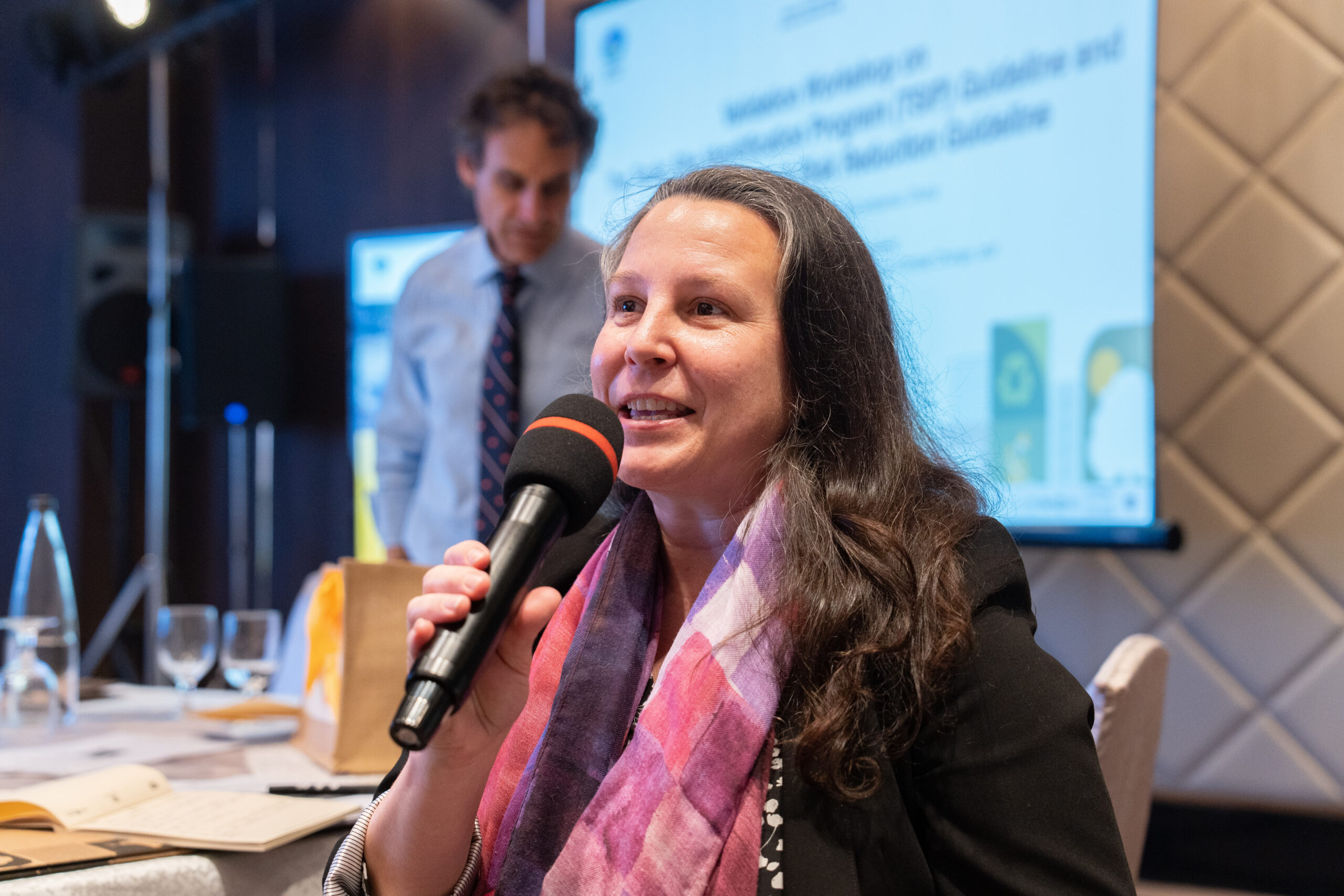
Pure Earth provides technical leadership in Ethiopia’s coordinated response to lead contamination.
In many communities across Ethiopia, lead contamination has long remained a silent yet pervasive public health concern, quietly embedded in everyday life through sources such as informal used lead-acid battery recycling, contaminated spices, aging paint, and household cookware. Though often unseen, its consequences are profound and far-reaching, particularly for children whose developing bodies are most vulnerable.
An estimated 21 million children in Ethiopia, approximately 36% of the pediatric population, have elevated blood lead levels above 5 µg/dL (IHME, 2023), even though no level of lead exposure is considered safe. Children exposed to this toxic metal are estimated to lose an average of 5.8 IQ points and face increased risks of developmental delays, cognitive impairment, and long-term health complications (World Bank, 2019). Beyond its human toll, lead exposure also places a substantial economic burden on the country, costing Ethiopia an estimated $8 billion annually and contributing to more than 27,000 premature deaths each year (World Bank, 2019).
A Scalable Model for National Governance
To respond to this growing public health challenge, Ethiopia has taken important steps to institutionalize a stronger and more integrated technical and governance framework for managing and reducing lead contamination risks. As part of these efforts, the country recently established the National Lead Coordinating Committee (NLCC), designed with a two-tier governance structure to ensure both strategic oversight and effective implementation.
At the highest level, the Steering Committee provides overall policy direction and strategic guidance. It is chaired by the Director General of the Environmental Protection Authority (EPA) and co-chaired by the State Minister of Health (MoH).
Beneath this, the Lead Technical Working Group (LTWG) oversees day-to-day implementation and technical coordination. It brings together key institutions such as EPA, MoH, the Ethiopian Public Health Institute (EPHI), the Ethiopian Food and Drug Authority (EFDA), and the Ministry of Labor and Skills (MoLS), fostering collaboration and alignment across sectors.
The group is further strengthened by the participation of development partners and technical organizations such as Pure Earth, Vital Strategies, the CDC Foundation, WHO, and UNICEF. These are complemented by representatives from the private sector, academia, and civil society organizations, ensuring a broad and inclusive technical platform.
To drive results, the LTWG operates through five thematic areas: Policy and Regulation, Research and Surveillance, Environmental Monitoring, Health Systems Response, and Risk Communication and Community Engagement. Each wing plays a distinct but interrelated role in translating policy direction into practical and on-the-ground action.
From Concept to Action
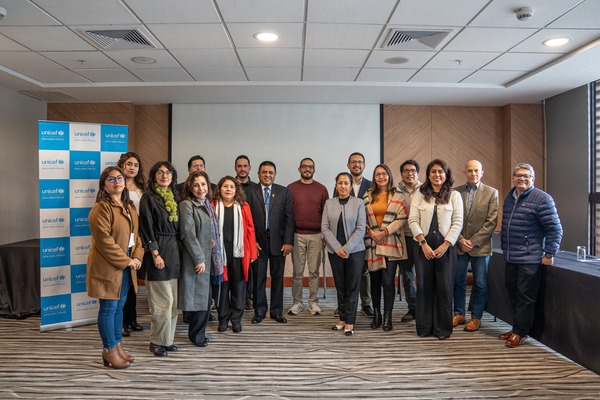
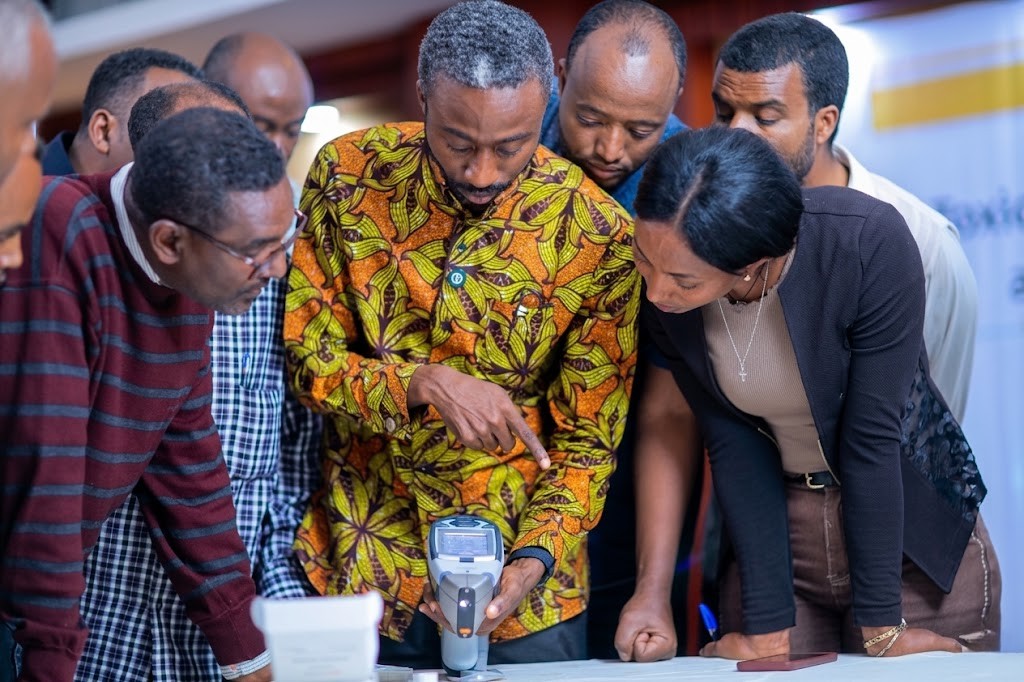
In April 2026, Ethiopia took a decisive step forward. Pure Earth, in partnership with the Clinton Health Access Initiative (CHAI), convened a three-day leadership workshop in Addis Ababa for members of the national lead technical working group.
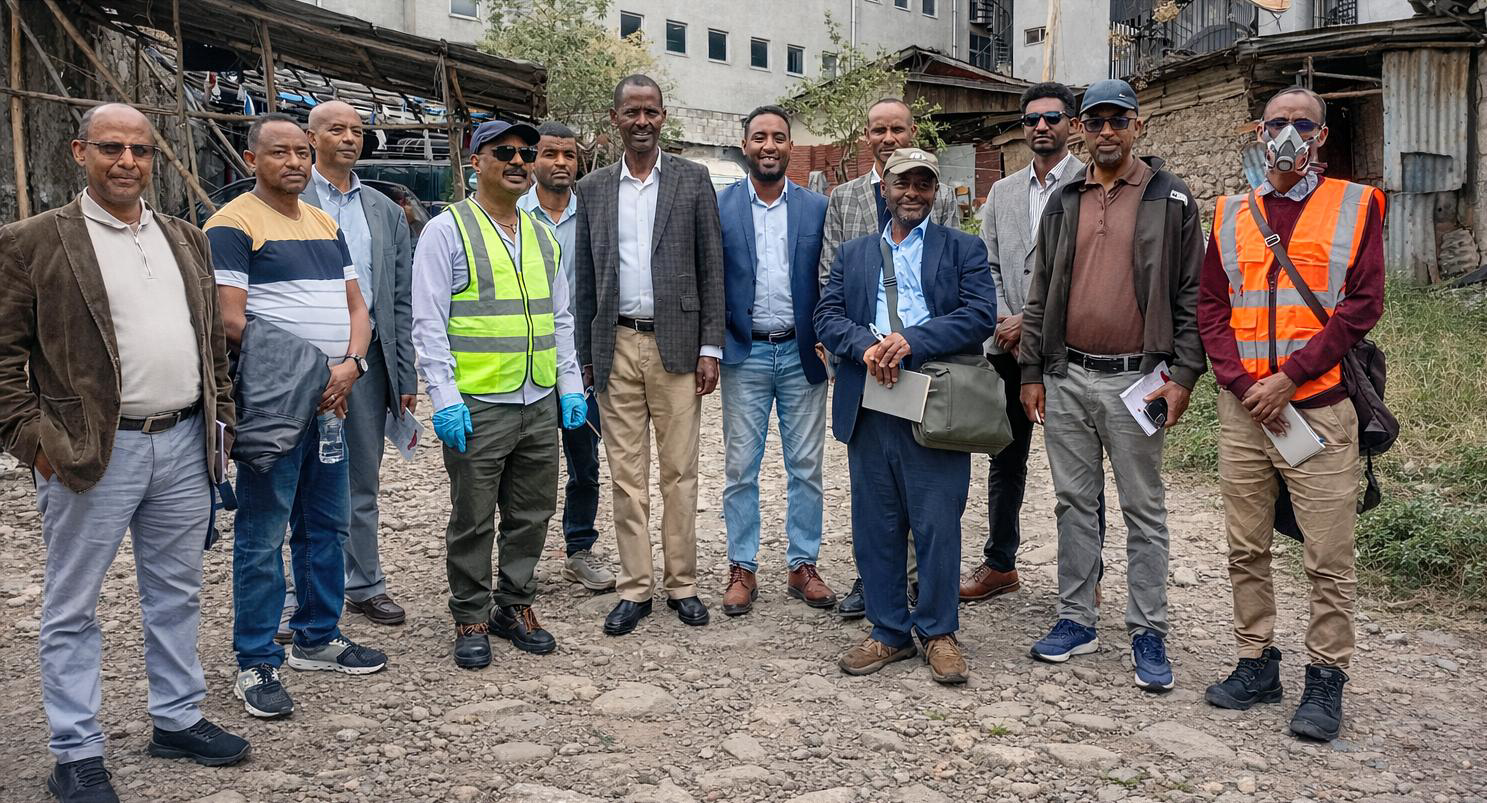
Moving beyond conventional approaches, the engagement began in the field with a visit facilitated by Pure Earth to a contaminated site in Addis Ababa, where participants witnessed firsthand the lived realities of lead exposure and its associated risks.
The visit took place in the Lideta area of Addis Ababa, where the rhythms of urban life and hidden environmental risks intersect. Participants observed a densely packed residential compound where informal battery recycling, a vehicle maintenance garage, small businesses, and households coexisted within a single confined space. Around 20 people live here, including 12 children, with a nearby playground actively used despite its proximity to lead contamination sources.
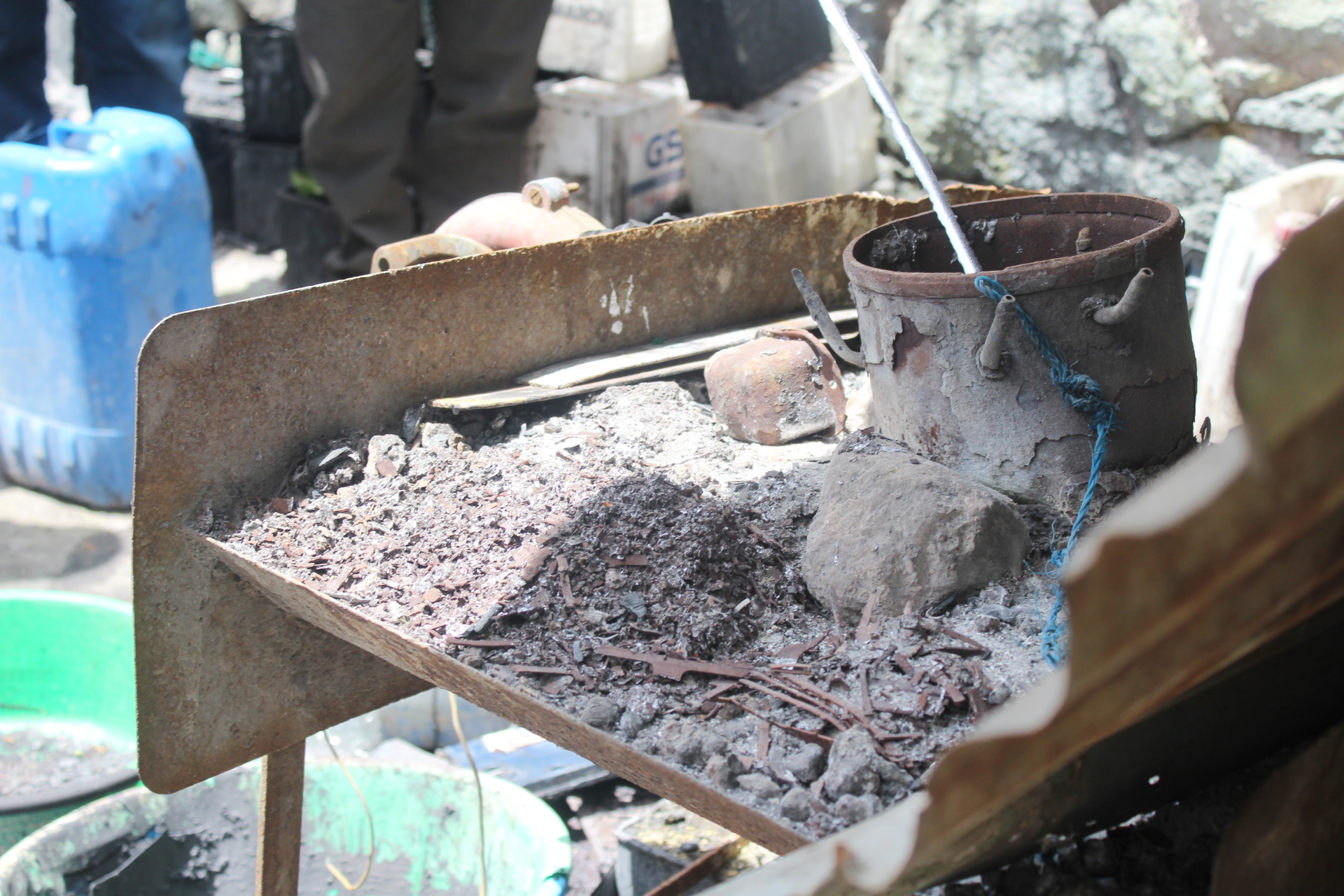
The site told a powerful story. The ground was unpaved and stained with oil and chemical residue. Broken battery casings, metal scraps, and ash lay scattered throughout the compound. With no drainage system in place, pollutants seeped silently into the soil, embedding long-term environmental and health risks. Workers handled hazardous battery materials without even most basic protective equipment.
“This site is not an isolated case. Across Addis Ababa alone, an estimated 1,600 informal battery recycling and repair workshops operate under similar conditions,” said Bereket Tesfaye, Technical Program Manager at Pure Earth in Ethiopia.
Beyond the visible hazards, the visit uncovered deeper challenges. Some workers acknowledged the potential health risks of their activities, yet had little to no access to protective equipment or the technical knowledge needed to adopt safer practices. The absence of clear boundaries between small-scale industrial work and living spaces meant that exposure was constant and unavoidable, particularly for children who live and play in these environments.
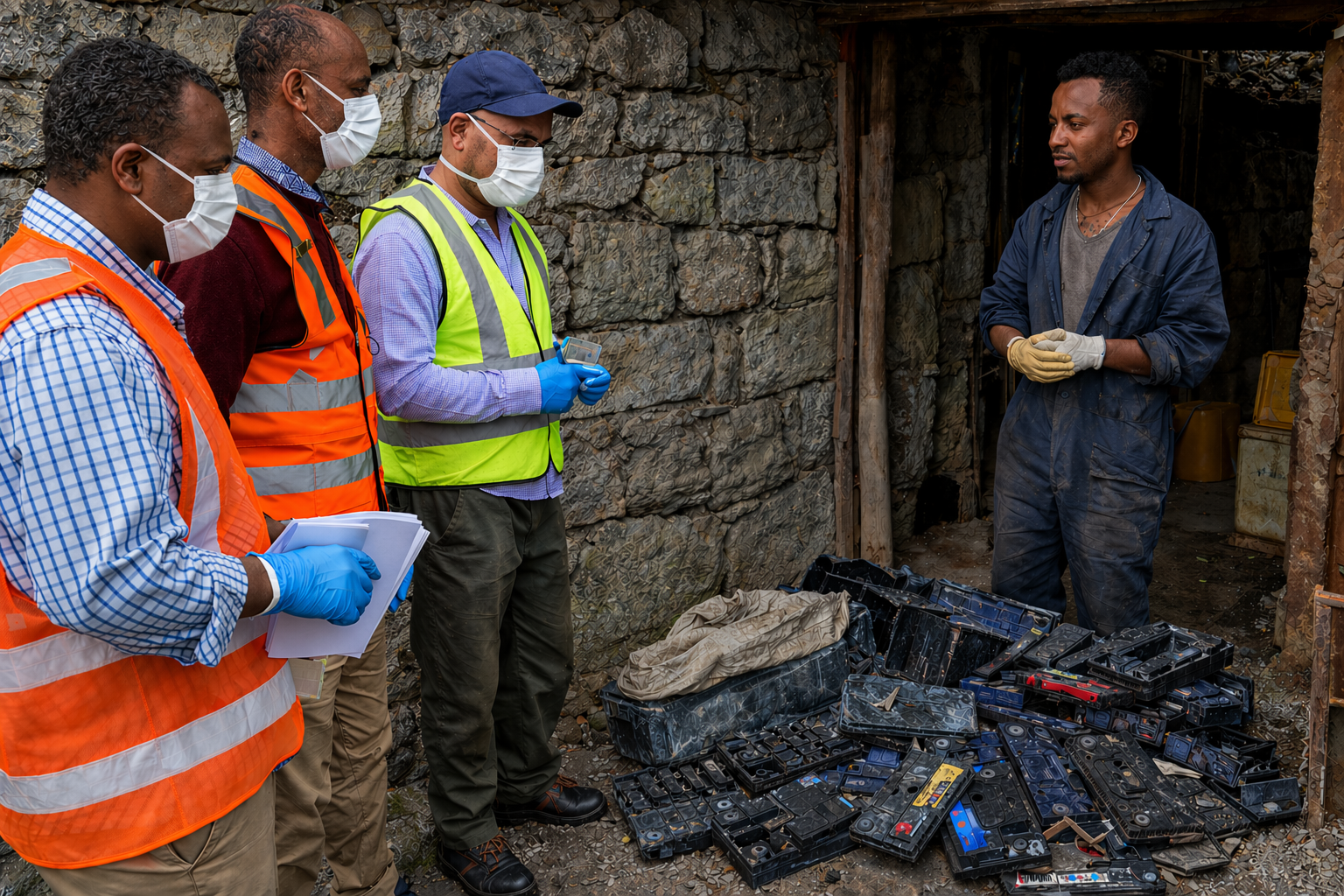
For the national technical working group, the experience was transformative. “Seeing the reality on the ground brings the magnitude of this challenge into sharp focus and changes everything. It brings urgency, clarity, and a shared sense of responsibility. I truly appreciate Pure Earth for organizing such an important field visit to a toxic site within the heart of Addis Ababa,” reflected Yared Mekuria, Sr. Expert of Hazardous & E-Waste Compliance Monitoring & Enforcement at the Ethiopian Environmental Protection Authority.
Translating Field Insights into National Action Plan
Returning from the field, the technical working group gathered with a unified sense of purpose. The deliberations that followed were firmly anchored in the realities they had directly witnessed, heard, and experienced during the visit. Over two days of intensive deliberation, participants translated these field insights into a comprehensive national lead prevention action plan, bridging local realities with national policy priorities.
The field observation had revealed critical systemic gaps, including unregulated battery repair operations, inadequate access to personal protective equipment, widespread environmental contamination, unsafe waste management practices, and significant community exposure risks.
Against this backdrop, key priorities emerged with clarity and urgency. Participants underscored the need for a phased and structured response: short-term measures focused on awareness creation, provision and enforcement of PPE use, and zoning controls; medium-term interventions aimed at strengthening regulatory compliance and enforcement mechanisms; and long-term structural reforms involving sectoral transition strategies and the gradual phasing out of high-risk activities. These were to be complemented by strengthened evidence generation, policy refinement, and deeper cross-sectoral integration.
Collectively, these deliberations culminated in the recommendation for a clear strategic roadmap to align all stakeholders under a coordinated national response framework. The working group further emphasized that sustained progress will depend on robust intersectoral coordination, institutional accountability, and consistent implementation across all levels of governance.
“This is about moving from fragmented efforts to a coordinated national response, where every institution understands its role and is accountable for results. Although different government institutions have been working on lead prevention for several years, their work lacked a unified framework. The emergence of development partners such as Pure Earth is now bridging those technical gaps, strengthening intersectoral coordination and building the national capacity required to mitigate the profound public health risks of lead exposure,” emphasized Lakew Desta, Lecturer and Researcher at the Department of Environmental Health, Arba Minch University.
“When coordination works, impact follows. This is the direction Ethiopia’s national response to lead exposure must take” noted Kirubel Tesfaye, a Team Leader of Environmental Health Division at EPHI. The workshop concluded with a concrete six-month action plan to strengthen the governance of this multi-sectoral effort.
A Shared Commitment to Protect the Future Generation
As Ethiopia continues to confront widespread informal recycling and lead contamination, the path forward is becoming clearer. While the challenge remains significant, momentum for change is also growing. The national lead technical working group now serves as a central mechanism for driving progress, bringing leadership, evidence, and accountability together in a unified response.
“For Pure Earth, this initiative reflects a deep commitment. It is foundational to everything we do,” said Firew Kefyalew, East Africa Region Director at Pure Earth. “We are moving beyond isolated interventions toward a model of strategic partnership, working in lockstep with government and development actors to transform technical evidence into life-saving policy and meaningful action. Strengthening coordination through platforms like this is a cornerstone to ensuring our efforts are well-coordinated, evidence-informed, and impactful, so that together we deliver lasting and measurable change”.
“Pure Earth is emerging as a rising star and the most reliable technical partner in Ethiopia’s efforts to address lead exposure, strengthening institutional coordination and reinforcing the technical foundation for a more holistic response,” shared Yared from EPA.
Ethiopia is no longer only responding to the challenge of lead exposure; it is actively building a coordinated national system to prevent it, reduce it, and protect future generations from its irreversible impacts. This work offers a strong example of how multi-sectoral collaboration can address some of the world’s most neglected environmental health challenges.