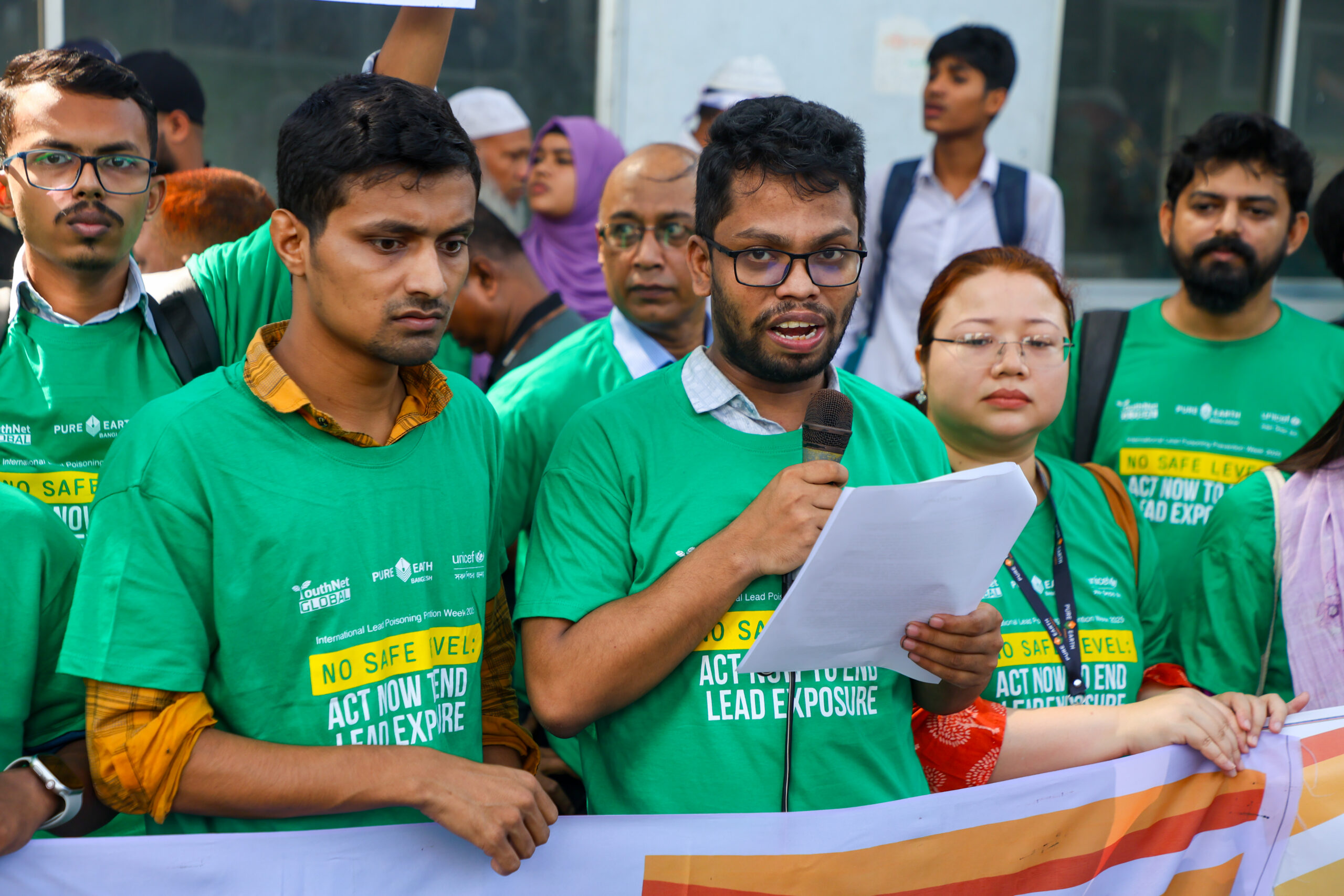
On the occasion of the International Lead Poisoning Prevention Week (ILPPW) 2025, Bangladesh’s youth took to the streets with a powerful message: There is no safe level of lead exposure, and the time to act is now.
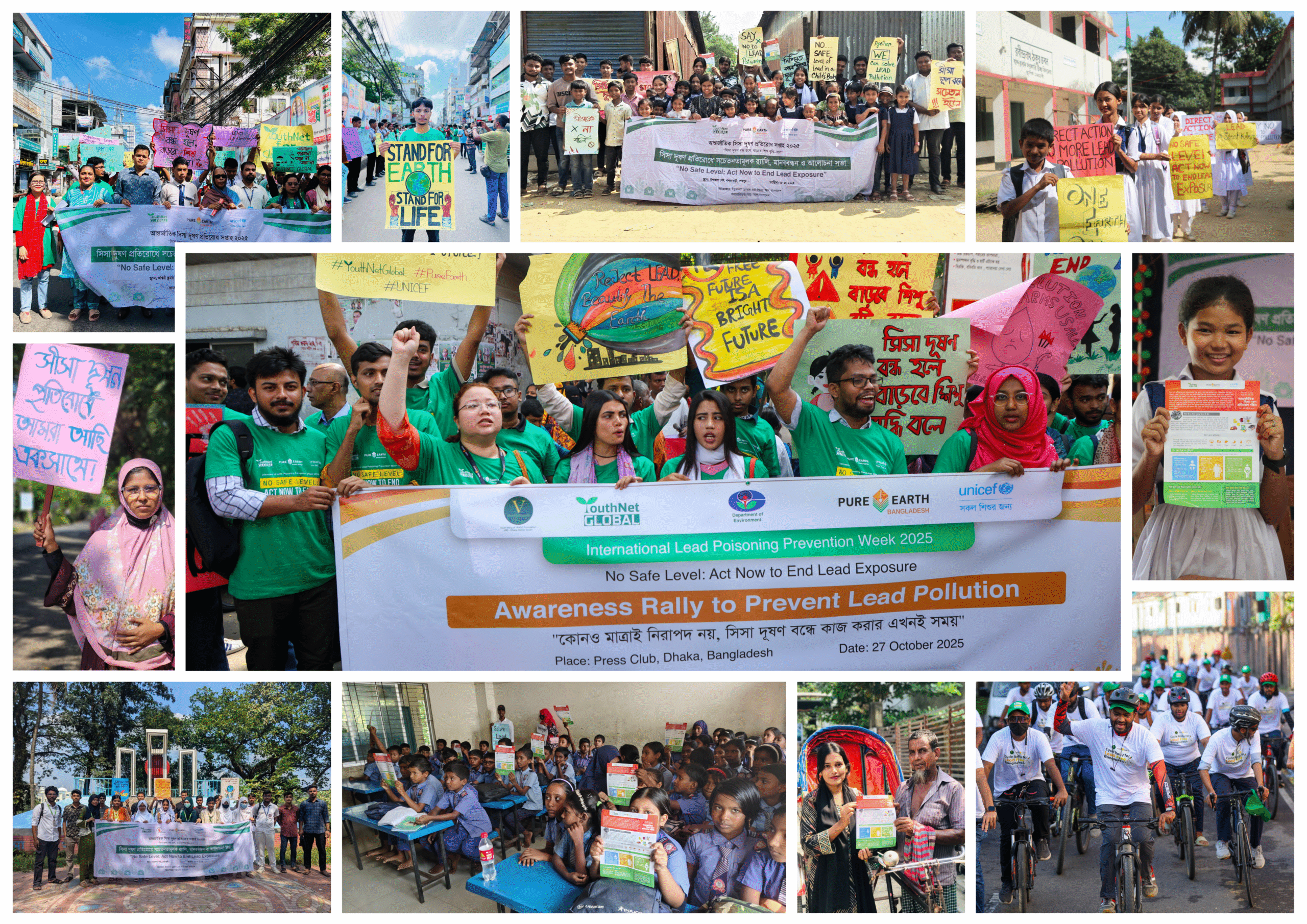
The International Lead Poisoning Prevention Week (ILPPW) 2025 was marked with a nationwide vibrant campaign spanning all 64 districts, bringing together youth, educators, civil society, media, and government agencies to address one of the most pressing yet neglected public health crises- lead pollution.
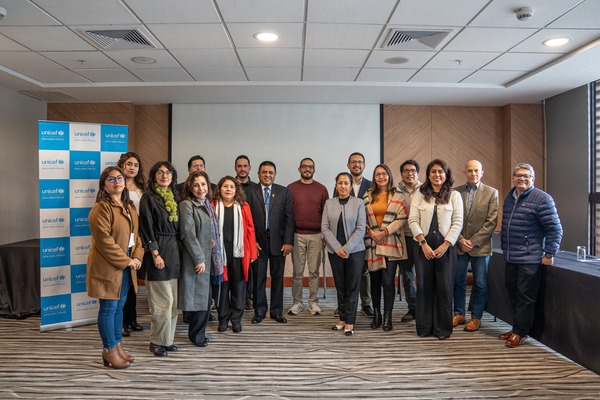
The month-long campaign ran from 19 October to 19 November 2025, with technical support from Pure Earth Bangladesh and implemented on the ground by YouthNet Global. Grassroots youth organizations and educational institutions partnered to preach awareness directly to communities where exposure risks are highest. The campaign was made possible through the generous support of UNICEF Bangladesh, a valued long-term partner of Pure Earth.
What the Campaign Looked Like on the Ground
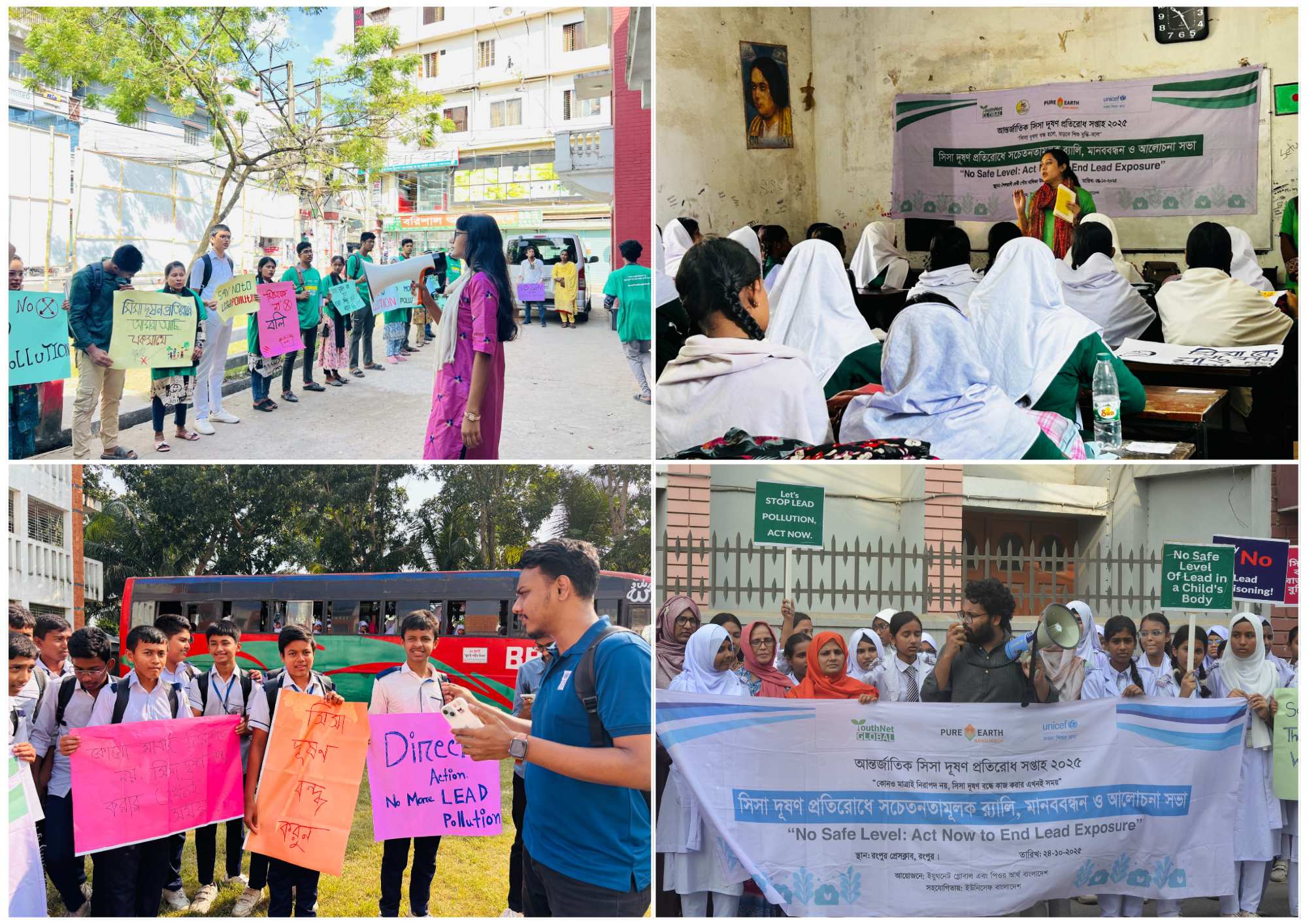
Under the global theme “No Safe Level: Act Now to End Lead Exposure,” the ILPPW 2025 campaign witnessed a coordinated national effort shaped by local youth leadership across all eight divisions, complemented by activities including:
- Public rallies and marches in high-visibility locations
- Human chains at press clubs, city landmarks, and school gates
- Awareness sessions at educational institutions, including schools, colleges, and university
- Community discussions with local leaders, teachers, and parents
- Distribution of educational materials
These activities were held in all 64 districts, with direct engagement of more than 2,200 people through in-person events. An additional 15,000 people were reached indirectly through surrounding communities, markets, and neighborhoods, bringing the total in-person reach to over 17,000 individuals. Over 300 youth leaders were trained through national online orientation sessions and supported by 26 grassroots youth organizations and 55 educational institutions. During the campaign, the volunteers distributed 3,000 lead awareness leaflets, 6,000 stickers on the impact of lead and solutions, 300 T-shirts with the ILPPW campaign slogan, and 64 banners for rallies and other events.
The campaign truly demonstrated the transformative power of coordinated, youth-led action at a national scale. Apart from the extensive field engagement, the youth groups also carried out a month-long digital advocacy campaign pushing the cause for lead pollution prevention, which was later amplified by coverage across more than 130 national and local media outlets. This hybrid approach ensured that lead pollution stayed relevant in the public consciousness, reinforcing its recognition as an urgent public health priority.
Why Lead Pollution Demands Urgent Action
Lead is a potent neurotoxin with no safe threshold of exposure, particularly for children whose developing brains are more vulnerable. Far from being an isolated environmental issue, lead contamination is pervasive in everyday life and constitutes a significant public health challenge. In Bangladesh, the scale of impact is especially alarming as the country ranks as the fourth most lead-affected nation globally, with an estimated 36 million children (roughly 60%) having elevated blood lead levels. This widespread exposure poses risks of irreversible damage, including impaired cognitive development, reduced IQ, behavioral disorders, increased risk of cardiovascular disease in later life, and diminished lifetime earning potential, undermining not only individual well-being but also national human capital. In fact, considering the adult health impacts, lead pollution accounts for a total economic loss of US$28.6 billion annually, which is equivalent to 6–9% of Bangladesh’s GDP. Such loss in human and economic capital is indicative of an urgent need for action to mitigate lead exposure and its economic ramifications.
The Multiple Indicator Cluster Survey (MICS) 2025, an elaborate study conducted by the Bangladesh Bureau of Statistics with UNICEF support, revealed that 38.3% of children aged 12–59 months and nearly 8% of pregnant women in the country have blood lead levels above WHO’s reference thresholds. The prevalence is the highest in Dhaka, Sylhet, and Chattogram.
Lead enters our bodies through an array of pathways- unsafe recycling of used lead-acid batteries, contaminated soil, lead-based paints, consumer products, and food chains. Without decisive interventions, these exposures will continue to undermine public and environmental health as well as economic productivity.
A Strong Government Commitment
Government officials participating in the campaign activities across the divisions reaffirmed the importance of institutional responsibility as well as their commitment to preventing lead exposure and mitigating the associated public health risks.
Md. Maruf Mohaimen, Research Officer (Waste and Chemical Management), Department of Environment, and Focal Person for Lead, stated:
“Preventing lead pollution is a national priority, and the government is fully committed to safeguarding public health and the environment. We are actively coordinating with communities, NGOs, and industry partners to enforce regulations, promote safe practices, and raise awareness, ensuring that every child and citizen can live in a lead-free, healthy Bangladesh.”
Such bold reaffirmation goes to show that the case of lead pollution is gaining stronger recognition within the governance realm in the country, with a greater drive for enforcement, regulation, and coordinated actions.
Community Mobilization Through Youth Leadership
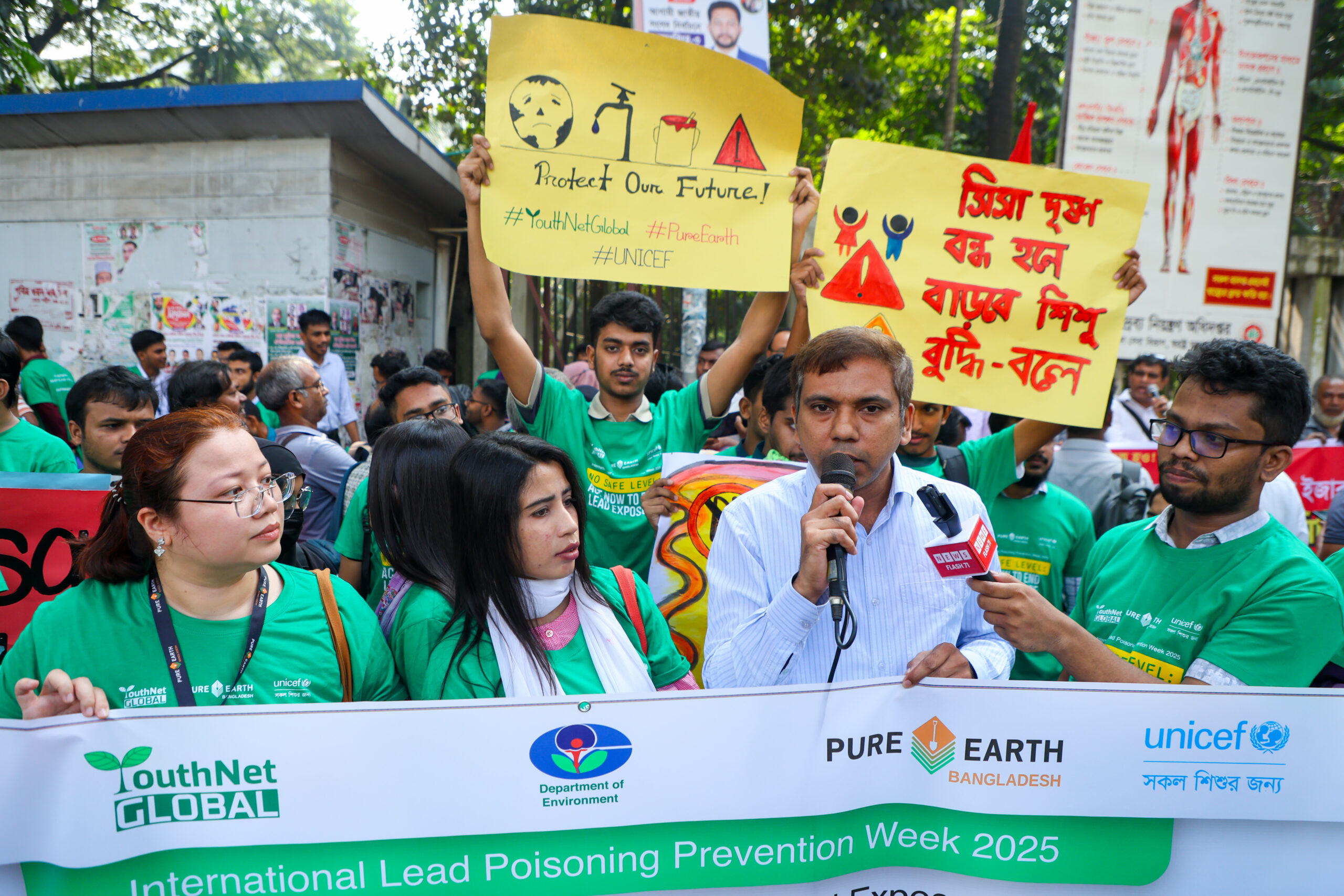
Speaking during the campaign observance at Dhaka, Mitali Das, Country Director of Pure Earth Bangladesh, emphasized the scale and urgency of the problem:
“All elements of our environment—soil, water, and air—are being contaminated with lead. This toxic heavy metal has entered our bodies and food chain through polluted soil, unsafe lead-acid battery recycling, and lead-containing consumer products. As part of Pure Earth’s mandate to combat lead pollution and protect public health, we are promoting environmentally sound management of lead, remediating contamination sources, strengthening government capacity and policy advocacy for effective action, and raising nationwide awareness by mobilizing youths to build a lead-free Bangladesh.”
YouthNet Global played a central role in translating this vision into action at the community level.
Highlighting the importance of youth engagement, Sohanur Rahman, Executive Director of YouthNet Global, said:
“Lead pollution is extremely harmful to our children, but it can be prevented. Every child has the right to grow up in a safe, pollution-free, and healthy environment. Through the active involvement of young people, it is possible to raise awareness at all levels and take effective actions to curb pollution, ensuring good health and a lead-free, safe future for our children.”
Empowering Youth Voices for Collective Change
Throughout the campaign, youth participation remained substantive, informed, and solution-oriented. Young people who participated in the diverse campaign activities across all the districts used the campaign as a platform to articulate the urgency of ending lead exposure in Bangladesh.
“In many places in Bangladesh, lead pollution is still spreading through old paints, battery recycling, and some unauthorized industrial processes. To protect the future generations of our country from this danger, action must be taken immediately,” said Zubayer Ahmed Siam, a student who participated in a rally in Chattogram.
“To stop lead pollution, there is no alternative to public awareness, setting lead limits in consumer products, banning illegal battery recycling, and enforcing the law,” said Jannatul Juthi, a Volunteer of YouthNet in Rangpur.
“Among so many countries in the world, despite being a nation of such small size, Bangladesh now ranks fourth among the countries most affected by lead pollution. We need more awareness to tackle this widespread exposure,” said a Volunteer of YouthNet during the campaign in Pirojpur.
These voices reflect a growing generation of informed advocates who understand both the health implications and the structural drivers of lead exposure. Their statements go beyond mere awareness, calling for systemic change, regulatory reform, and institutional accountability.
From Awareness to Real Impact
One of the most significant outcomes of ILPPW 2025 was its real-life manifestation into policy action. Youth leaders identified and reported five illegally used lead-acid battery (ULAB) recycling sites across several districts. These sites were operating without environmental clearance and posing severe risks to nearby communities, and were subsequently shut down by authorities following inspections.
A notable case in Gaibandha district showcased how youth-led advocacy, media engagement, and coordination with the local administration led to the closure of an illegal battery recycling facility in a residential area, thereby protecting public health and agricultural land. Watch how an instantaneous raid put a permanent stop to the informal battery recycling operation:
A Unified 10-Point Call to Action
Throughout the campaign and beyond, participants and leaders issued a 10-Point Call to Action directed at the government, policymakers, donors, and all stakeholders:
- Classify lead as a “Toxic Chemical Substance” and officially recognize it as hazardous due to its severe health impacts.
- Conduct a national survey to assess blood lead levels, prioritizing children and pregnant women, and implement measures to reduce exposure.
- Set and enforce strict standards to eliminate lead from consumer and everyday products, including cookware, paints, toys, and food items.
- Develop modern laboratories and equipment for testing blood lead levels and lead content in products.
- Shut down unsafe, informal lead-acid battery recycling factories nationwide and ensure environmentally sound formal recycling practices.
- Identify and remediate lead-contaminated areas, particularly those affected by illegal battery recycling, and establish a national toxic sites database.
- Develop a comprehensive national strategy to prevent lead pollution by reviewing and strengthening existing laws and policies.
- Provide training for government officials, health workers, and youth representatives to enhance national capacity for lead pollution prevention.
- Increase research on lead pollution in Bangladesh through government initiatives and donor support.
- Work with all stakeholders to raise nationwide awareness of lead sources and risks to protect public health and the environment.
A Lead-Free Future Is Possible
ILPPW 2025 showed that nationwide action is achievable when communities, youth, and institutions work together. However, awareness alone is not enough, but it is an essential starting point. With a government leadership that is willing, informed communities, and continued youth engagement, Bangladesh can significantly reduce lead exposure within a generation.
A lead-free future is not an aspiration. Lead poisoning is preventable, and a lead-free Bangladesh is within reach.