
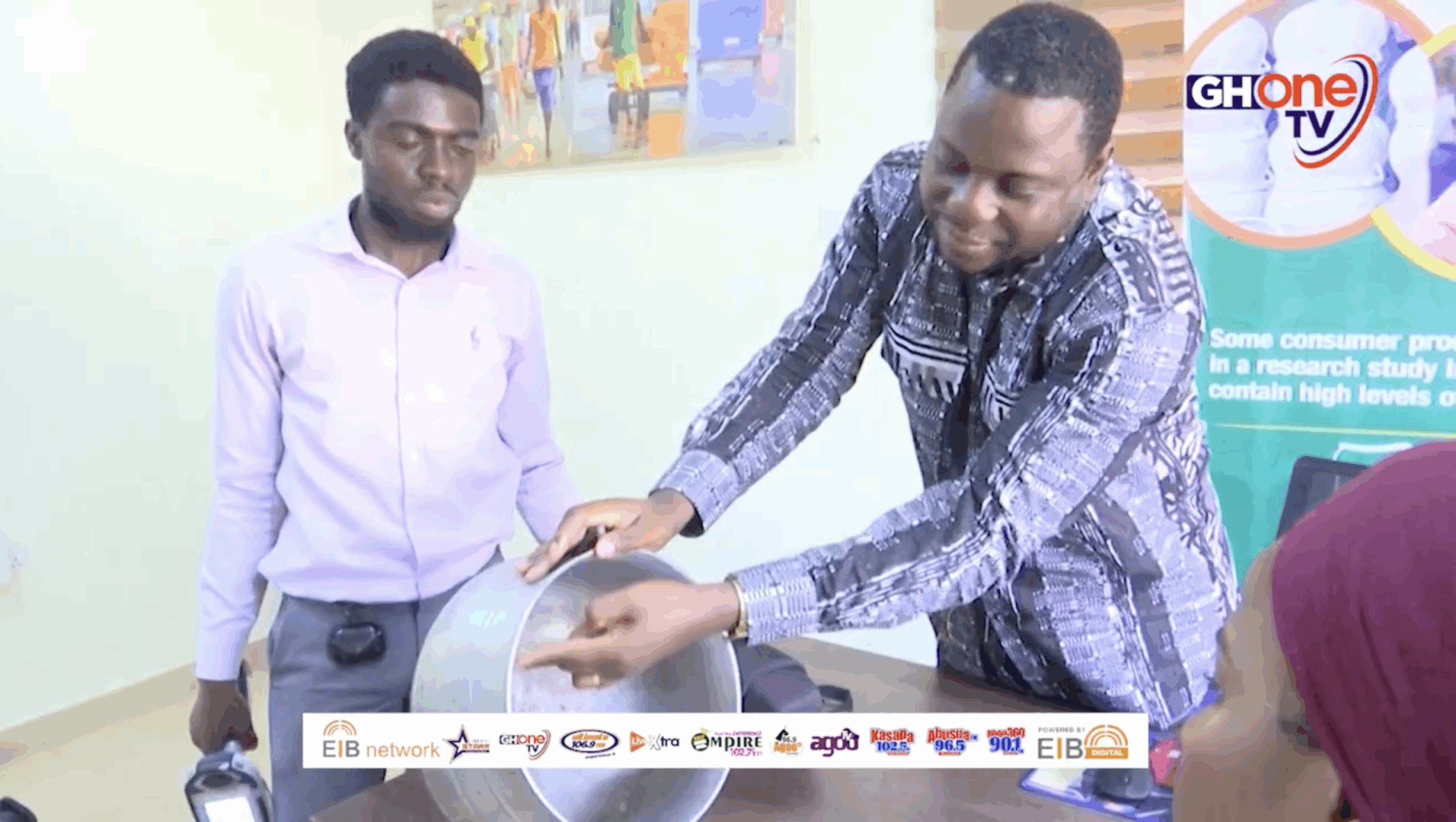
Metal cookware is a key source of lead exposure in Ghana. A new video news piece by Nadima Umar Uthman on GHOne TV, Tracing the Toxic Pot, looks at how government regulatory authorities, such as the FDA and Ghana Health Service, and Pure Earth Ghana are developing solutions to address lead contaminated aluminum cooking pots, which are molded from the collection of scrap metals and used in homes across Ghana.
In the documentary, Pure Earth’s Africa Regional Program Director Rev. Dr. Esmond Quansah shares that most manufacturers don’t realize the hazards of using lead-contaminated scrap metal. “When you cook in this cookware over time and the surface begins to wear away, lead particles can migrate into your food,” said Dr. Quansah. “Small doses of lead consumed regularly accumulate in the body and can impact health over time. By working directly with artisans, we can produce cookware that is safe for consumers without destroying their livelihoods.”
Lead contamination from informal scrap recycling and cookware production has been documented across West Africa, South Asia, and Latin America. Lead is a toxic heavy metal that poses significant risks to human health, especially for young children whose developing nervous systems are highly vulnerable. Lead poisoning is a severe and persistent public health issue, particularly in low- and middle-income countries (LMICs), where half of children are estimated to be lead poisoned. Elevated blood lead levels (BLL) have been linked to impaired cognitive development, lower IQ, and poor educational attainment. Since there is no medical treatment that can reverse the long-term impacts of lead poisoning, prevention strategies are crucial.
A blood lead level survey among children in Ghana conducted by the Ghana Health Service, Pure Earth and UNICEF Ghana in 2022/2023 found that out of 3,227 children tested, 1,725 (53.5%) had a blood lead level exceeding 5 micrograms per deciliter (µg/dL), the World Health Organization’s level requiring action. The region of Northern Ghana had the highest prevalence of lead poisoning: Out of 768 children tested, 79.7% had blood lead level exceeding 5ug/dl. Follow-up home based assessments to determine sources of exposure in Northern Ghana revealed that metal cookware, particularly inexpensive, locally produced pots, was found to contain lead.
The amount of lead that leaches out of any particular pot and into food is difficult to predict without specific testing, and there are currently no existing international standards for total lead content in metal cookware. However, 224 of the 293 (77%) cooking pots assessed during the study were found to contain levels of lead high enough to indicate the potential for a dangerous amount of lead to leach, based on Pure Earth’s on-going research (above 100ppm). Metal cookware items with elevated lead were found in all study areas, with the highest proportion in the Northern Region.

To address this, Pure Earth is working closely with Ghana Health Service, Environmental Protection Authority, and Ghana Standards Authority to assess the scope of lead exposure from cookware in Ghana. Using specialized tools like XRF analyzers, Pure Earth tests raw materials and finished pots to identify those with safe lead levels. Pure Earth, the Center for Global Development, the Ghana Health Service, and the University of Oxford have recognized the need for experimental evidence on the most effective strategies to reduce childhood lead exposure. A Randomized Controlled Trial (RCT) study is being implemented, with the aim of investigating the primary sources of lead exposure and evaluating household-level interventions to reduce children’s exposure in Yendi and Tolon districts of Northern Ghana. In addition, Pure Earth is supporting the Ghana Standards Authority in developing standards in the cookware manufacturing industry to help the produce lead-free cookware. These standards will soon be publicly available. Support for these projects come from the Lead Exposure Action Fund and are part of Pure Earth’s global program, Mitigating Lead Exposure in Low- and Middle-Income Countries.
Meanwhile, many families continue to use cooking pots every day, often unaware of the risks. Pure Earth’s work highlights a critical balance: protecting public health while preserving Ghanaian culinary traditions. Through research, testing, awareness raising, and collaboration, Pure Earth aims to reduce lead exposure, safeguard children’s health, and empower communities with safer alternatives.