About the Global Lead Program
Lead is one of the World Health Organization’s top 10 chemicals of public health concern. Lead poisoning affects more than 1 in 3 children worldwide, and 90% of these children are in low- and middle-income countries.
Pure Earth implements evidence-based solutions in collaboration with governments and trusted public health partners. Our five-phase approach draws on more than 25 years of experience protecting people from lead exposure in low- and middle-income countries, and is tailored to each local context, with phases that can overlap and be adapted to country-specific priorities.
Pure Earth’s 5-Phase Approach to Solving Lead Poisoning
1: Reveal the Crisis
Working with health agencies, implement nationally representative blood lead level (BLL) surveys to reveal the true prevalence, severity, and distribution of exposure. These surveys generate country-owned data that transforms lead poisoning from a modeled estimate into documented national evidence that governments can use to prioritize and act.
2: Pinpoint Exposure Sources
Conduct in-depth exposure source assessments to understand where lead is lurking. Everyday items including food, spices, paint, cookware, cosmetics, water, and soil are systematically tested in homes, markets, communities and at contaminated sites. Because exposure sources differ across cultural practices, industry norms, and market dynamics, this work ensures exposure mitigation efforts are based on context-specific evidence.
3: Reduce Exposure
Armed with data, develop and implement national strategies to detect and prevent exposure, remove contaminated items and soil, strengthen product testing and supply chain monitoring, improve regulations, and build enforcement capacity. Targeted exposure mitigation efforts are focused on the most critical sources of exposure, ensuring maximum impact.
4: Mobilize Collective Will
Educate communities, policymakers, peer organizations, and funders on the health and economic impacts of lead, and transparently share country-specific data, strategies, and results to generate the public and political will needed to reduce exposure.
5: Build Durable Systems
Build systems for lasting government ownership of lead poisoning prevention. Policies and practices are embedded into routine government operations, including national BLL monitoring, training health workers and inspectors, strengthening enforcement capacity, and enhancing civil society’s ability to hold governments accountable, ensuring sustained reduction of lead exposure over time.
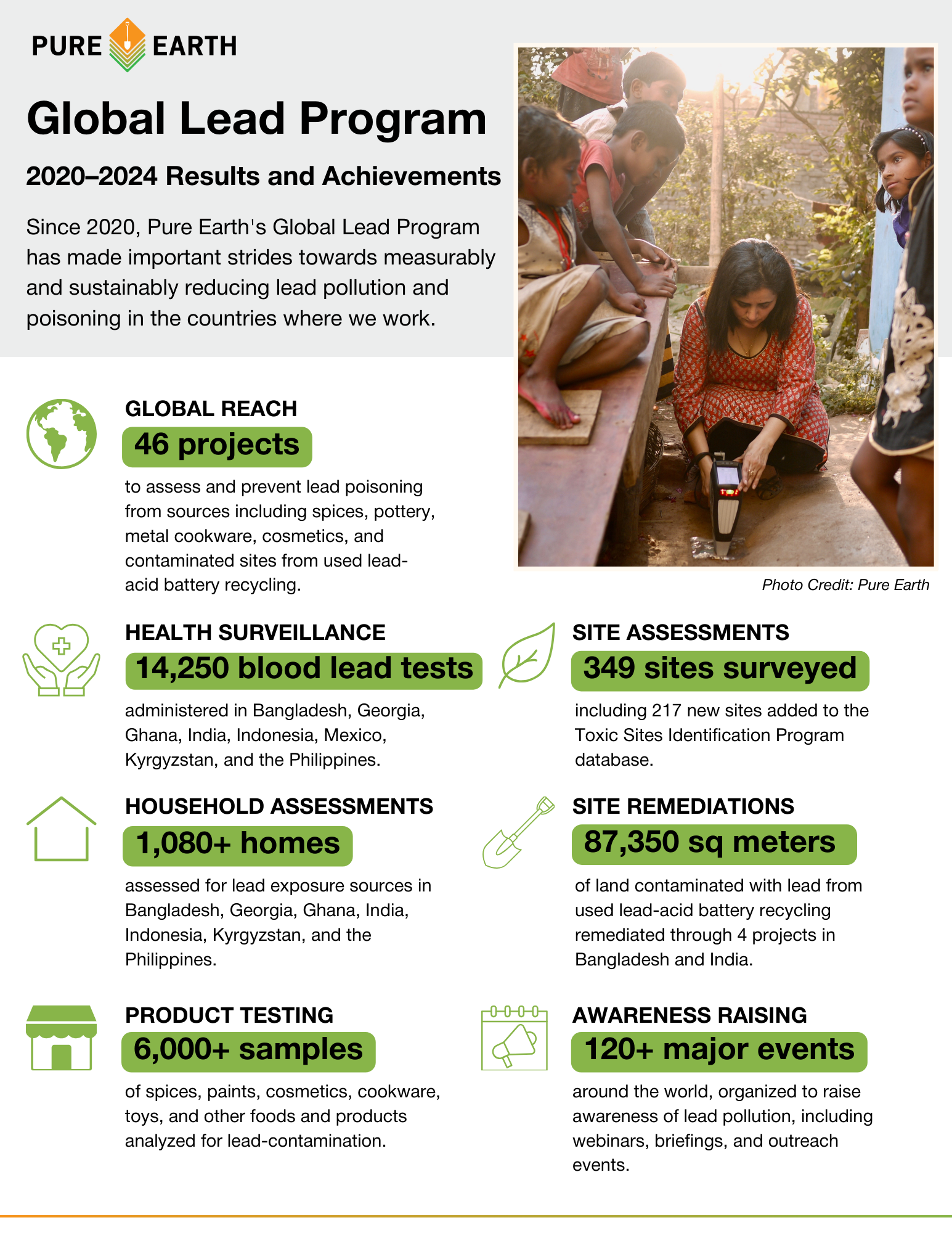
Global Lead Program Results and Achievements
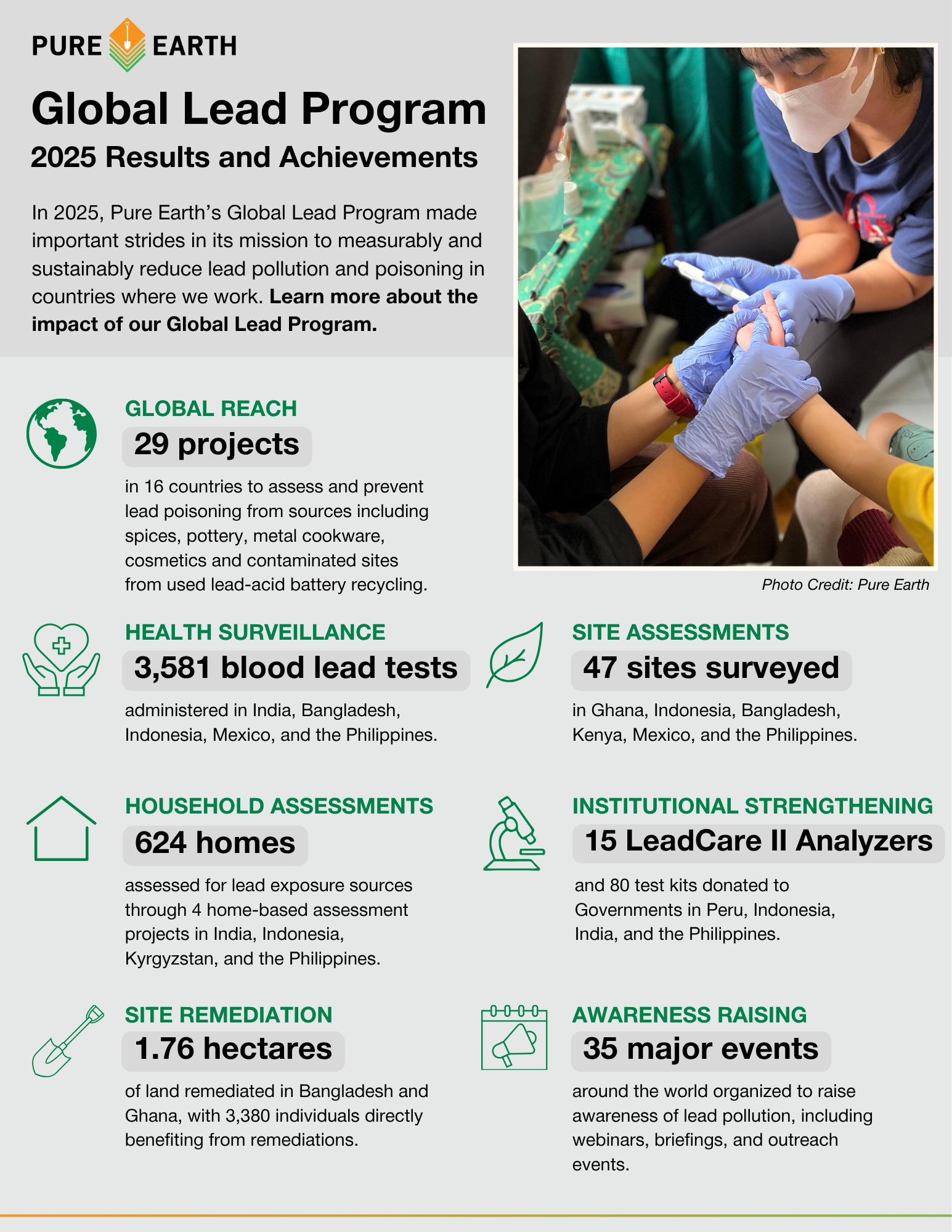
Over the past five years, Pure Earth has launched its integrated, nationwide approach in eight countries, supporting governments to make real progress against lead poisoning by uncovering the true scale and sources of exposure, developing national mitigation plans, and eliminating the most critical exposure sources. This comprehensive approach builds on 25 years of experience, implementing 50 successful lead exposure reduction projects across more than 30 countries since 2020.
Learn more about the impact of our Global Lead Program with our Global Lead Program Results and Achievements Reports.
2025
2024
2020-2023
Pure Earth's 5-Phase Approach in Action
Eliminating Lead-Contaminated Spices in Georgia
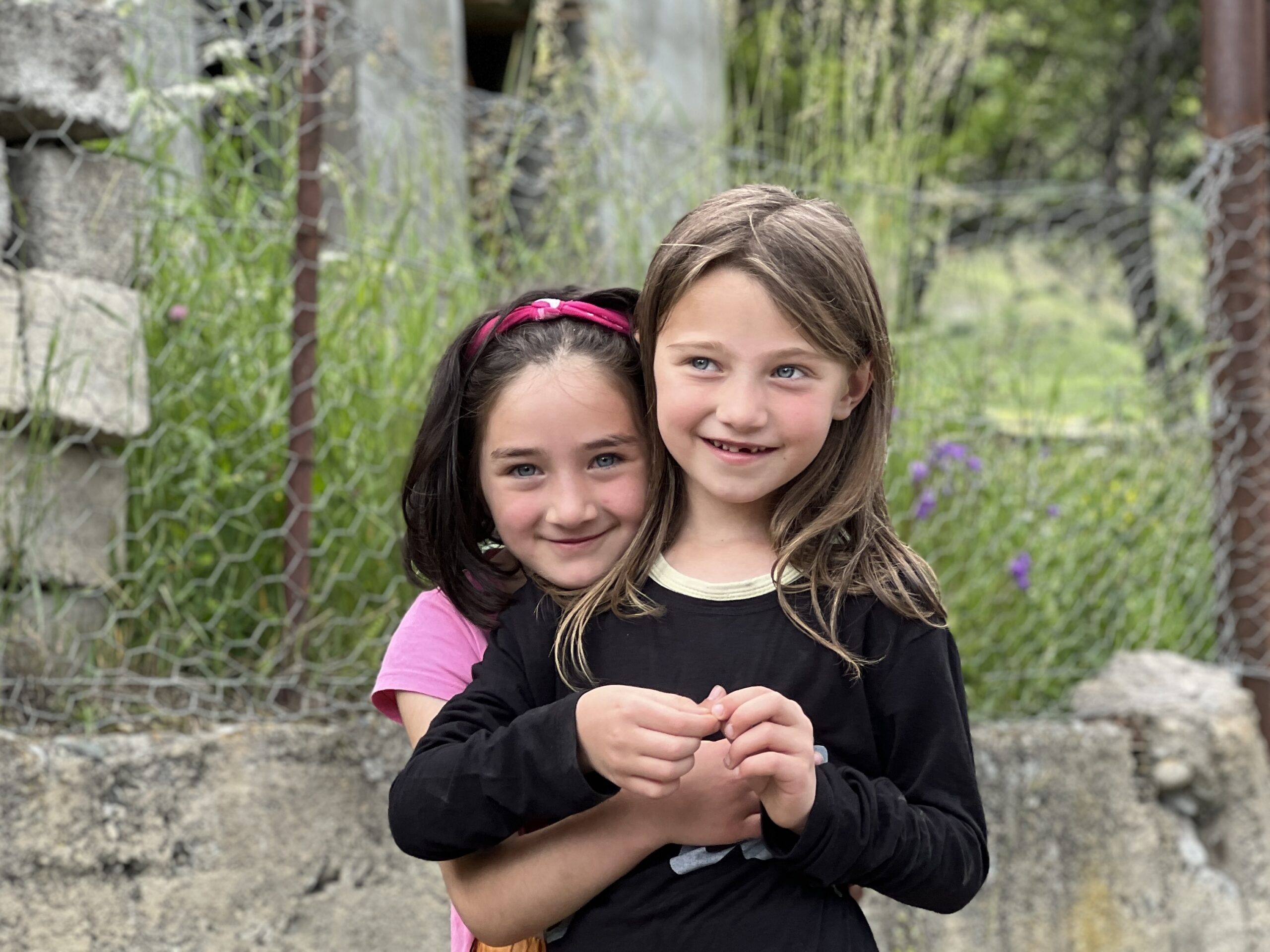
In 2018, a national BLL survey conducted with UNICEF revealed that 41% of children had elevated blood lead levels. Our assessments of exposure sources identified contaminated spices as a leading driver of exposure. The government and its partners responded decisively: tightening and enforcing food safety regulations. Post-intervention testing of 700+ spice samples showed a 99% reduction in lead-contaminated spices. By 2023–2024, BLL surveys documented a 75% drop in average BLLs among children and pregnant women in the hardest-hit regions.