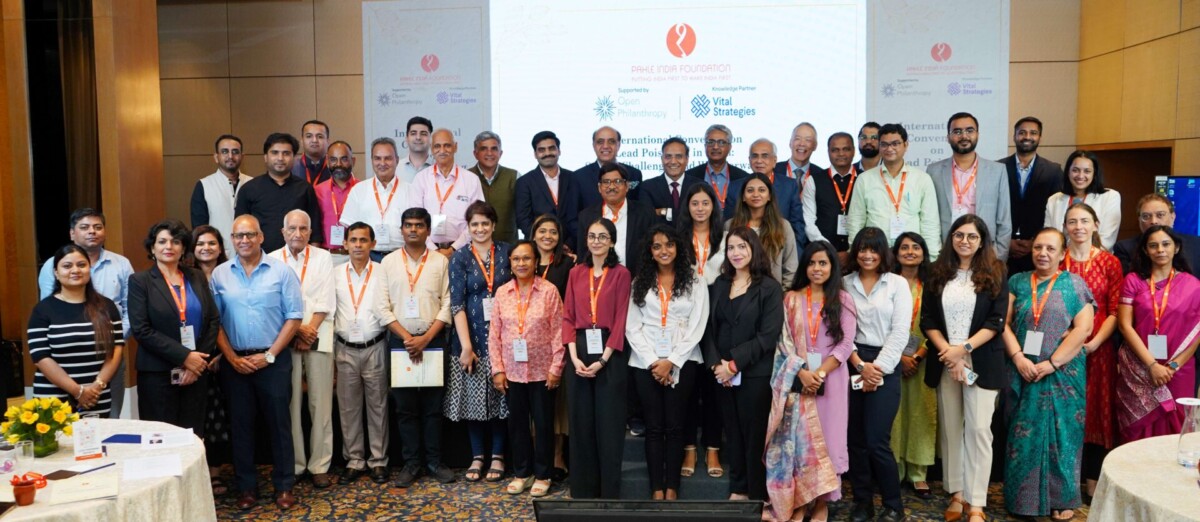

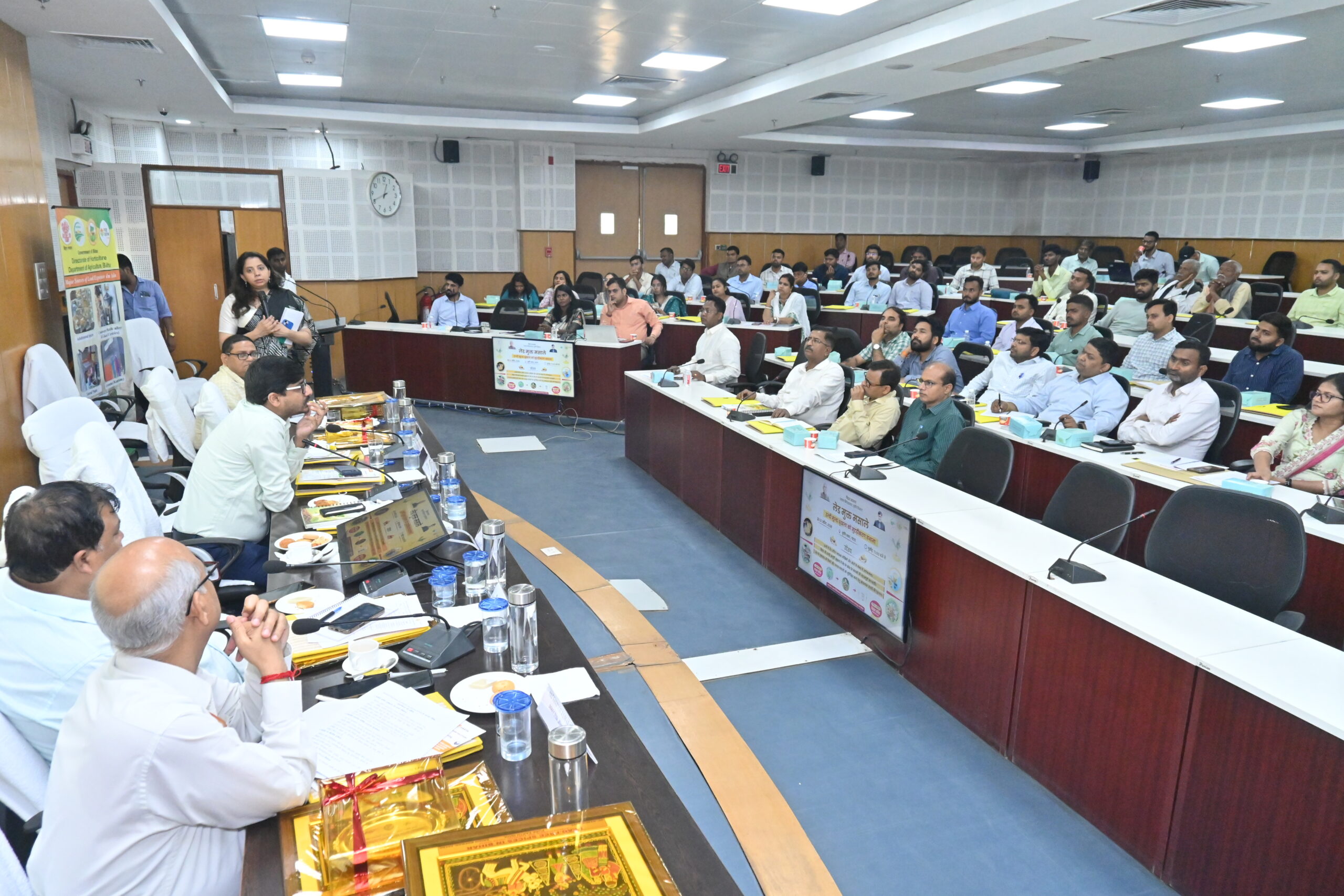
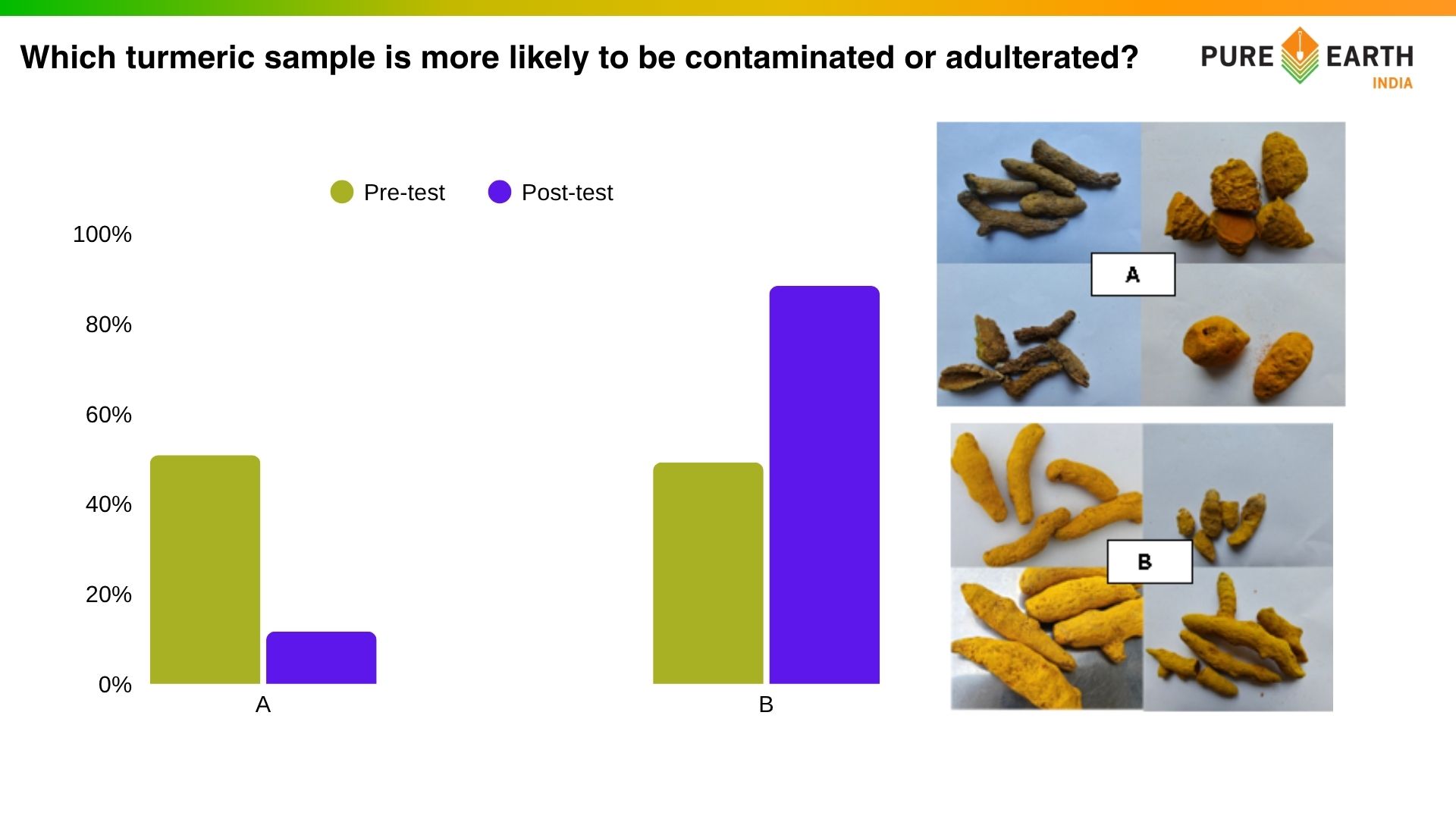
When 111 district horticulture officers, food safety officials, and supply chain stakeholders gathered in Patna, Bihar on April 2, 2026, only half of them could accurately identify a potentially adulterated turmeric sample by sight. By the end of the day, nearly nine in ten could. That shift — from 49% accuracy to 88% in a single session — is a clear signal that targeted, evidence-based training can move the needle on one of Bihar’s most urgent and least visible public health problems.
The workshop, convened by the Directorate of Horticulture, Department of Agriculture, Government of Bihar, in collaboration with Pure Earth India, was designed to build awareness and institutional capacity around lead adulteration in turmeric. A structured pre- and post-assessment was conducted among 78 participants.
The results provide a compelling snapshot of how evidence-based training can change perceptions: 80% of post-test respondents reported a significant change in their understanding of lead exposure risks, and 84% expressed increased confidence in their ability to initiate or support lead mitigation efforts.
The Scale and Sources of Lead Exposure in Bihar
Bihar recorded the highest average blood lead level in India in the 2022 CSIR–NITI Aayog report — 10.42 µg/dL. In a subsequent survey, Pure Earth India tested 697 children and 55 pregnant women across eight districts. The findings were stark:
- Widespread exposure: 90% of children under 5 years and 80% of pregnant women tested recorded BLLs ≥5 µg/dl,
- High-risk levels: 20% of children and 22% of pregnant women had BLLs ≥10 µg/dL.
- Population average: Overall mean BLL was 7.6 µg/dL.
- Urban pregnant women most affected: Average BLL reached 14.9 µg/dL — nearly double the overall mean, which indicates a high-risk of fetal transmission since there is no placental-fetal barrier to lead transport.
At this scale, the implications of lead exposure are profound. Exposure to lead, particularly in early childhood, inflicts irreversible harm on the developing brain. It diminishes cognitive abilities, reduces learning capacity, and undermines school performance. These effects ripple outward, lowering productivity and limiting opportunities across a lifetime. Left unaddressed, the burden of lead exposure threatens Bihar’s future workforce and overall development trajectory.
For years, lead exposure has been understood primarily as an industrial problem — the consequence of battery recycling, smelters, and contaminated soil. But research shows that lead-adulterated spices are a significant and often overlooked source of lead exposure in South Asia. Household-level environmental assessments by Pure Earth India and partners found that over 50% of spice samples tested exceeded regulatory limits. Turmeric showed the highest contamination, with some samples exceeding permissible limits by 400 times. A multivariate analysis also found a statistically significant association between lead levels in household spices and elevated blood lead levels in children.
Even more recent pan-India market studies by Stanford University’s Project Unleaded continue to point toward high lead adulteration in turmeric in the state, with all three cities in Bihar selected for the study showing high levels of adulteration. After adjusting for age, sex, and demographic factors, each doubling of lead content in spices was associated with 1.35 times higher odds of a child having a BLL ≥10 µg/dL (aOR=1.35, 95% CI 1.17–1.58).
Critically, this contamination is not accidental. Studies indicate intentional adulteration using lead chromate, a chemical added during polishing and processing to enhance the color and visual appeal of turmeric. The adulteration seems to be mostly concentrated in whole dried turmeric roots and loose powders. This points to the root cause being market-driven adulteration, requiring a fundamentally different response strategy.
What We Learned: Gains and Gaps
The Directorate of Horticulture’s initiative to conduct a cross-sectoral workshop marked a strong step towards coordinated action on lead adulteration in spices.
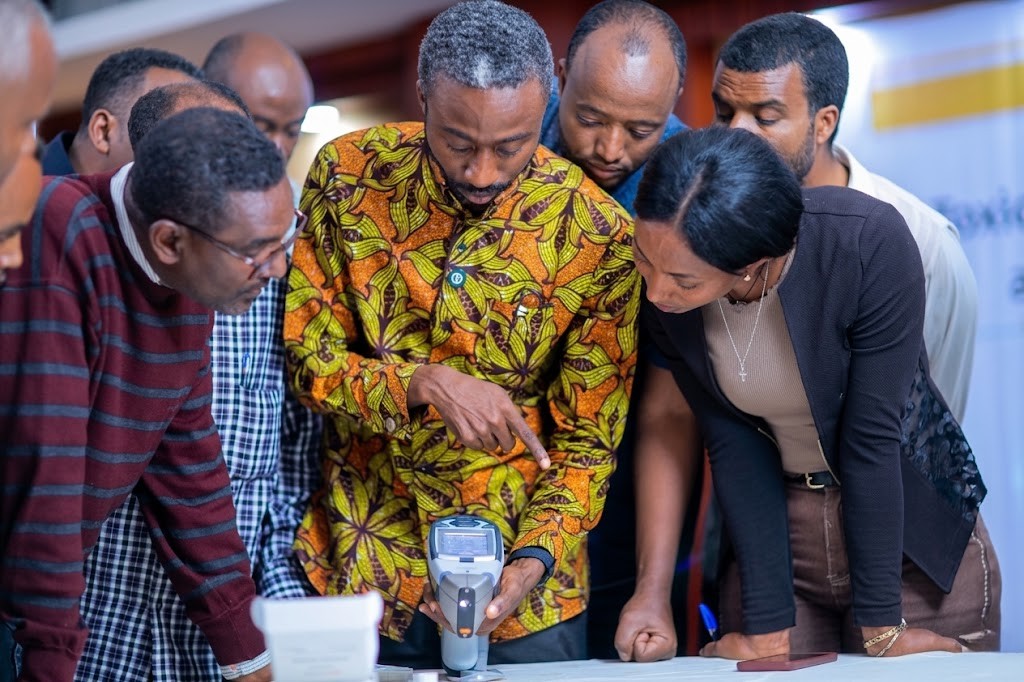
Participants, including district horticulture officers, health officials, food safety agencies, and farmer producer organizations (FPOs), which function as agribusiness units that procure, process, and market turmeric across the value chain, were trained on the health risks of lead exposure, its scale and the pathways of lead adulteration in turmeric. The participants were introduced to the X-ray fluorescence machine that is used to detect and measure lead. The workshop also included training on visual cues that can help detect lead chromate adulteration in dried turmeric roots and discussion on approaches to addressing adulteration through the value chain.
The pre- and post-assessment was designed to tell us areas where supply chain stakeholders could quickly grasp and apply new information, and where persistent gaps would require more targeted, sustained communication.
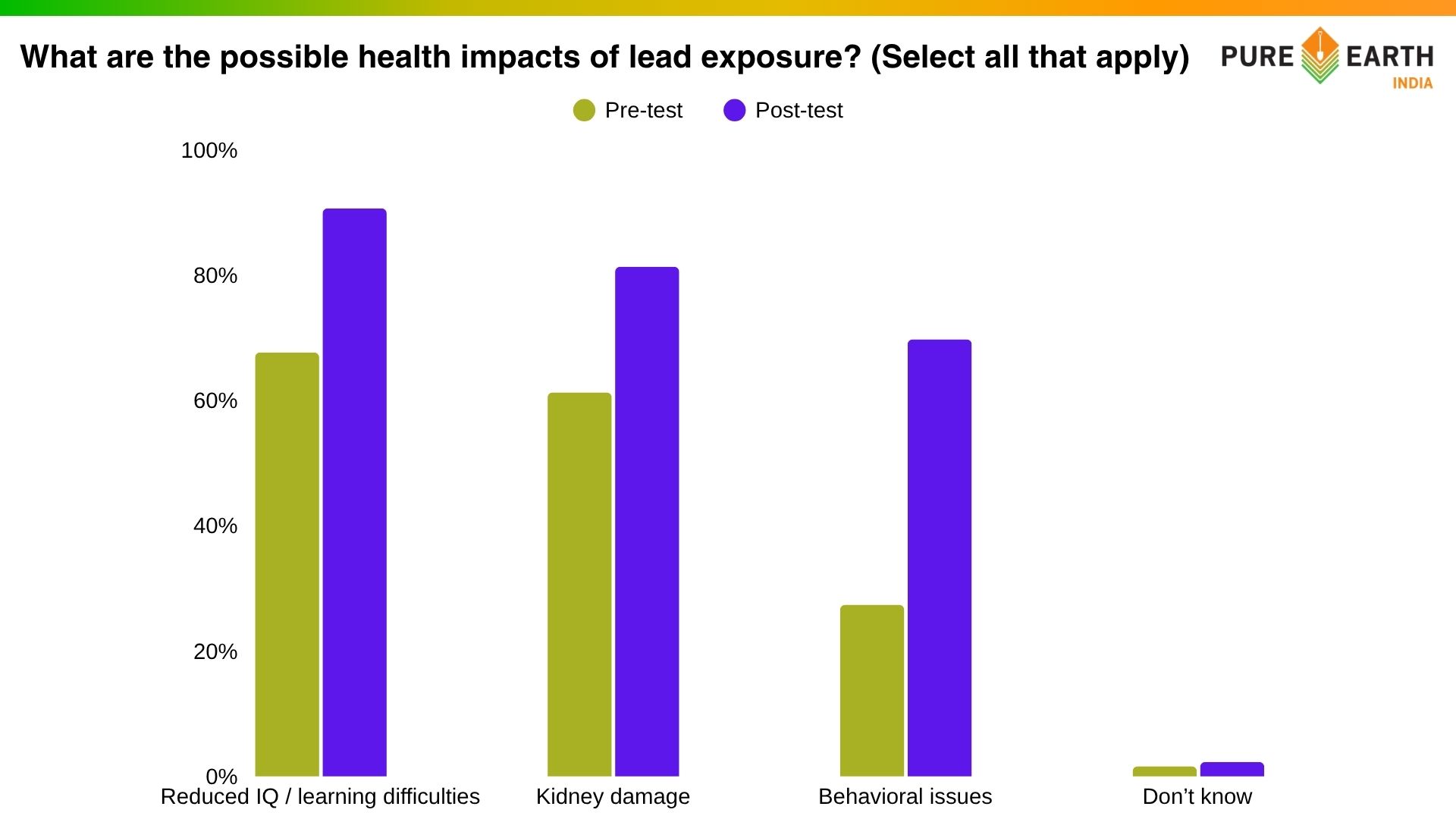
The gains were substantial. Recognition that there is no safe level of lead exposure rose from 30% to 67%. Awareness of lead’s health impacts — reduced IQ, kidney damage, behavioural issues — increased sharply across all categories. Participants also demonstrated broader and more accurate identification of pathways, including contaminated food, battery recycling, industrial emissions, and household products.
The ability to visually identify adulterated turmeric improved from 49% to 88%, a significant increase. People were quick to learn and apply the visual detection skill, identifying brightly coloured or unusually shiny turmeric as a potential indicator of lead chromate adulteration. This is a practical cue that can be communicated to processors and traders as a basis for rejection of adulterated turmeric.
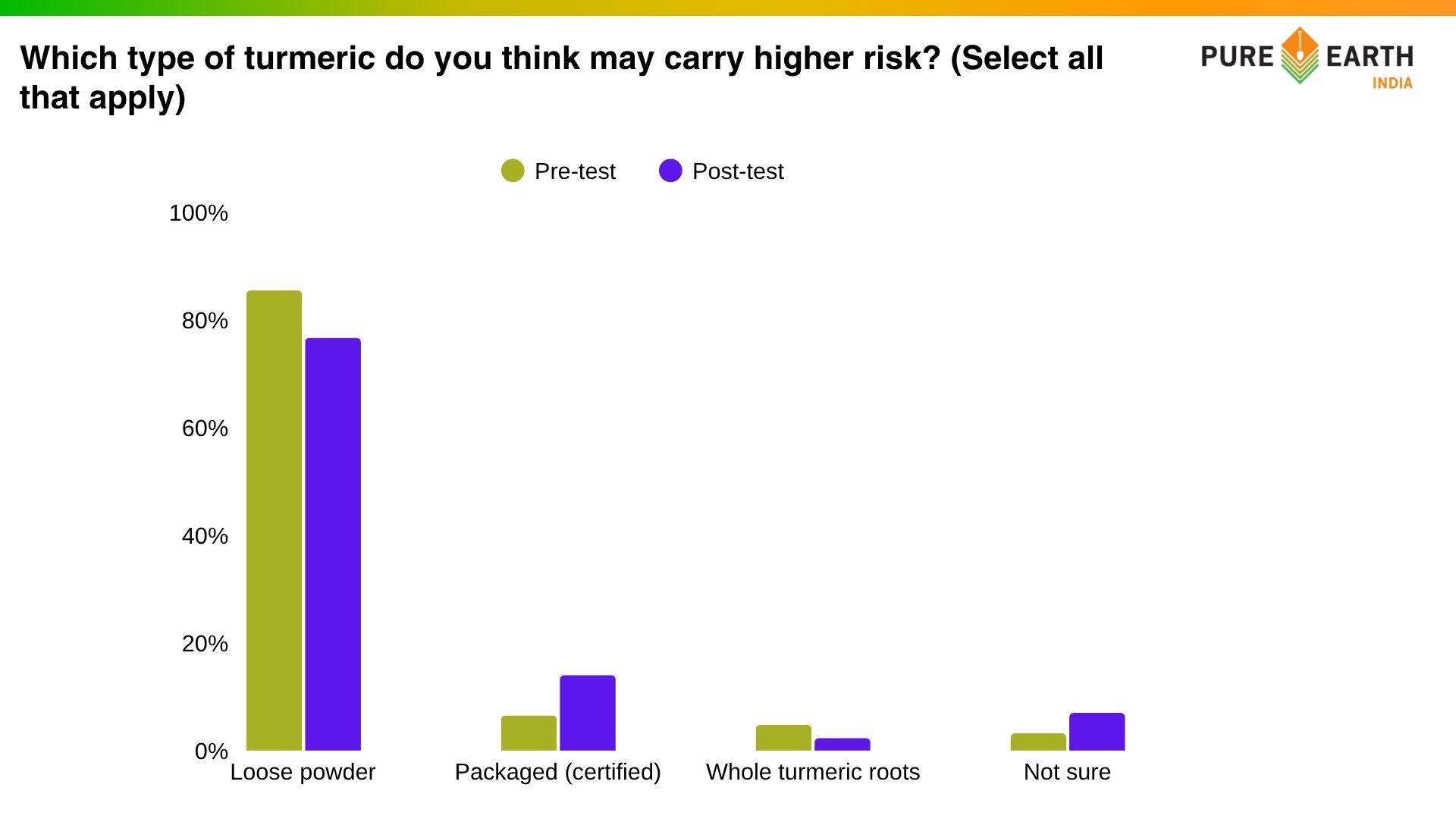
Through this exercise we also identified gaps or areas that require sustained training. For instance, the assumption that loose powder carries higher risk than whole dried roots proved persistent, despite evidence to the contrary. Shifting this bias will require sustained communication, particularly among consumers, where the preference for powder over root could itself be a meaningful risk-reduction behaviour.
Awareness of lead chromate and the risks it poses also remained limited. Given how central it is to the adulteration problem, this is a priority area for future messaging and clearer, accessible information on its health risks.
What this means for Bihar
These learnings are already shaping Pure Earth India’s next steps. The workshop provides a strong baseline to understand what key stakeholders currently know about lead exposure, what type of evidence they need to act decisively and how to develop targeted intervention strategies.
Pure Earth India is now working with the Department of Food & Safety, Bihar to roll-out interventions in Patna, Gaya, and Samastipur, focused on inspection drives, inter-state supply chain tracking, and promoting communication on the risks of adulterated turmeric to stakeholders across the value chain and the consumers.
Bihar is laying out the groundwork for a scalable and sustainable model. Getting lead out of turmeric is not just a food safety issue — it is one of the highest-impact opportunities available to protect the health and futures of Bihar’s children.