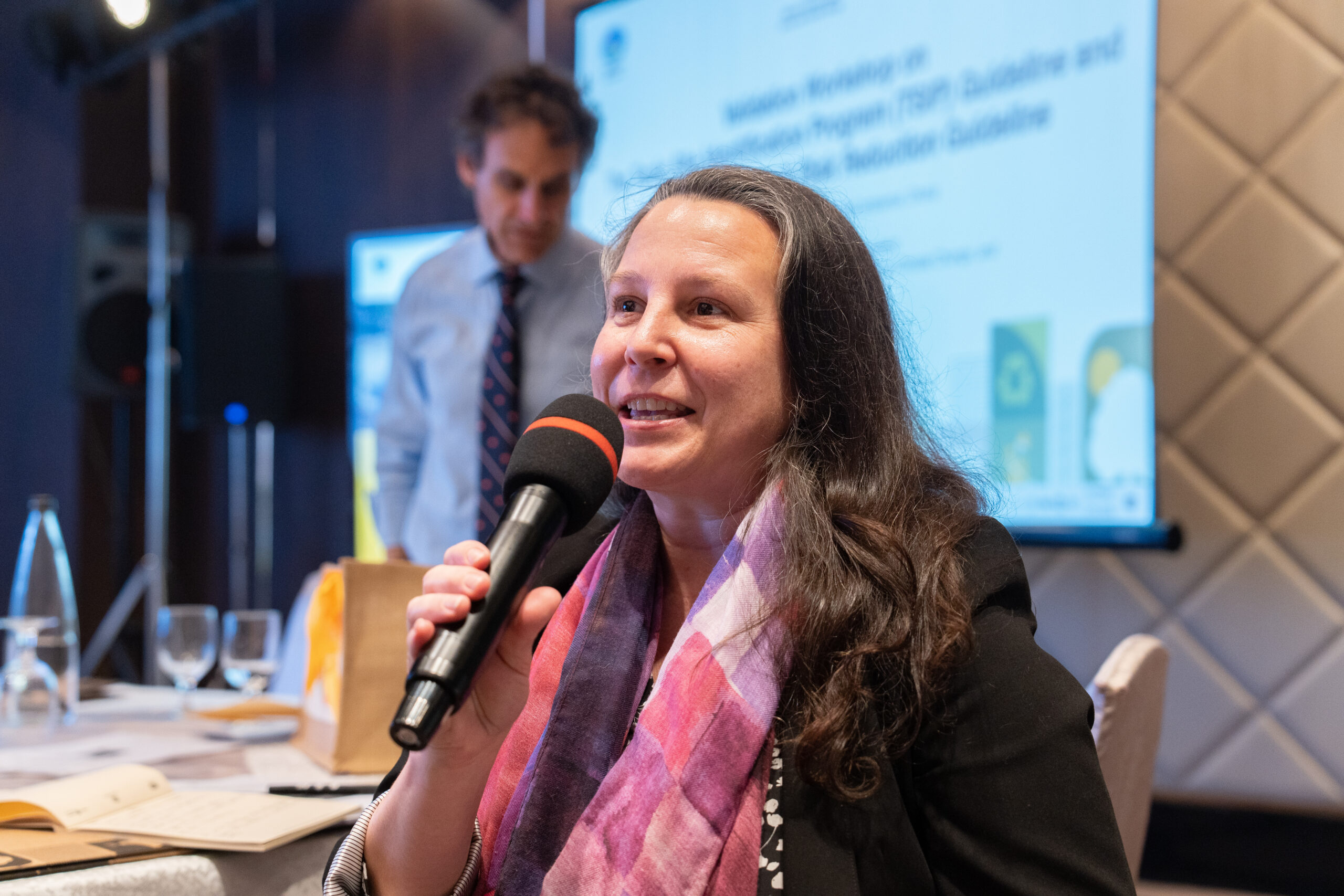
Pure Earth brought together representatives from PAHO, governments, academia, and the productive sector in Brazil, Colombia, Mexico, and Peru to connect experiences and place prevention at the center of the regional agenda.
Latin America’s ability to prevent lead exposure depends largely on how it connects available knowledge with the institutions and people who can address its sources. With this perspective, on October 20, 2026, Pure Earth convened the webinar “Latin America United Against Lead: Experiences to Protect Health and the Environment,” as part of International Lead Poisoning Prevention Week.
With participants joining from 13 countries, the event broadened the reach of a conversation that brought together experiences from Brazil, Colombia, Mexico, and Peru and perspectives from sectors with complementary responsibilities. Its regional value lay in creating a space for national experiences to contribute to a shared conversation about moving from detection to prevention. For Pure Earth, this coordination is part of an approach that connects evidence, partnerships, and solutions tailored to each local context.
A Regional Conversation Across Sectors
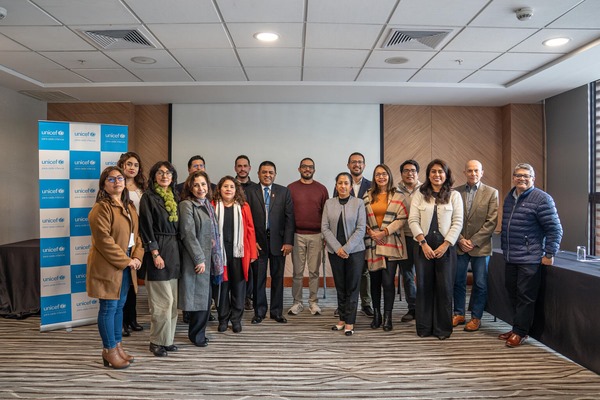
The opening session was led by Natalia Machuca, Director of Pure Earth’s Latin America Regional Program, and Luis Francisco Sánchez Otero, Regional Advisor on Chemical Safety at the Pan American Health Organization and World Health Organization (PAHO/WHO). This segment placed lead exposure prevention within a regional public health perspective and raised the importance of coordination across sectors to sustain responses.
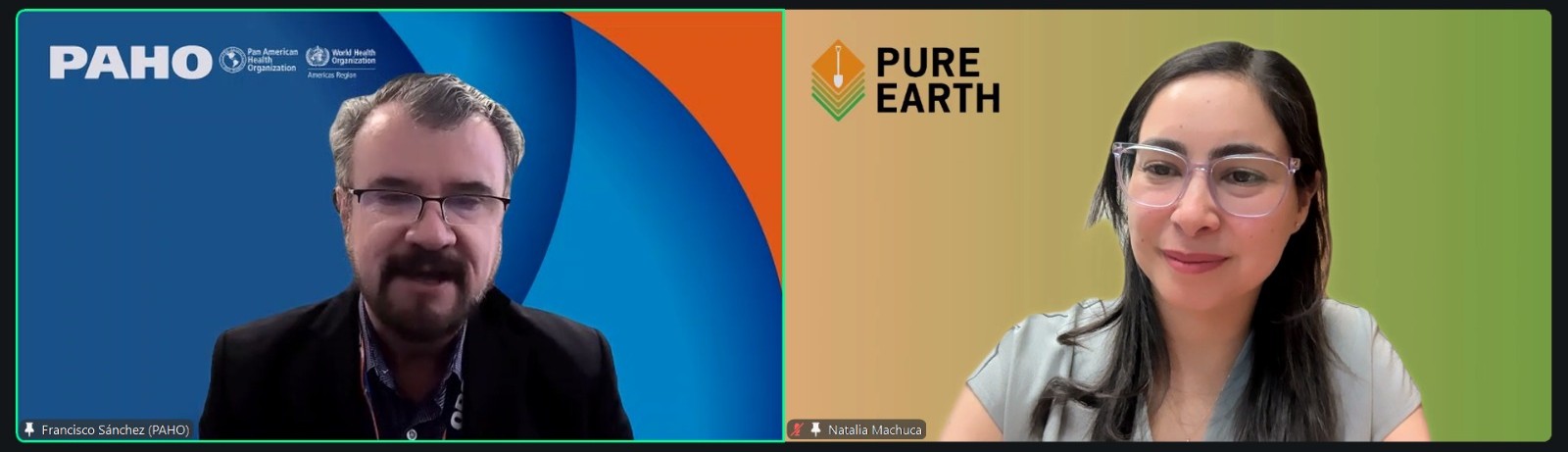
Natalia Machuca and Caroline Baylor, Pure Earth’s Senior Program Manager for Latin America, co-moderated the event. The session featured simultaneous interpretation into English and Portuguese, facilitating exchange between countries and broadening access to the conversation.
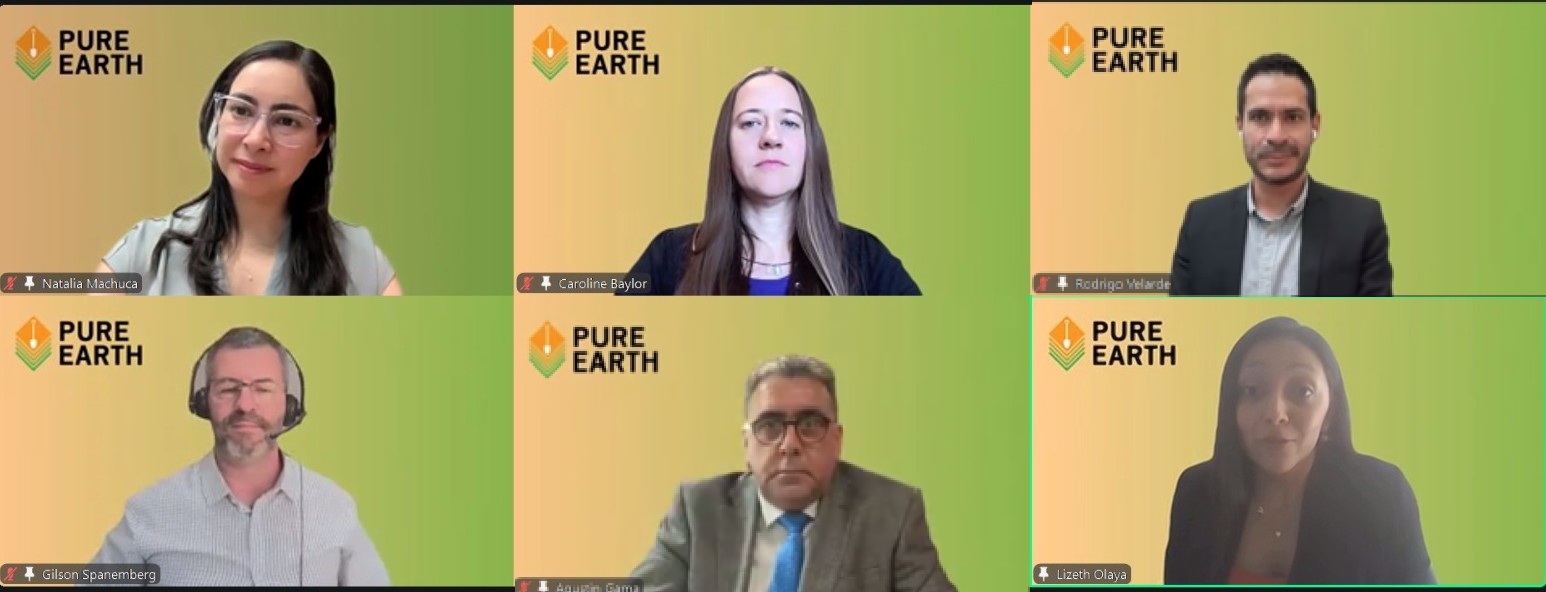
The perspectives of Pure Earth’s country offices were represented by Agustín Gama, Director of Pure Earth Mexico; Gilson Spanemberg, Program Manager at Pure Earth Brazil; Lizeth Olaya, Director of Pure Earth Colombia; and Rodrigo Velarde, Director of Pure Earth Peru. Their participation connected each country’s context with a common question: what progress, challenges, and opportunities should guide the transition from identifying exposure to effectively preventing it?
Four Experiences Connecting Evidence with Action
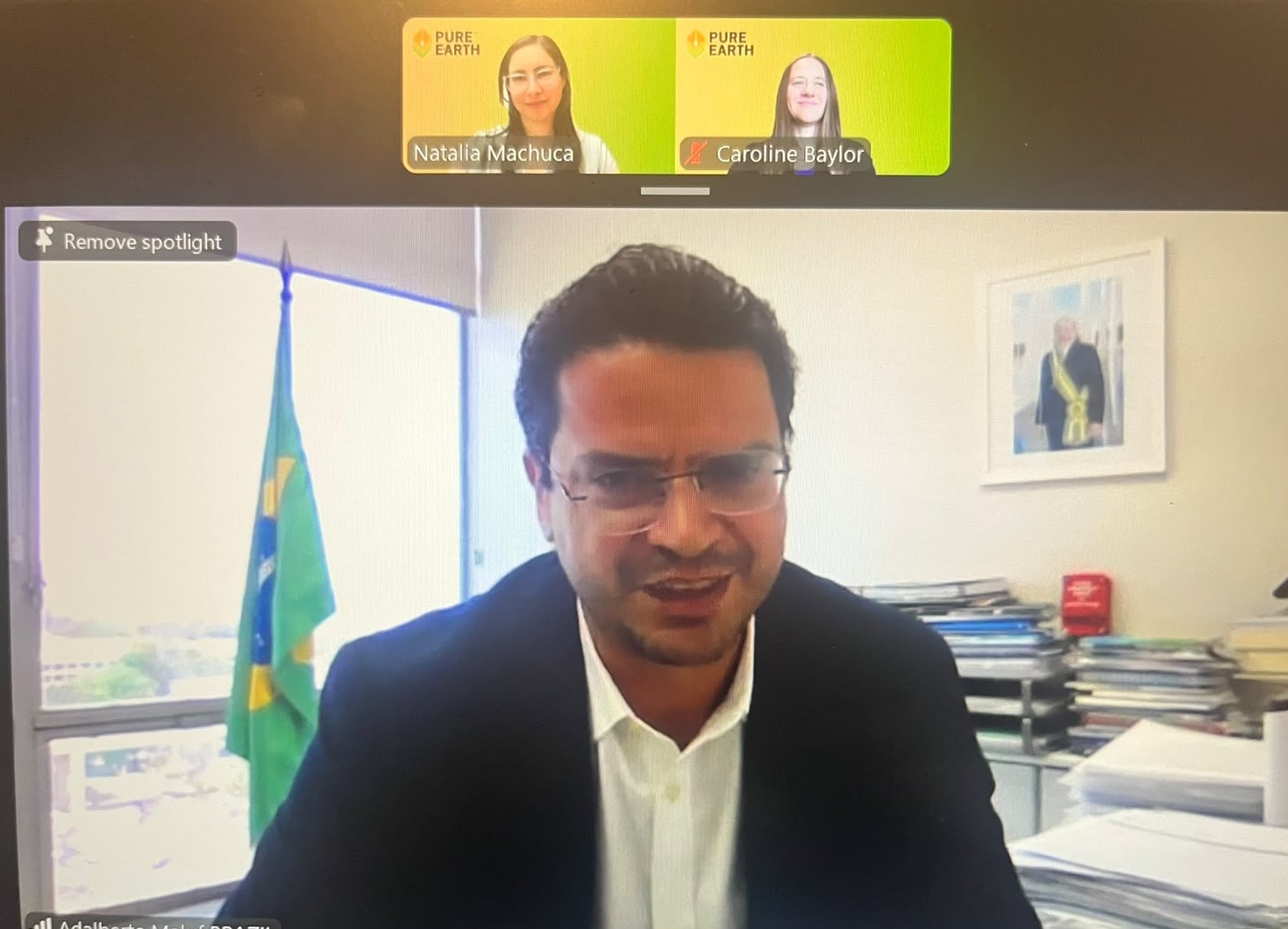
Brazil’s participation brought the perspective of Adalberto Maluf, National Secretary for Urban Environment, Water Resources, and Environmental Quality at the Ministry of the Environment and Climate Change. The segment addressed coordination across sectors to prevent lead exposure, including discussion of its presence in paint. This dimension of the agenda presents a central task for the region: connecting knowledge about risks with institutional coordination and public policy decisions.
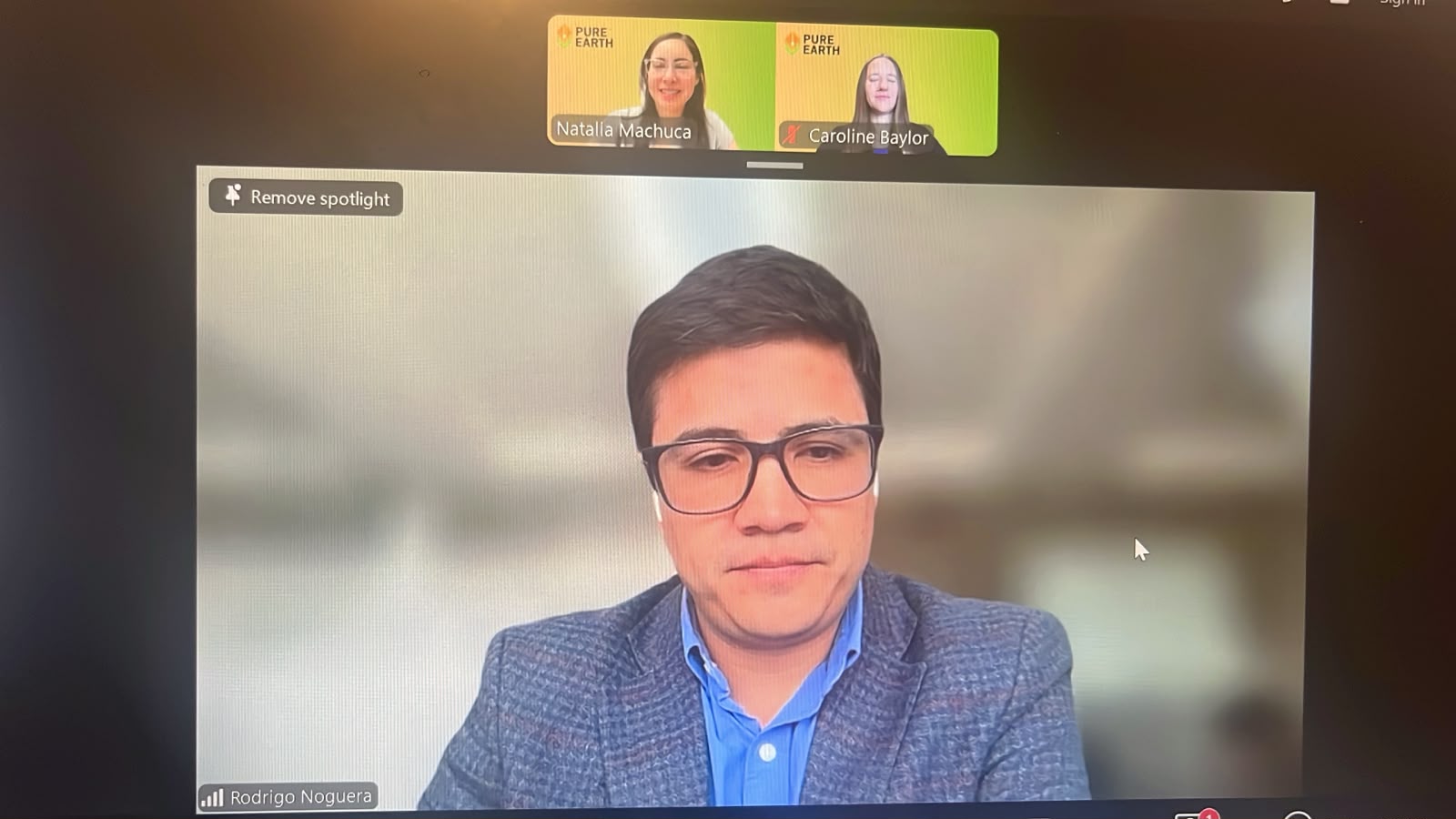
From Colombia, Rodrigo Noguera Fajardo, Director of Planning and Management Control at the Pasto Chamber of Commerce, shared the experience of the partnership between that institution and Pure Earth in southern Nariño. The work with automotive workshops and recyclers connects the identification of risks associated with lead-containing materials with mitigation measures, training, and recommendations to promote safer practices. This experience offers a local perspective on the productive sector’s role in protecting workers, families, and communities.
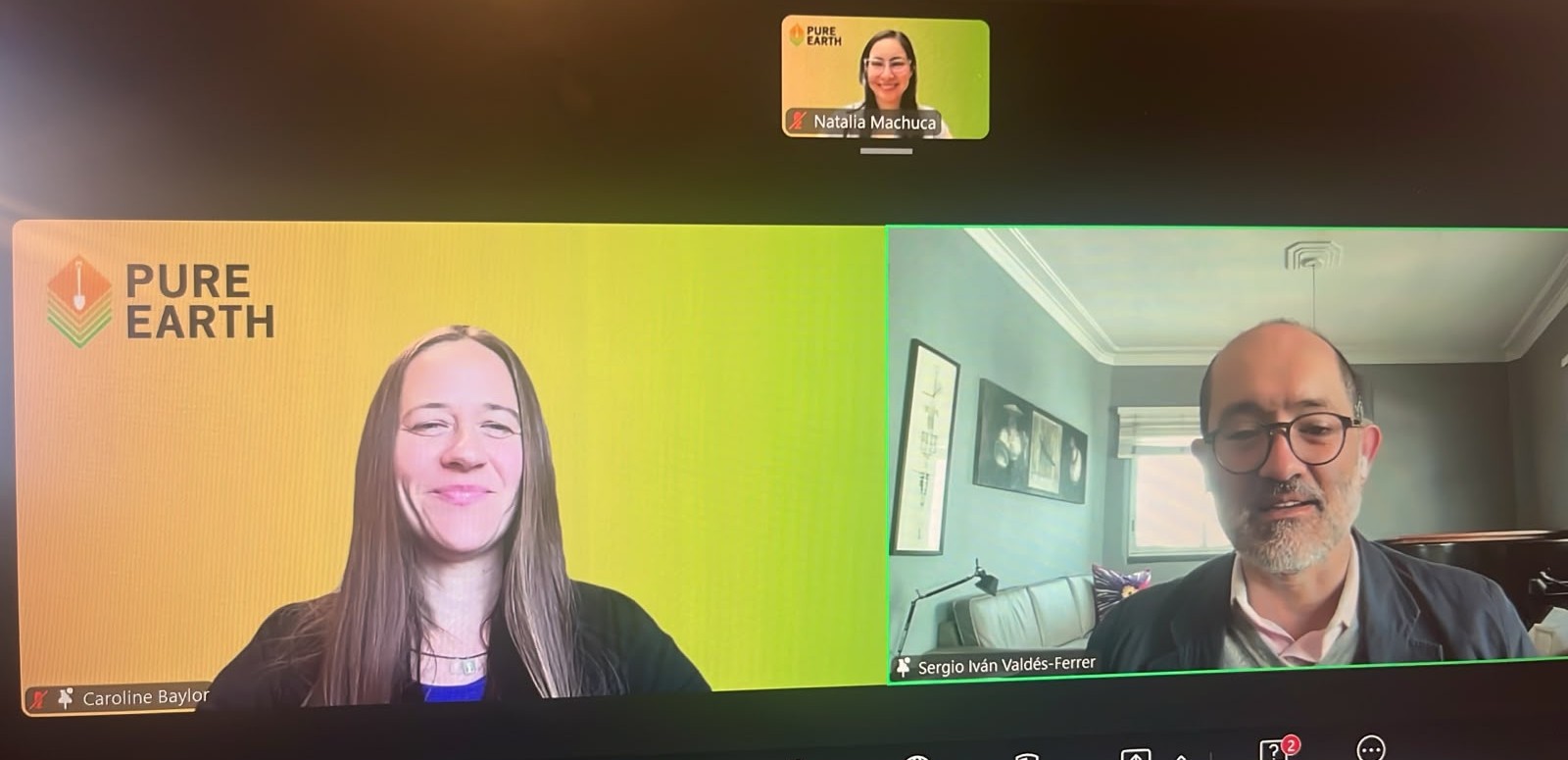
Mexico was represented by Dr. Sergio Iván Valdés-Ferrer, Principal Investigator at the Salvador Zubirán National Institute of Medical Sciences and Nutrition. His participation brought research and health perspectives to a conversation about the evidence, partnerships, and actions needed to strengthen prevention and protect the most vulnerable populations. This approach connects knowledge generation with the capacities that health professionals and institutions need to respond to lead exposure.
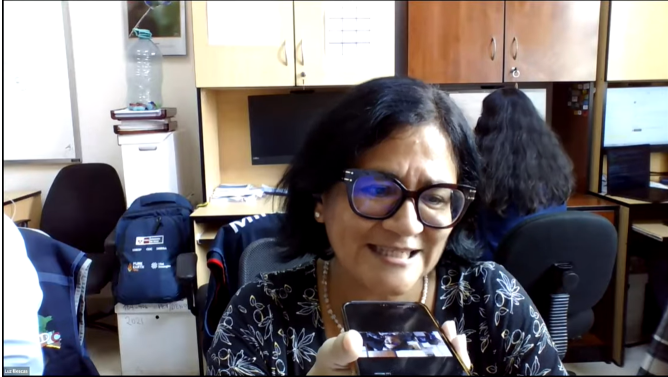
Peru’s perspective was presented by Luz Marina Illescas Ruiz, a public health specialist and member of the Technical Team of the Functional Health Unit for Exposure to Heavy Metals and Other Chemical Substances within the Ministry of Health’s Directorate for the Prevention and Control of Noncommunicable, Rare, and Orphan Diseases. Her participation placed the challenges and opportunities of a comprehensive and sustainable health response on the agenda, along with the connection between detecting exposure and taking preventive action.
The Value of a Connected Response
Bringing these perspectives together highlights that prevention requires continuity across different areas of action. Knowledge of exposure sources should help guide decisions; institutions need the capacity to put those decisions into practice; and measures must be sustainable within the communities and sectors where exposure occurs.
Latin America’s diversity makes this exchange especially valuable. One country’s experiences can offer useful questions, tools, and lessons for others, provided they are adapted to local realities. In this process, Pure Earth contributes its capacity to bring stakeholders together, connecting the work of its country teams with partners in health, the environment, academia, and the productive sector.
The closing call to action invited governments, academic institutions, social organizations, communities, and businesses to identify a concrete action within their areas of responsibility: generating evidence, strengthening capacities, improving practices, or advancing prevention policies and partnerships.
Continuing this conversation means translating those connections into sustained decisions and actions. For Pure Earth, connecting the region’s capacities is a way to expand the reach of solutions and help more children, families, and communities live in healthy environments.
Watch the Webinar
Explore the experiences of Brazil, Colombia, Mexico, and Peru and the perspectives of those helping to strengthen lead exposure prevention in Latin America.
Watch the full recording: