KLIK DI SINI untuk membaca artikel dalam Bahasa Indonesia.
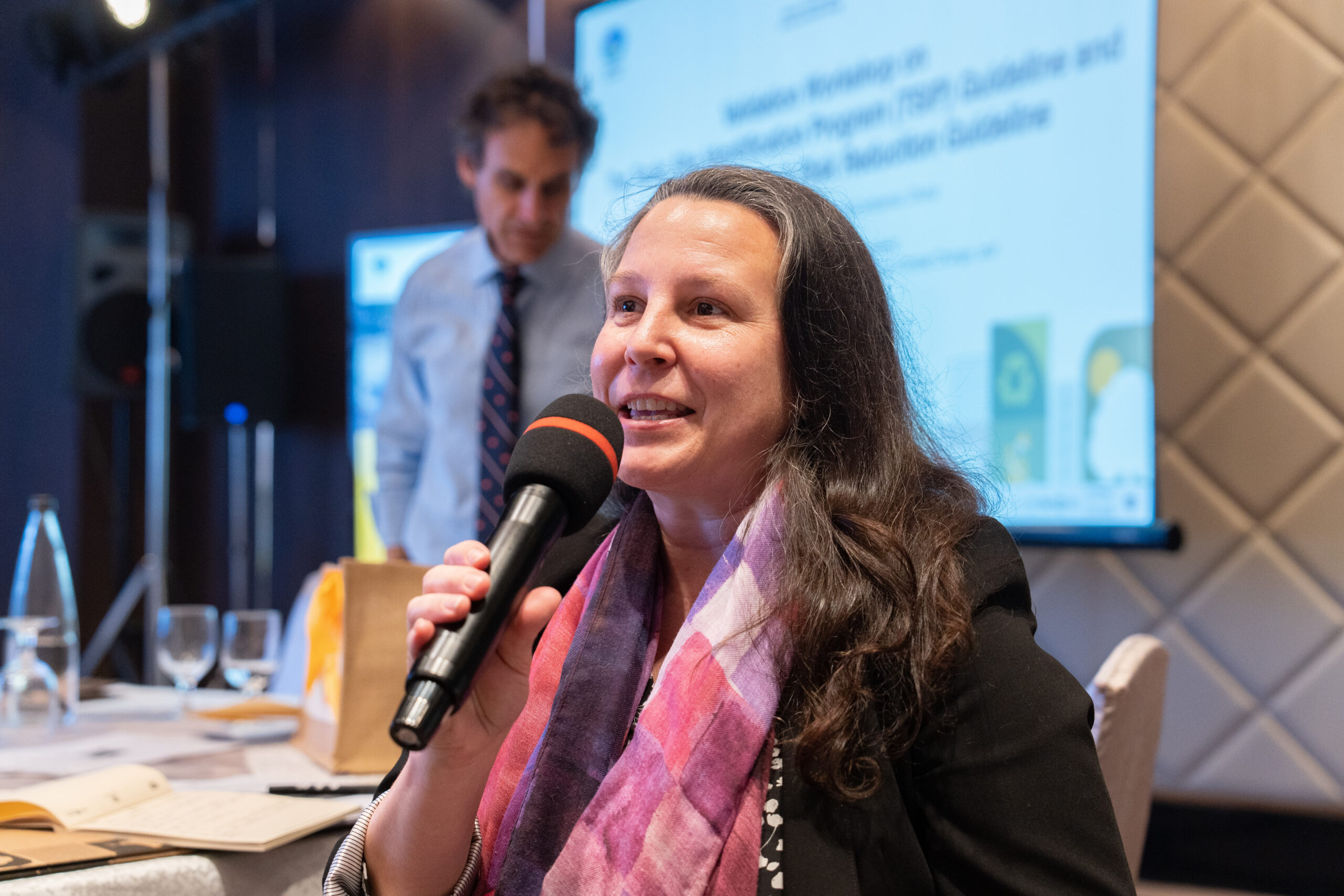
Prof. Ir. IDAA Warmadewanthi, ST., MT., PhD, Head of the Center for Sustainable Infrastructure and Environmental Research at the Institut Teknologi Sepuluh Nopember (ITS) Surabaya, believes that the tension between environmental health concerns and economic needs remains one of the biggest challenges in lead waste management in Indonesia. This is especially evident in the recycling of used lead-acid batteries (ULAB), much of which is still carried out informally without adequate environmental and health safeguards. In this interview, she explains why a circular economy approach could offer a way forward—and what needs to happen to make ULAB recycling both safe and sustainable.

“I saw it myself—a worker melting lead ingots right next to the stove where his wife was cooking,” recalled Prof. Ir. IDAA Warmadewanthi, ST., MT., PhD., describing a household-scale metal smelting operation she visited in Pesarean Village, Tegal Regency, back in 2015.
“On one hand, these workers were incredibly hardworking and determined to earn a living for his family. But on the other hand, what they were doing was wrong and posed serious risks to health,” she said.
According to the professor affectionately known as Prof. Wawa, this tension, between protecting environmental health and meeting economic needs, is one of the defining challenges in how Indonesia manages lead waste, including the largely informal practice of ULAB recycling.
After decades researching hazardous and toxic waste management, Prof. Wawa has spent much of her career grappling with one fundamental question: How do we recover valuable materials from waste without compromising human health?
“Follow the Garbage Truck”
Prof. Wawa’s introduction to the world of waste began at a crossroads, between her parents’ wishes and her own personal passion. Though encouraged to pursue medicine, she chose engineering instead, drawn to what she saw as a more challenging path.
“I ended up choosing environmental engineering at ITS, which was then called Sanitary Engineering. So even though I didn’t become a doctor, the field I chose was still connected to health. Not just human health, but environmental health too,” she recalled.
It was on campus that she first encountered the realities of urban waste up close. “There used to be a joke that ITS stood for ‘Ikuti Truk Sampah’ (Follow the Garbage Truck). If you followed a garbage truck in Surabaya, you would end up at ITS because the city’s landfill was located right next to our campus.”
As a student, Prof. Wawa grew accustomed to interacting with waste collectors and scavengers around Surabaya, especially near campus. “We saw how they worked, and how that became their source of income. But an income that came at a real cost to their health.”
Learning the Hard Way: Keputih’s Buried Past and Pesarean’s Ashes
In 2003, Prof. Wawa took part in a research project at a former landfill in Surabaya called Keputih. Her team excavated and studied waste that had accumulated there over nearly two decades of operation.
Even though the landfill had been closed for two years by then, they found enormous amounts of undegraded hazardous waste. “This kind of waste is genuinely dangerous for public health and the surrounding environment. We found a lot of medical waste, especially used syringes. I almost got pricked by one,” she said, recalling the moment that drove home just how hazardous the work was, even for a protected researcher.
What struck even closer to home: her time working intensively at the landfill coincided with health complications in her child, born not long after. “The doctor linked it to my exposure to waste at the landfill. I wore personal protective equipment and only conducted research there for two years,” she said quietly. “Imagine the risks faced by workers who are exposed every day, or by people living nearby.”
Her resolve to push for safer, more sustainable hazardous waste management grew stronger when she joined a feasibility study on remediating lead-contaminated land in Pesarean Village in 2015 with Pure Earth (then known as the Blacksmith Institute).

“We saw children playing on piles of ash from metal smelting operations. Some children were in poor health, yet their parents had no idea that hazardous waste might be the cause,” she said. “Seeing that reality motivated me to stay involved and continue contributing to this field.”
The State of Lead Waste Management in Indonesia
A decade after her work in Pesarean, Prof. Wawa notes that progress in lead waste management has been limited, particularly in the recycling of ULABs.
Indonesia generates around 570,000 tons of ULABs every year. Less than half are recycled in licensed formal facilities. There are only eight of those in the entire country, almost all concentrated on the island of Java. The rest are handled informally, without oversight and adequate environmental or health standards.
“There may have been some changes, but they have not been significant. The informal sector is still very large,” she said. She points to a baseline study her team conducted with Pure Earth Indonesia in 2025, which found extensive informal ULAB recycling in smaller cities in Kalimantan and Sulawesi—places even less developed than Java and Sumatra in this respect.
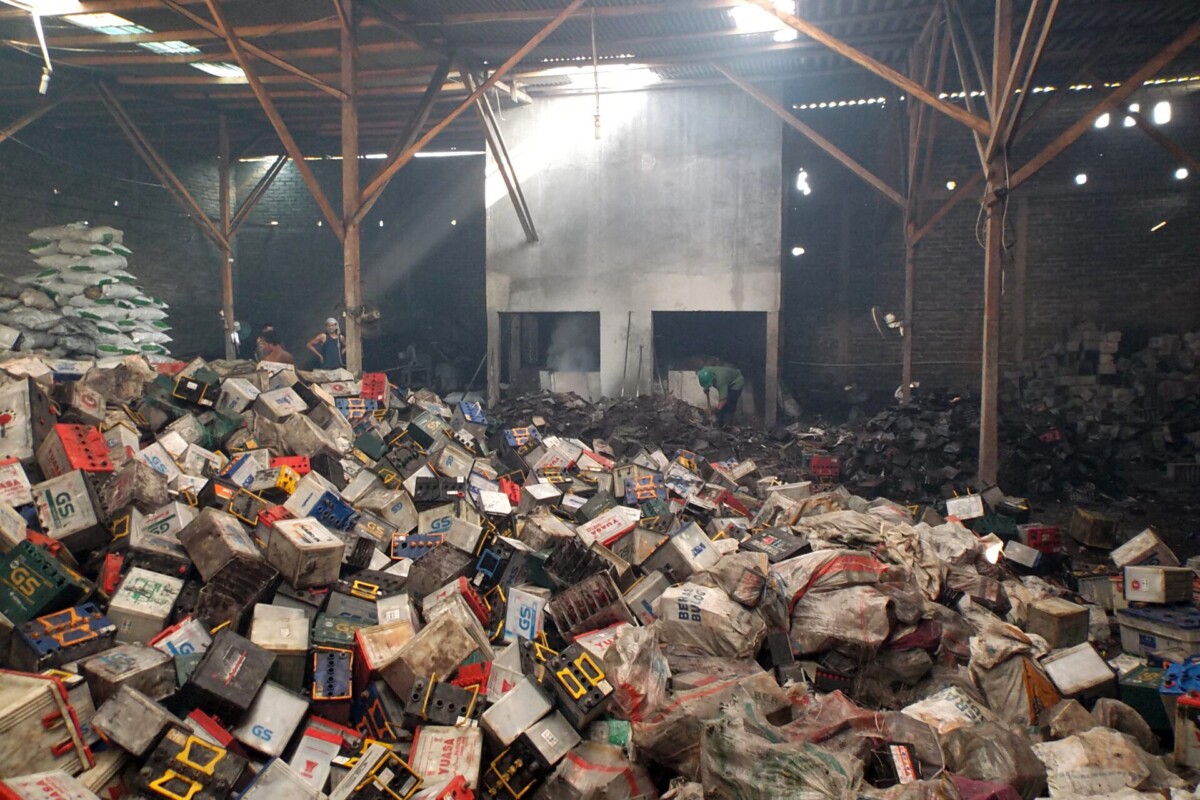
Beyond weak oversight and enforcement, according to Prof. Wawa, economic realities are a major reason why informal recycling remains widespread. “People from lower-income communities need jobs and economic opportunities. Compared to recyclable materials like plastic or paper, ULAB have much higher economic value,” she explained.
This economic reality, she says, is precisely what makes it so hard to convince informal recyclers to stop. “We can’t just cut off their livelihood overnight. If they’re going to switch to a different line of work, at minimum, their income needs to stay roughly the same. That’s the puzzle we need to solve. Otherwise, they will not be willing to change.”
A Circle That Connects Two Competing Interests
This is where the circular economy can help bridge the gap between economic needs and environmental health.
“When viewed through a circular economy lens, the potential is enormous,” Prof. Wawa said.
Lead contained in used batteries is a valuable, non-renewable material that remains essential across many industries. Recovering lead through recycling is often more practical and cost-effective than relying solely on new mining operations.
“But only if it’s done formally, following cleaner production principles,” she emphasized.
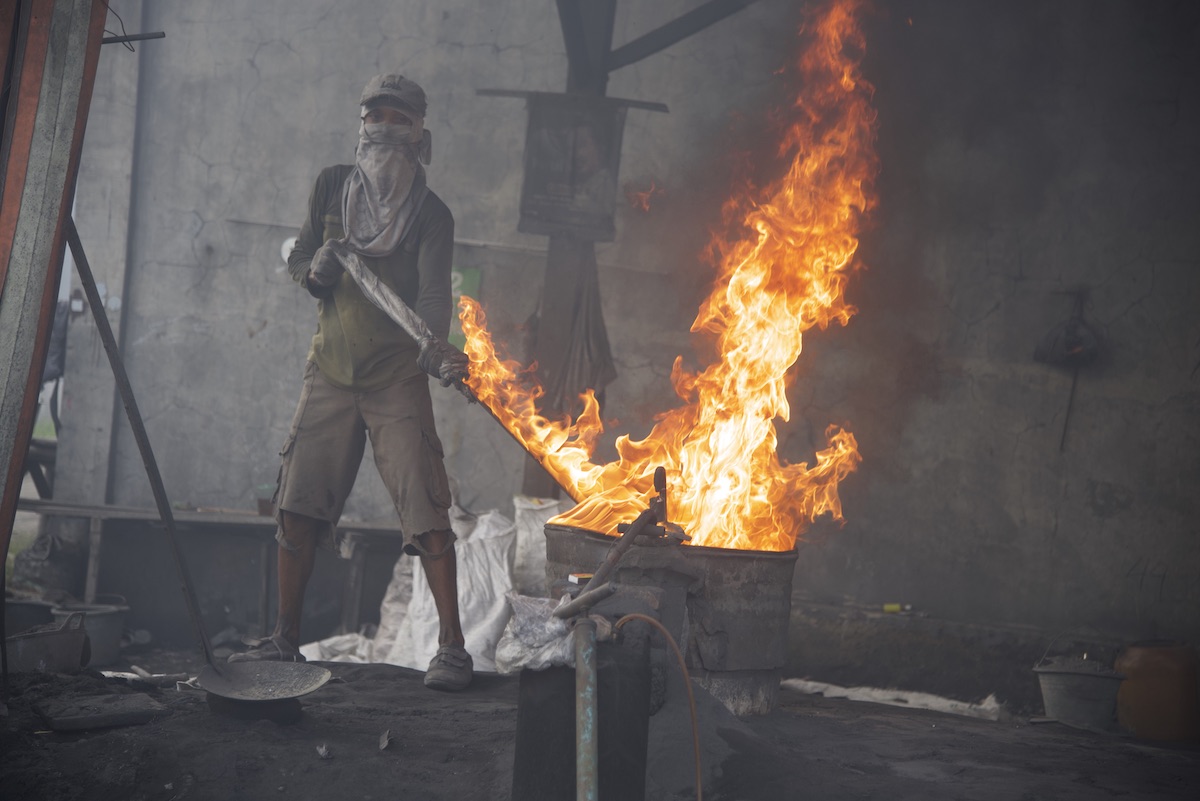
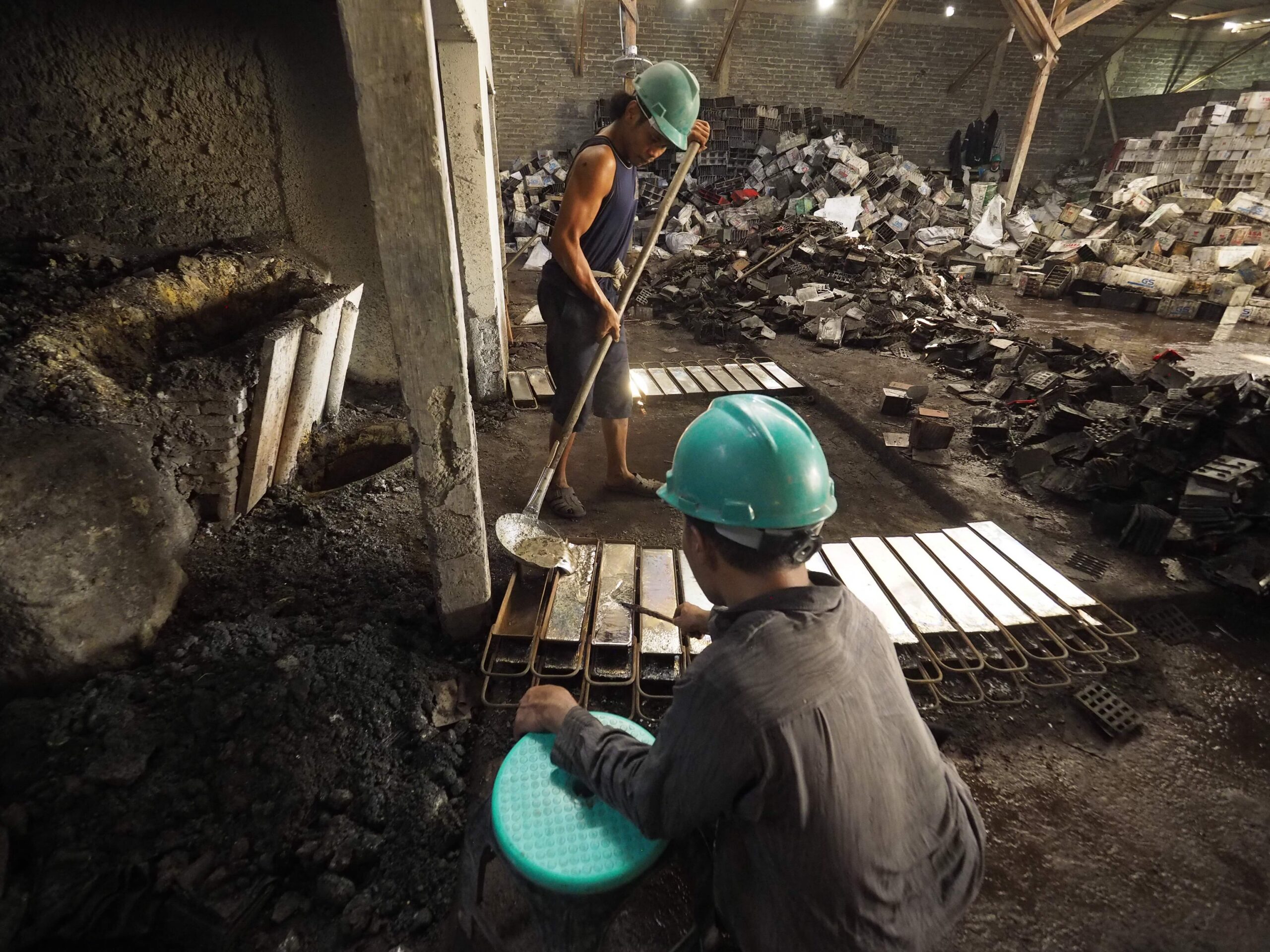
That’s why, in her view, formalizing the system—with proper, environmentally sound processing standards—is essential. One possible approach is to integrate informal workers into the formal recycling sector. “There must be monitoring and oversight throughout the process. We need cleaner technologies. Battery acid containing sulfuric acid and lead must be treated before disposal. Smelting operations should have air pollution control equipment. Smelting ash cannot simply be discarded; it must undergo stabilization and solidification treatment. And workers must be protected with proper personal protective equipment,” she explained.
But formalization, in Prof. Wawa’s view, doesn’t necessarily mean turning informal workers into registered companies. “We’re not asking them to become an LTD on paper. We just want their work to be recognized by the government and given proper support. That’s really what the informal sector needs.” She points to a metal smelting operation in Kebasen as an example, where informal workers were relocated to a single site and provided with proper facilities. “Of course, once they’re formalized, government support has to continue.”
Putting the Circular Economy for ULAB Recycling into Motion
Given the complexity of ULAB recycling in Indonesia, Prof. Wawa stresses that formalization alone isn’t enough. There’s a lot that needs to be prepared, and many stakeholders need to be brought to the table.
The government, she argues, should push for the expansion of formal recycling facilities across the country rather than concentrating them mainly in Java as they are today. She adds that academics have a role to play here too, conducting baseline studies in each region. “Once we understand the baseline conditions, we can develop appropriate action plans. Without that information, interventions will miss the mark.”
Beyond formalization, the government also needs to provide clear, accessible legal standard operating procedures (SOPs) that communities can actually understand. “Otherwise, people interpret the rules differently. We already have regulations, but they’re hard for communities to translate into practice. It’s not easy for people to implement a law when there’s no simple SOP to follow. Legal language just isn’t accessible.”
Meanwhile, industry also needs to take Extended Producer Responsibility (EPR) seriously, a mechanism actually mandated under Indonesia’s Waste Management Law (Law No. 18/2008), but one that has yet to be effectively implemented.
“We need to find the best win-win solution. Should prices go up so consumers share some of the responsibility? Or should there be collaboration between industry, the private sector, and government? Whatever the answer, we need a way to keep EPR functioning,” Prof. Wawa insisted.
She points to Taiwan’s 4-in-1 system as an example, where industries are required to contribute funds to the government, which are then used to subsidize formal recycling operations. This system closes a gap that’s long been missing in Indonesia: collection, processing, and financing working together as one interconnected ecosystem. Prof. Wawa also sees potential in bringing the financial sector into the EPR equation, through loan schemes, subsidies, or incentives for formal recyclers.
If every stakeholder commits to playing their part, Prof. Wawa hopes Indonesia can build a safe and sustainable ULAB recycling system for the future. One that significantly reduces, or even eliminates, lead exposure from this source altogether.