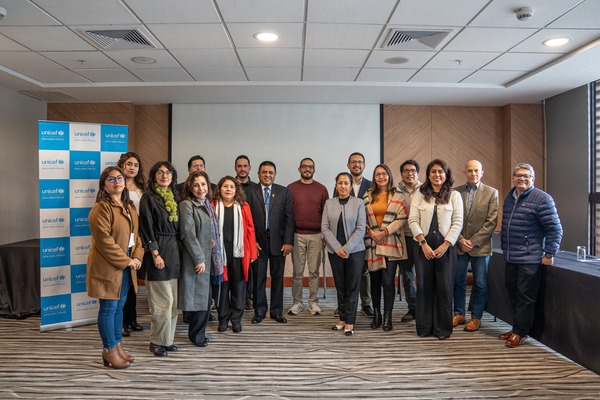
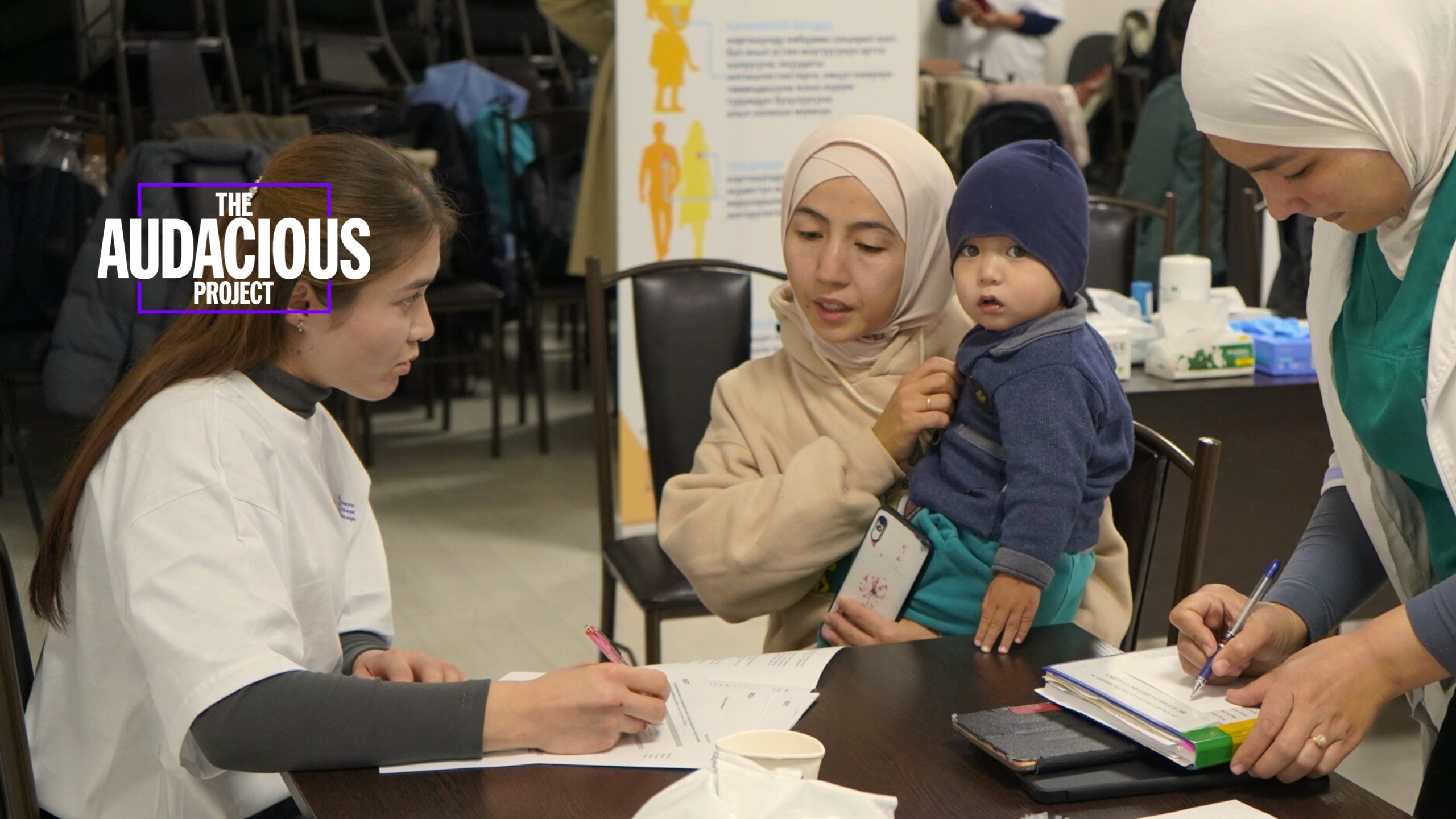
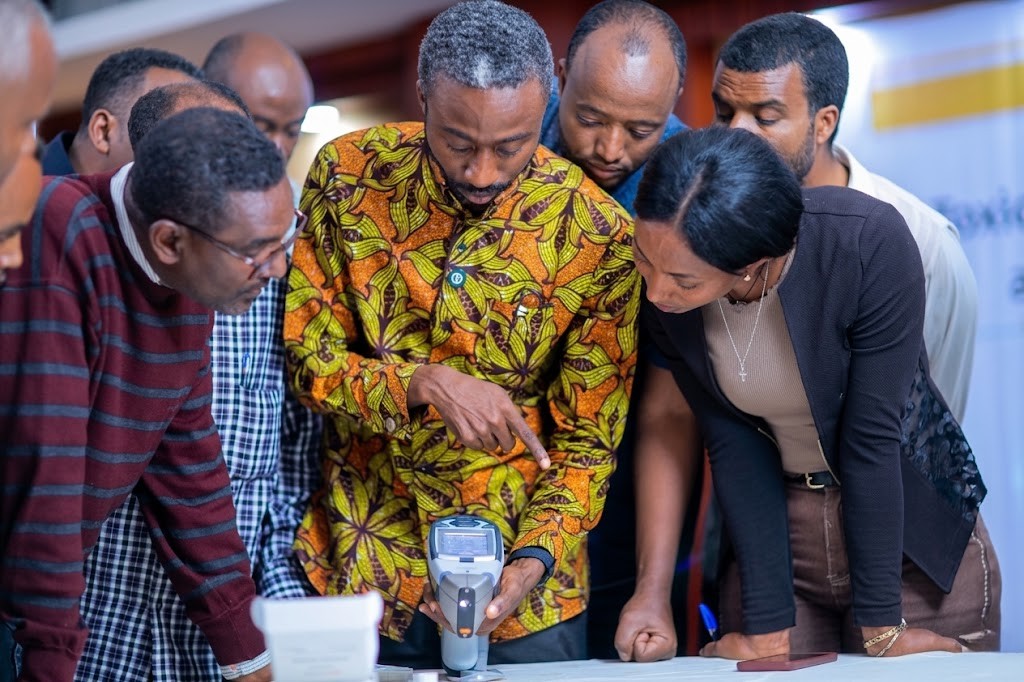
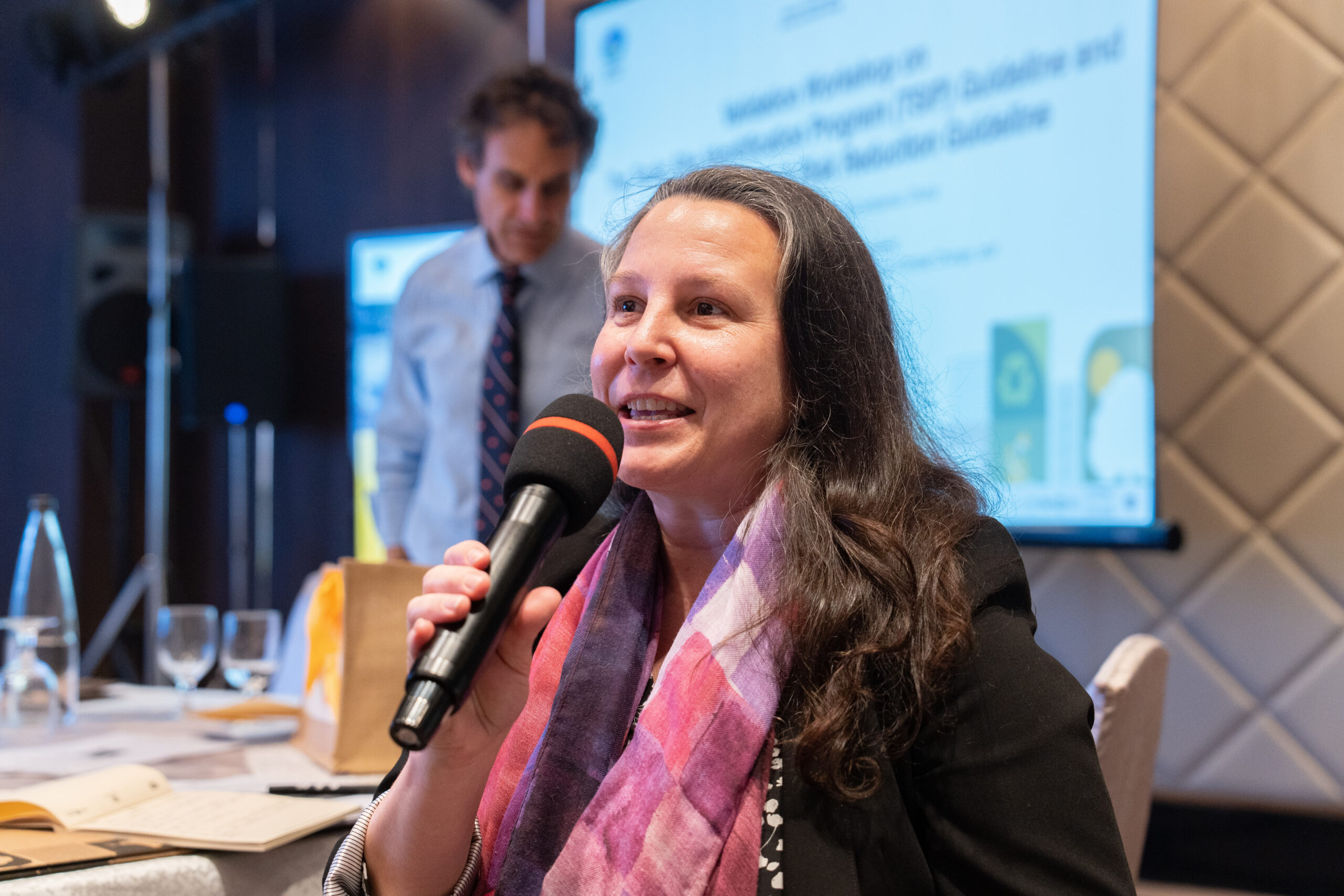
Inside the diverse coalition of global health and development organizations, researchers, government officials, youth activists, private sector actors, and community leaders who are forging a path to end one of the country’s most pressing environmental health crises.
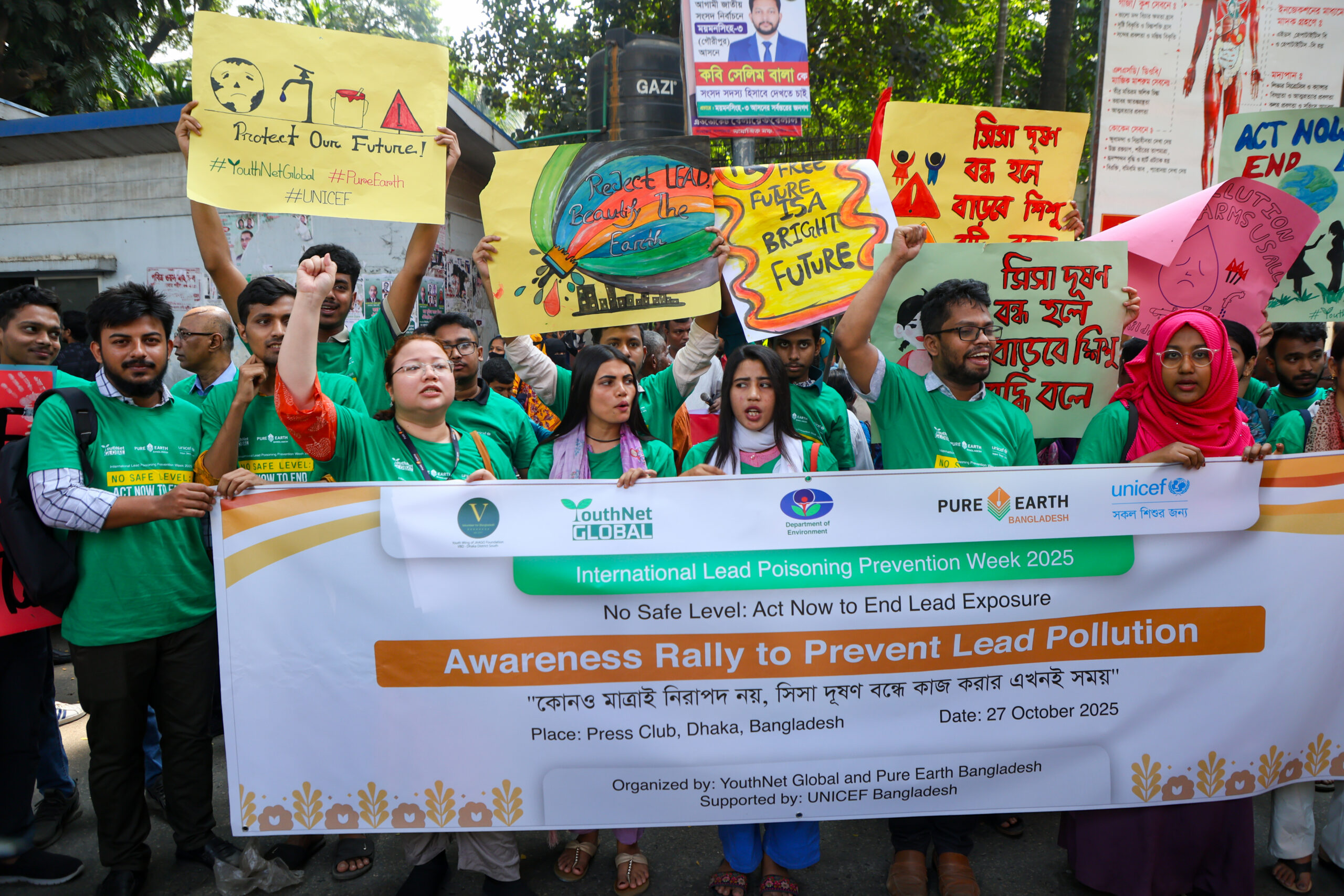
Photo: A public awareness rally led by Pure Earth Bangladesh, together with the Department of Environment, UNICEF, and YouthNet Global during International Lead Poisoning Prevention Week 2025, calls for collective action to prevent lead exposure and build a lead-free Bangladesh.
In Bangladesh, lead hides in the everyday objects of childhood. It is in the turmeric that colors a family’s curry, the aluminum pot it simmers in, the paint on a bedroom wall, the playground soil where lead ash from burning batteries has settled.
The damage of lead exposure in a child is silent but permanent. Attacking the developing brain, lead erodes cognitive capacity. There is no fever, no rash, and no specific moment when a parent can see a child become lead poisoned. A range of symptoms build gradually at high levels of lead poisoning: a struggling student stops progressing, falls behind grade level, and forgets yesterday’s lesson. At home, they lose the ability to remember and follow a parent’s instructions.
When Pure Earth researchers, with the University of Dhaka, began systematically documenting toxic pollution across Bangladesh in 2011, they uncovered what would become recognized as a national lead pollution and poisoning crisis. A recent national representative survey estimates nearly 40% of Bangladesh’s children have levels of lead in their blood that exceed the WHO threshold for intervening in a child’s life.
Fifteen years on, a coalition of actors in Bangladesh, in partnership with the government, has built something no single entity could: a systematic national response to protect the country’s children against lead poisoning. While challenges remain, the emerging response demonstrates how close collaboration between government, international, and local civil society actors can drive systemic change, offering practical lessons for other countries beginning to confront lead poisoning. This case study covers the key milestones, from site mapping to national strategy, in Bangladesh’s national response to lead poisoning.
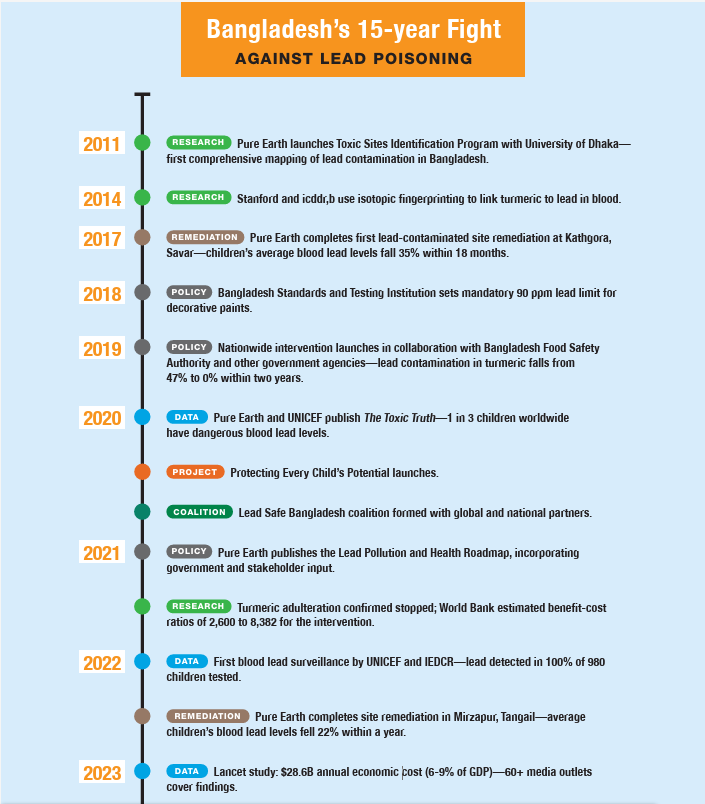
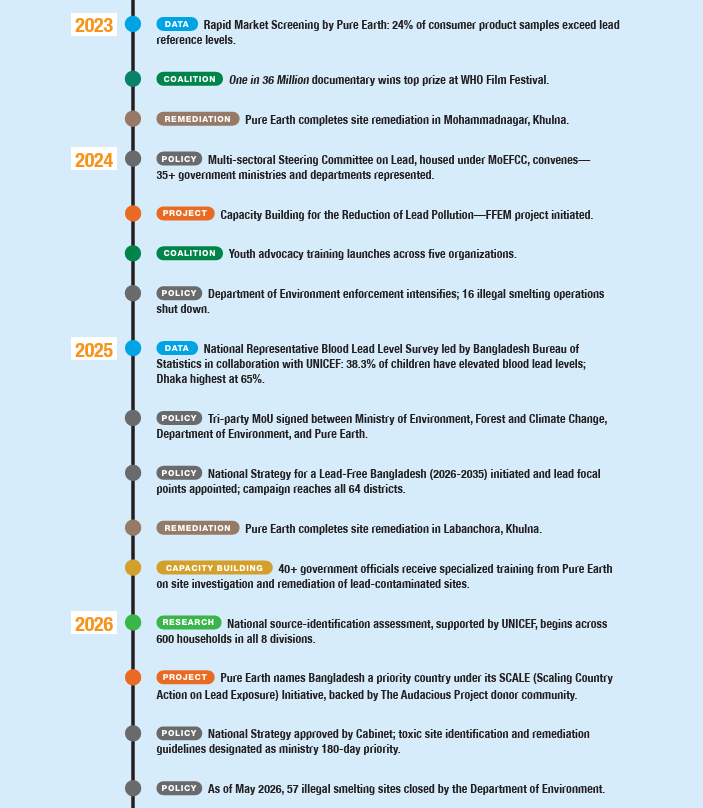
Finding the Sources
Bangladesh’s first decade of progress focused on finding lead: mapping industrial sources and measuring contamination in soil, homes, and communities.
Pure Earth’s Toxic Sites Identification Program (TSIP) launched in Bangladesh in 2011 with the University of Dhaka and funding from the World Bank and USAID. While the TSIP is designed to capture a variety of toxins, in Bangladesh, the overwhelming majority of assessments to date have identified lead pollution resulting from the informal recycling of used lead-acid batteries.
Around 70 to 80% of the country’s lead-acid batteries flow into informal recycling networks, where workers break batteries open by hand, drain lead-contaminated acid into the soil, and smelt lead in rudimentary furnaces or open fires. Pure Earth’s TSIP documented more than 350 contaminated hotspots, 290 of them linked to used lead-acid battery recycling. This was the first comprehensive mapping of lead pollution in the country. At some sites, soil lead concentrations exceeded the US EPA’s residential soil lead screening level of 200 parts per million by a factor of 50, with surrounding communities recording childhood blood lead levels well above the WHO’s threshold for intervening in a child’s life.
In 2017, Pure Earth, the University of Dhaka, and the Department of Environment carried out Bangladesh’s first remediation of a lead-contaminated site, in Kathgora, Savar, a pilot designed to show practical solutions for government adoption. The pilot removed and contained highly contaminated soil, reduced lead exposure for around 300 residents, including 90 children, and led to a 35% average reduction in children’s blood lead levels over 18 months, proving that targeted environmental cleanup can rapidly reduce lead exposure.
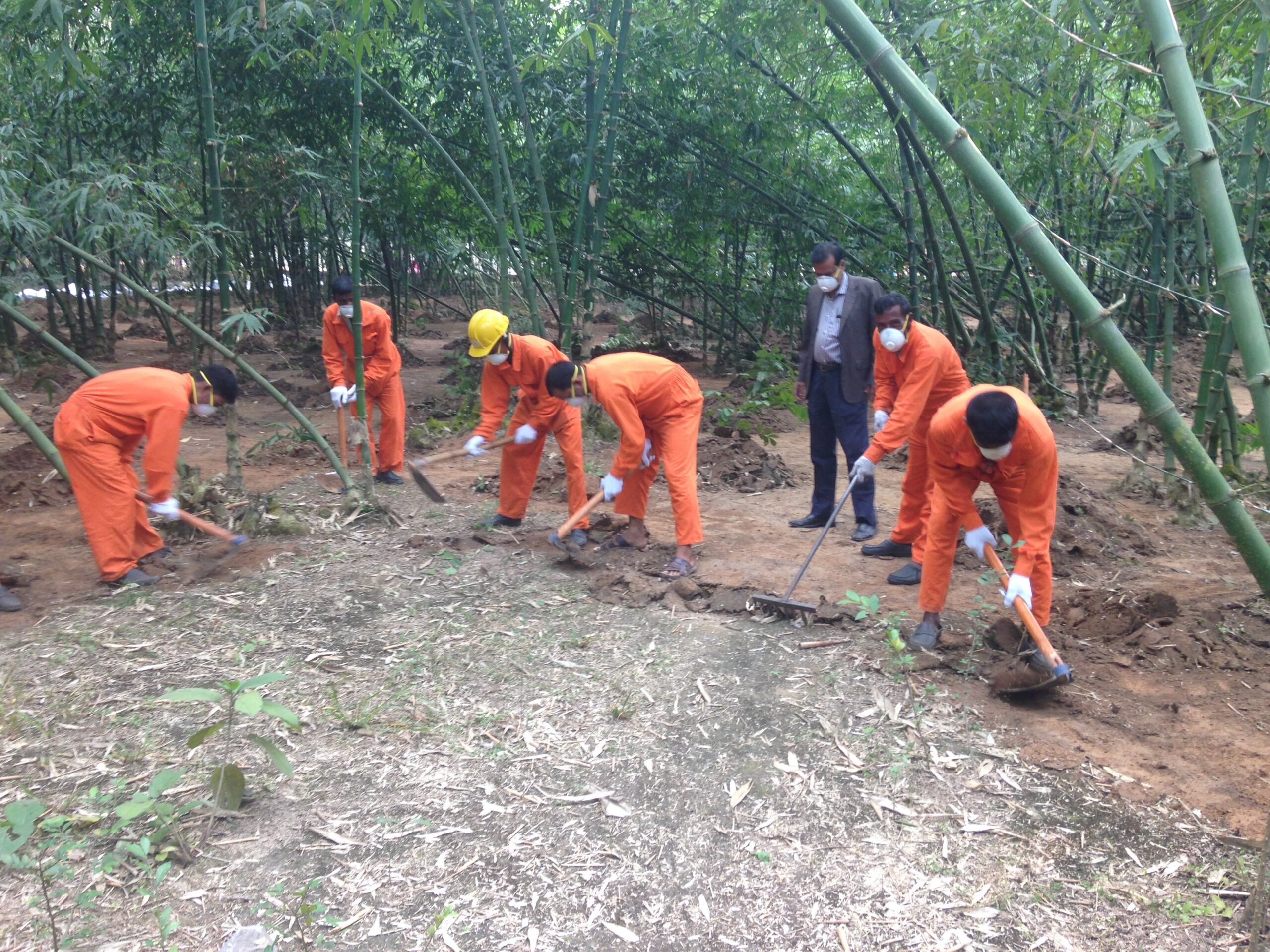
Photo: Workers excavate highly lead-contaminated soil during remediation at the Kathgora site, a critical step toward restoring the land and protecting nearby communities from ongoing lead exposure.
While Pure Earth mapped the industrial pollution landscape, the environmental organization Environment and Social Development Organization (ESDO) uncovered a more intimate threat: lead was already inside people’s homes, hiding in decorative paints and other consumer goods. This dual approach of documenting both industrial contamination and consumer product risks helped build a fuller understanding of how people were being exposed to lead.
ESDO’s focus on consumer products was deliberate because paint offered both a pervasive exposure pathway and a clear regulatory solution, since safe alternatives existed, and domestic manufacturers were already producing compliant products. ESDO built the local evidence base through school awareness programs, household surveys, and product testing, then carried the findings into government technical committees.
“From the outset, ESDO treated paint not just as a product issue, but as a child health, pregnant women, older people, consumer safety, and market governance issue, aligning environmental evidence with public interest and regulatory action. We learned that local data was essential to make the problem tangible for national stakeholders.” — Siddika Sultana, Executive Director, ESDO
This community-based research engaged local populations in understanding lead sources in their daily lives and armed advocates with the evidence needed to push for change. The strategy delivered the country’s first policy breakthrough: in 2018, Bangladesh’s national standards agency established a mandatory 90 ppm lead limit for decorative paints sold in the country.
The Turmeric Turning Point and A Global Wake-Up Call
The next breakthrough came from the kitchen spice rack. In 2014, researchers from Stanford University and icddr,b, a global research institute based in Bangladesh, began investigating lead contamination in turmeric, a spice used daily in most Bangladeshi households. The research revealed turmeric samples with lead levels up to 500 times above legal limits, contaminated with lead chromate to enhance the spice’s bright yellow color. Using isotopic analysis, a kind of heavy metal fingerprinting, researchers were able to definitively link the lead in turmeric to the lead in people’s blood.
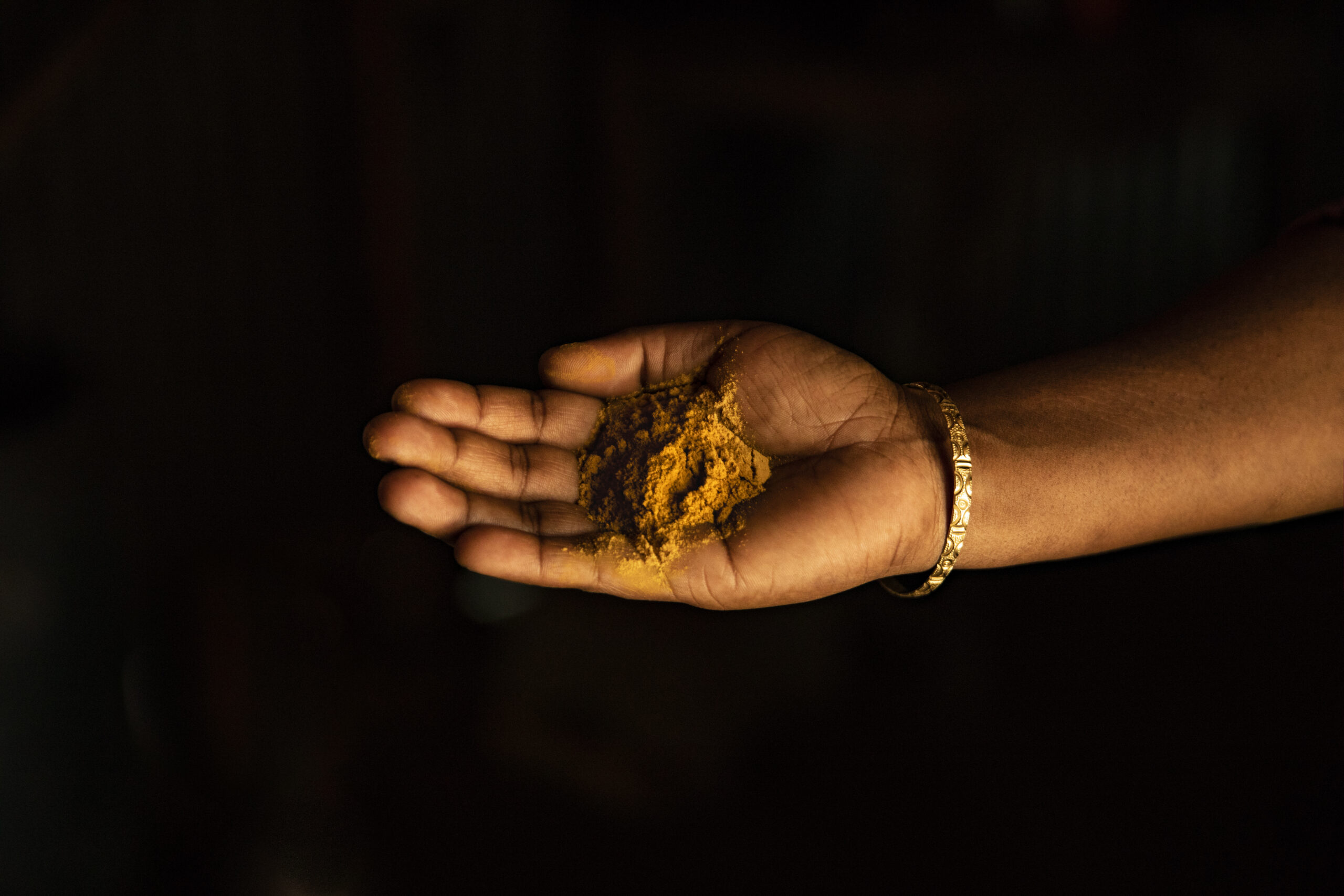
Photo: A turmeric sample collected during field investigations for laboratory analysis to determine whether it contained lead chromate, a toxic pigment sometimes illegally added to enhance the spice’s color.
In collaboration with the Bangladesh Food Safety Authority and other government agencies, the research team launched a nationwide intervention that paired consumer awareness with X-Ray Fluorescence (XRF) screening of turmeric in markets. The government distributed thousands of flyers and notices to raise awareness among consumers and sellers. In parallel, the Stanford team engaged with industry people most responsible for adding lead chromate and introduced a rapid XRF analyzer to screen for lead in turmeric in real-time. These interventions enabled government regulators to enforce existing food safety policy, and fine sellers of tainted turmeric. The results were remarkable: lead chromate contamination in turmeric fell from 47% to 0% of samples within two years, and mill workers’ blood lead levels dropped by a median of 30%. A source of mass poisoning had been nearly eliminated because the approach was targeted.
“We didn’t just raise awareness about lead in turmeric writ large. We tailored information to each group. For consumers, we discouraged the consumption of bright yellow roots. For sellers, we raised awareness about the food safety policy and fines on the horizon. For industry, we focused on the most influential business people, those processing the greatest volumes of turmeric.” — Dr. Jenna Forsyth
The gains held. A follow-up study by icddr,b and Stanford, supported by Pure Earth, found a 21% reduction in blood lead levels among matched cohorts of pregnant women between 2012 and 2022, with turmeric adulteration still far below pre-intervention level. A World Bank benefit-cost analysis estimated the Bangladesh turmeric intervention returned $2,600 to $8,382 in economic benefits for every $1 spent, based on a $400,000 government implementation cost and modeled IQ-point gains across the country’s 445,000-child annual birth cohort — ranking it among the most cost-effective health interventions worldwide.
The turmeric success story also revealed a more complex next frontier. As turmeric-related exposure declined, industrial sources of lead became more visible. Researchers identified 56 lead-polluting industries within a 2 km radius of study households, including battery making, battery recycling, and other lead-handling operations. Soil lead levels near the highest-polluting industries reached a median of 18,863 ppm and a maximum of 287,516 ppm, far above the US EPA soil reference level of 200 ppm.
In July 2020, Pure Earth and UNICEF published The Toxic Truth, revealing that one in three children worldwide have a level of lead in their blood exceeding the WHO’s threshold for intervention. Bangladesh featured prominently as a case study, highlighting both the severity of the crisis and the emerging potential for systematic intervention. International attention translated into institutional commitment: the Protecting Every Child’s Potential project launched in October 2020, formalizing a framework and new funding for a Lead Safe Bangladesh coalition which continues to this day.
With this support, Pure Earth launched the first Lead Pollution and Health Roadmap in 2021 and a 17-member Technical Implementation Committee under the Ministry of Health and Family Welfare. Next, UNICEF and Institute of Epidemiology Disease Control and Research advanced the country’s first health-sector blood lead surveillance in 2022, testing 980 children across four districts. All children had elevated lead levels, with 65% of samples above the U.S. Centers for Disease Control and Prevention reference value of 3.5 μg/dL. This led directly to Bangladesh’s first national Clinical Management Guidelines and the training of community health workers in early detection of lead poisoning. In parallel, Pure Earth assessed 30 toxic sites and completed two large-scale remediations with the Department of Environment; in Mohammadnagar, Khulna, and Mirzapur, Tangail. In Mirzapur, published research confirmed children’s average blood lead levels fell 22% within a year as lead concentrations in soil decreased from over 20,000 ppm to below 400 ppm, which was the EPA soil reference level in 2023.
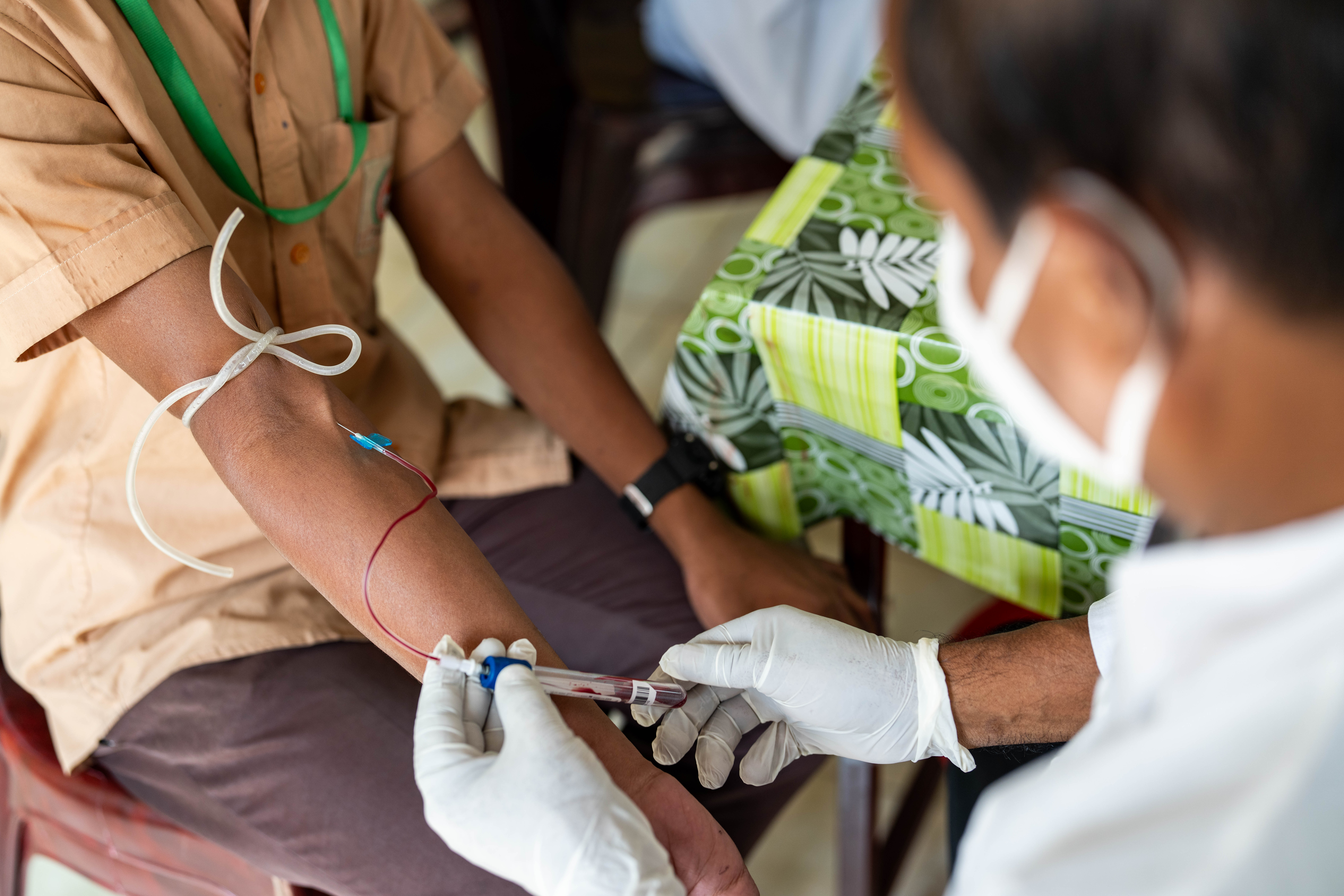
Photo: A healthcare worker collects a blood sample for blood lead level testing from a student at a school in Labanchora, Khulna, helping identify lead exposure, and guiding timely public health interventions
In 2023, the Lancet Planetary Health journal published a groundbreaking study, by Bjorn Larsen and Ernesto Sánchez-Triana, further documenting the consequences of lead pollution globally and Bangladesh specifically. The study estimated that lead exposure resulted in approximately 138,000 cardiovascular disease deaths annually among adults aged 25 years or older in Bangladesh.
“We have estimated for Bangladesh that about 20 million IQ points are lost among young children every year, equivalent to an average loss of 6.9 IQ points per child over the first 5 years of a child’s life. This has enormous implications for a child’s learning capacity, schooling, as well as lifetime income of the child, and productivity of the child in the labor force.” — Bjorn Larsen, who led the study with Ernesto Sánchez-Triana.
The Lead Safe Bangladesh coalition, with support from Pure Earth, met the moment with a coordinated media strategy: a joint press release with ten priority actions and a national data package. More than 60 outlets covered the findings including Prothom Alo and the Dhaka Tribune, and for the first time, nearly all major national media published editorials the next day.
In the same year, Pure Earth Bangladesh’s Rapid Market Screening program found that 24% of 197 samples in Bangladesh exceeded reference lead levels, with metal foodware (59%), paint (54%), ceramic foodware (44%), and children’s plastic toys (13%) showing especially high rates of contamination. In a pivotal moment for the coalition’s visibility, the Pure Earth Bangladesh short documentary One in 36 Million: Story of Childhood Lead Poisoning in Bangladesh won the Grand Prix award in the “Better Health and Well-being” category at the WHO Health For All Film Festival in 2023, focusing global attention on the crisis and the coalition’s work to address it.
In September 2024, the Partnership for a Lead-Free Future launched during the high-level week of the United Nations General Assembly. Bangladesh’s remediation success story, Transforming Lead-Acid Battery Recycling, Protecting Future Generations, along with the turmeric intervention, took center stage at the launch, highlighting Bangladesh’s innovative efforts to a global audience.
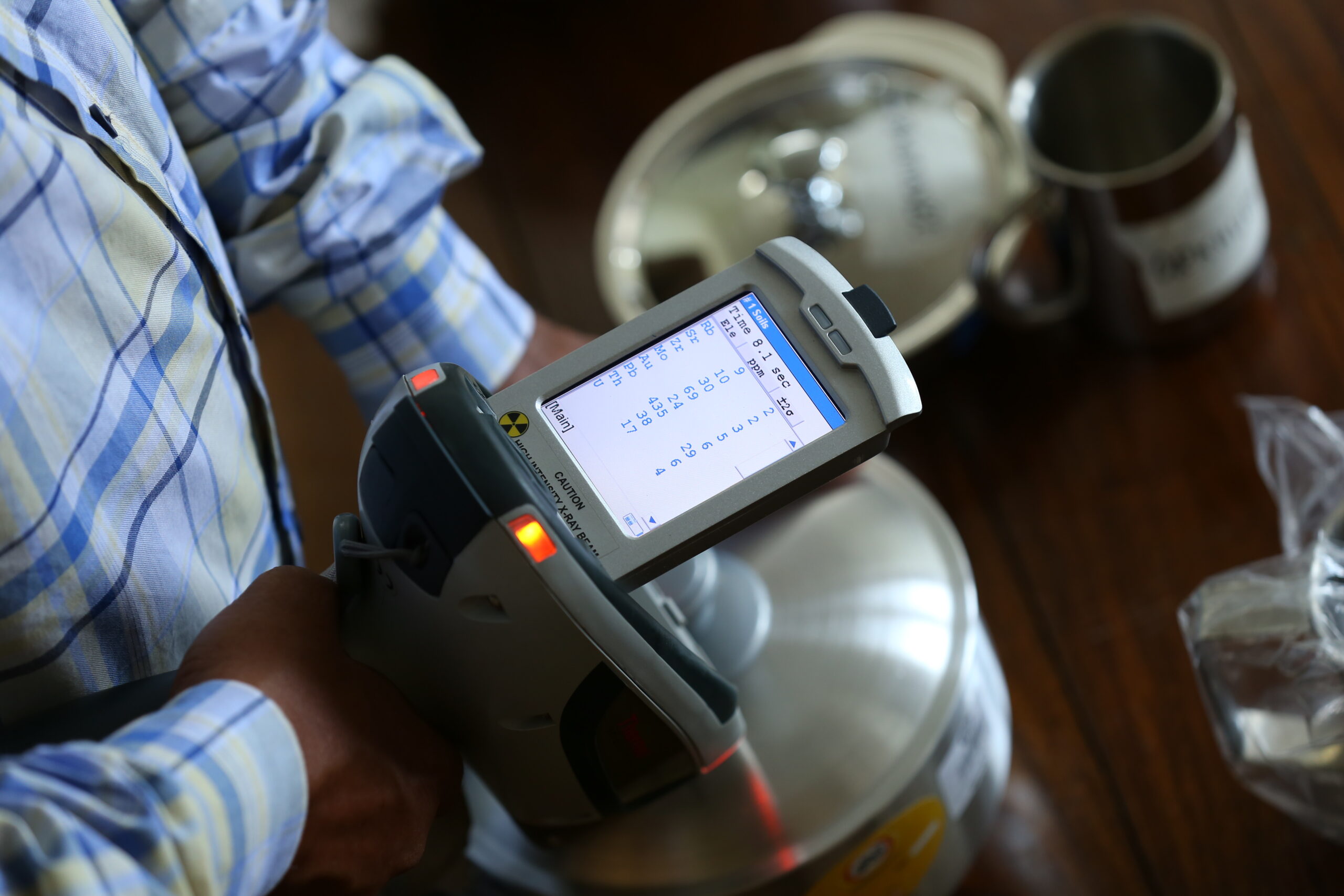

Photo: Top: A handheld XRF analyzer screens aluminum cookware for lead and other heavy metals as part of Pure Earth’s Rapid Market Screening study to identify consumer products that may pose health risks. Bottom: Brightly colored plastic toys collected during market surveillance for laboratory testing to determine whether they contained lead-based pigments that could pose a lead exposure risk to children.
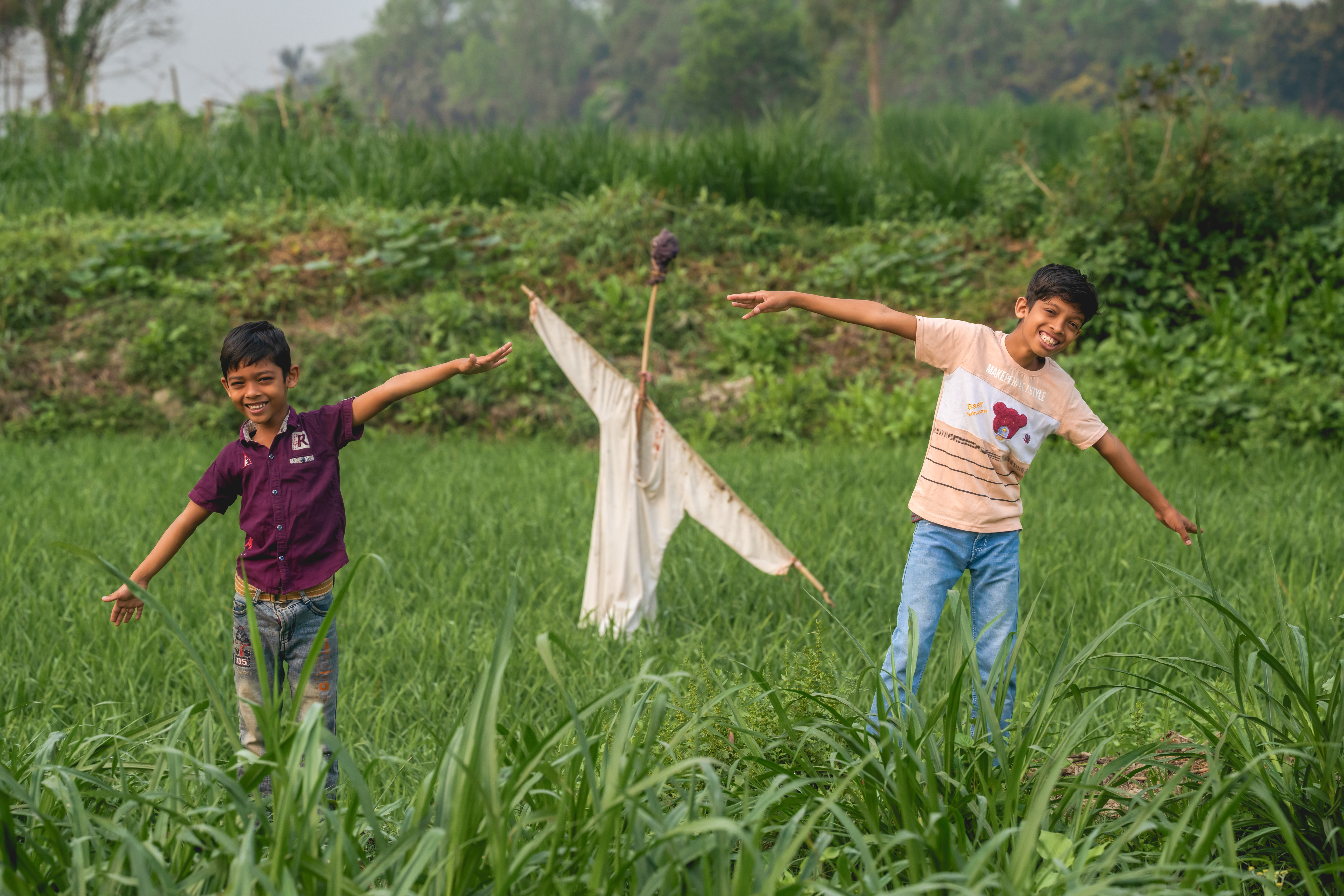
Photo: Five years after remediation at a formerly lead-contaminated site near their home, Saim and Shihab, who are featured in the documentary, One in 36 Million: Story of Childhood Lead Poisoning in Bangladesh, enjoy a cleaner, safer environment where they can grow, play, and thrive.
Following the Money: The Market Incentives Behind Lead
Millions of electric three-wheelers across Bangladesh run on lead-acid batteries that typically last less than a year, feeding a constant stream of dead batteries into the informal recycling sector. That battery economy has become a leading driver of Bangladesh’s lead crisis. And unlike turmeric, where awareness and enforcement eliminated the source in two years, recycling lead-acid batteries has persisted because it is more profitable in the informal sector.
Research under the Sustainable Manufacturing and Environmental Pollution Program—led by Pure Earth Bangladesh with Georgetown and Stanford researchers, United Nations Trade and Development’s technical support, and UK’s Foreign, Commonwealth & Development Office funding—set out to understand why informal recycling persists and what could be done about it. Nearly 80% of used lead-acid batteries (ULABs) are recycled through informal and illegal facilities, and the problem is not simply weak enforcement but market failure. Informal recyclers avoid taxes, environmental compliance, and safety standards, letting them outbid formal recyclers for used batteries, making pollution more profitable.
Research also exposed how policy can backfire. For example, the Barrier to Import Batteries and Lead Poisoning in Bangladesh study found that the import barrier which was introduced in 2015 to protect domestic battery manufacturing inadvertently expanded informal recycling and was associated with roughly four additional pregnancy losses per 100 among women living near battery sites. A companion study, titled “Retailers’ Informational Role in an Informal Circular Economy” found consumers cannot distinguish battery quality, so retailersand manufacturers have little incentive to build longer-lasting products—producing a constant churn of short-lived batteries feeding the informal furnaces.
“Good regulations are important, but without effective implementation they have limited impact. We need to change the economic incentives so that responsible formal businesses become more competitive than the informal sector.” — Dr. Amrita Kundu of Georgetown University
The same study also identified major information gaps in the battery market.
“Consumers are typically unwilling to pay much of a premium for a battery that is marketed as longer lasting, because they lack reliable information about the actual battery life. Therefore manufacturers have little incentive to produce a longer-lasting battery.” — Dr. Erica Plambeck of Stanford University.
These research findings, along with the economic model from the Sustainable Manufacturing and Environmental Pollution program, informed a package of market-based policy recommendations, including battery traceability through digital registration, minimum durability standards, oversight of lead flows, incentives for compliant recycling, and a review of the fiscal and trade policies shaping the market. Together, these measures aim to reduce lead emissions, strengthen formal recycling, improve battery quality, and support a safer circular economy for Bangladesh. Importantly, this economic analysis provided government officials with practical alternatives to enforcement-only approaches, though implementation across the massive informal sector remains a major challenge.
“Robust regulation and enforcement to curb informal practices in battery recycling must be complemented by economic and trade incentives that support the sector’s formalization, while strengthening consumer protection through verifiable battery quality standards and clear information at the point of sale.” — Henrique Pacini, UN Trade and Development
A Movement Takes Shape: Mobilizing Youth & Multi-sectoral Steering Committee
With the evidence and economics in hand, Bangladesh’s coalition against lead poisoning could build political momentum and public pressure.
In October 2024, the Ministry of Environment, Forest and Climate Change (MoEFCC) convened the first “Multi-sectoral Steering Committee on Lead,” to develop the government’s focal platform on lead, drawing stakeholders from more than 35 ministries and departments alongside civil society organizations, researchers, industry, and development partners. Since lead touches health, industry, agriculture, labor, environment, as well as national and local government, a cross-sector and cross-government organizing body was critical for coordination.
In tandem, Pure Earth focused on partnering with youth organizations to grow the movement’s grassroots engine, training representatives from five youth organizations in research methods, policy advocacy, and campaign development.

Photo: Students at a school in Labanchora, Khulna, participate in a puppet-based awareness session before remediation commenced at the adjacent lead-contaminated site, promoting understanding of lead exposure and its health risks.
“Nearly 1/3 of Bangladesh’s population are young people, who have played a significant role in driving change in every major crisis and movement. Our strategy recognizes youth as powerful advocates who not only raise their voices but also sensitize communities, engage local leaders, media, and bring grassroots recommendations to national policymakers. They serve as a constructive pressure group, holding government and industry accountable while building greater public demand for action. Investing in an informed, empowered, and organized youth movement is essential to achieving change.” — Mitali Das, Country Director, Pure Earth Bangladesh
The training showed rapid impact. Youth advocates began documenting illegal operations themselves—often finding battery recycling facilities operating next to schools and homes—and handing government officials specific, actionable evidence of violations. During the 2025 International Lead Poisoning Prevention Week campaign, a youth-led movement reached all of Bangladesh’s 64 districts, engaging more than 17,000 people, including local government officials and training over 300 youth leaders.
In 2024, Pure Earth launched the Lead Champion Award to recognize outstanding youth leadership in preventing lead pollution. The first recipient, Fariha Alif, was honored for leading community advocacy that helped shut down a ULAB recycling factory beside her sister’s school in Narayanganj, protecting more than 1,000 students from daily exposure to toxic lead fumes.
“Children struggled to breathe, coughed constantly, and many were afraid to stay in school. At times, it felt impossible to make anyone listen. But we refused to give up. When students, parents, teachers, and the community came together, we proved that young people can create real change and protect their communities.” — Fariha Alif, recipient of Lead Champion Award from Pure Earth Bangladesh
Continuous pressure from different youth groups across the country contributed to an enforcement breakthrough. According to the Department of Environment, between September 2024 and May 2026, it shut down 57 illegal lead smelting factories and filed cases against 77 factories, leading to fines that totaled approximately 5.79 million Bangladeshi Taka—one of the country’s strongest enforcement pushes against informal recycling on record. The ministry’s new leadership has since pointed to local government engagement as the next enforcement frontier, given how scattered informal operations are across the country.
“To strengthen enforcement, district administrations have been requested to identify and monitor informal lead-acid battery recycling and smelting facilities, while efforts are underway to build a nationwide database… Consumer awareness, improved labelling, battery traceability and long-term financing are some important issues also. In addition, innovative approaches such as QR-code-based information systems and lead inventories can strengthen accountability across the supply chain.” — Dr. Fahmida Khanom, Acting Secretary of MoEFCC
The Path to Country Ownership
The Bangladeshi government is now driving the lead response. Three developments made that clear.
New National Representative Data Confirms the Stakes: In November 2025, the Bangladesh Bureau of Statistics, with UNICEF support, released preliminary findings from the Multiple Indicator Cluster Survey (MICS), marking the first integration of testing Blood Lead Levels. This is the most comprehensive picture of childhood lead exposure ever assembled in the country.
The results revealed that almost four in ten children have elevated levels of lead in their blood. The study assessed 13,707 participants, including children aged 12-59 months and pregnant women aged 15-49 years. According to the findings, 38% of young children and nearly 8% of pregnant women have blood lead levels above the WHO reference thresholds, with Dhaka (65%) showing the highest prevalence.
“Bangladesh’s research showed that lead poisoning is not just an environmental issue but a human capital crisis affecting children across all socio-economic groups… Bangladesh has overcome great challenges before, and with decisive, sustained collaboration, it can reduce lead poisoning [significantly] and demonstrate what is possible for countries around the world.” — Dr. Priscilla Wobil, Health Specialist, UNICEF Bangladesh
The MICS data helped spur the next investigative step: in 2026, the Institute of Epidemiology Disease Control and Research, with UNICEF and technical partners, began a follow-up environmental assessment across roughly 600 households in all eight divisions, supporting XRF measurements, dust wipes, and testing of soil, water, food, cookware, paint, cosmetics, and toys. This next step is focused on identifying why levels are high where they were identified in MICS, and what will bring them down. MICS showed where the problem lives while the assessment work focused on finding its sources.
National Strategy Development: A January 2025 tri-partite Memorandum of Understanding between the MoEFCC, the Department of Environment (DoE), and Pure Earth Bangladesh set a roadmap for reducing lead contamination, aligned with global initiatives like the Partnership for a Lead-Free Future. This convergence of evidence, political will, and stakeholder partnerships presents a critical opportunity to treat lead pollution as a solvable problem that unlocks gains in health and human capital. In addition, the Government of Bangladesh has initiated targeted enforcement against lead chromate in turmeric and illegal ULAB operations.
The clearest signal of country ownership is the “National Strategy for a Lead-Free Bangladesh and Multi-Year Action Plan (2026–2035)” which is Bangladesh’s first comprehensive plan to end lead pollution, developed under MoEFCC’s leadership with UNICEF, Pure Earth Bangladesh, and ESDO as core working-group members. In August 2026, the National Strategy was approved at the Cabinet Division of the Government of Bangladesh. The strategy reflects a shared national commitment for tackling lead pollution and protecting public health in Bangladesh.
State Capacity Building: The coalition’s technical playbook is now being transferred to government hands through the Capacity Building for the Reduction of Lead Pollution project, launched in 2025 with funding from the French Facility for the Global Environment and implemented by Pure Earth Bangladesh with the Department of Environment, Khulna University, Bangladesh Medical University, and key agencies.
To strengthen government ownership, the DoE established a Project Steering Committee in March 2025. The committee is convened by the Additional Director General of the DoE, with members from the government agencies, academia, Bangladesh Battery Manufacturers and Exporters Association, and other key stakeholders. The committee has evolved into a broader government platform for discussing policy, technical and implementation issues related to lead pollution. In parallel, a Pure Earth environmental expert was seconded to the MoEFCC, providing day-to-day technical support and helping build institutional capacity from within government.
Field evidence generated through the project directly informed government action. Pure Earth Bangladesh’s remediation of the Labanchora site demonstrated that even one of the most severely polluted informal lead smelting sites in Bangladesh could be safely restored. Before remediation, blood lead testing of 202 residents found that more than 90% exceeded the international action level, while soil lead concentrations reached a median of 98,476 ppm. Following remediation across 1.2 hectares under DoE supervision, in the primary smelter area, median surface lead concentrations were reduced from 98,476 ppm to 99 ppm, representing more than 99 percent reduction, protecting approximately 700 residents and schoolchildren living on the site.
Labanchora remediation also exposed a regulatory gap. Bangladesh had no nationally adopted soil lead limit, prompting the DoE to establish a technical working group to develop one with the technical support from Pure Earth Bangladesh. Building on four remediation projects, Pure Earth, the ministry, and the DoE produced the country’s first TSIP Protocol and Site Investigation, Remediation and Risk Reduction guidelines. Since then, 40 DoE officers have been trained on them, a national validation workshop reviewed them, and the ministry has finalized them in its 180-day priority action plan. In parallel, Pure Earth Bangladesh is supporting development of the country’s first Extended Producer Responsibility Directive for lead-acid batteries, a comprehensive framework assigning responsibility across the battery lifecycle, from production and import through collection, recycling, and disposal, with traceability and chain-of-custody systems to make it enforceable.
Piece by piece, these initiatives are creating the institutional architecture for Bangladesh to sustain lead pollution prevention well beyond the lifetime of any individual project.
Lessons from Bangladesh & The Road Ahead
The accumulated efforts have achieved measurable progress, demonstrating that systematic change is possible even for challenges of this magnitude. The turmeric intervention nearly eliminated lead chromate contamination industry-wide within two years. The paint standard contributed to major manufacturers reducing lead content in their product lines, though monitoring compliance across smaller manufacturers remains challenging.
What led to Bangladesh’s success, and what other countries can replicate, comes down to four lessons:
- Evidence plus advocacy must be sustained over years. High-quality research gave the cause of lead poisoning credibility in Bangladesh. Coupled with capacity building, community engagement, and media strategy, there was sustained pressure to act on it.
- Government leadership drives systemic change. In Bangladesh, government institutions took an active leadership role in shaping and coordinating the national response. With technical support from organizations like Pure Earth, government officials strengthened their institutional capacity and expertise, helping translate evidence into national strategies, technical guidelines, standards, regulatory enforcement, and multi-stakeholder coordination that can sustain progress beyond individual projects.
- Fix the economics, rather than focusing on the rules alone. People run informal smelters because they are profitable. Bangladesh’s push toward market-based solutions to eliminate unsafe ULAB recycling – including traceability, standards, and formalization incentives – factors into this economic reality.
- Complementary coalitions are more sustainable than any single actor. International organizations brought global expertise and funding; local organizations brought community trust and policy knowledge; universities brought evidence and research; youth brought pressure; government brought authority. This diverse coalition continues to carry momentum fifteen years in.
Looking ahead, Bangladesh must operationalize and implement the National Strategy and Multi-Year Action Plan, alongside finalizing and enforcing key instruments such as the TSIP and remediation guidelines, national soil lead standards, industry standards, the Lead-Acid Battery Extended Producer Responsibility Directive, and related regulatory measures. Progress should be measured by tangible reductions in lead exposure, using indicators such as declining blood lead level prevalence.
In 2026, Bangladesh was named one of the priority countries under Pure Earth’s SCALE (Scaling Country Action on Lead Exposure) Initiative, backed by The Audacious Project donor community. The new initiative aims to protect more than 500 million children around the world with elevated blood lead levels. Bangladesh’s fifteen years of coalition-building and evidence collection have laid the groundwork for Pure Earth SCALE to drive population-wide impact.
“If there’s one lesson from Bangladesh, it is that you do not solve a problem of this scale with a single intervention—you solve it by stacking them. Find the sources. Build the evidence. Fix the economics that keep bad actors in business. Bring young people in to hold the line. And work with the government until the response is theirs. Every country we work in has its own version of turmeric, its own version of the battery economy. The specifics change, but the approach can be adapted and replicated.” —Drew McCartor, President and CEO, Pure Earth
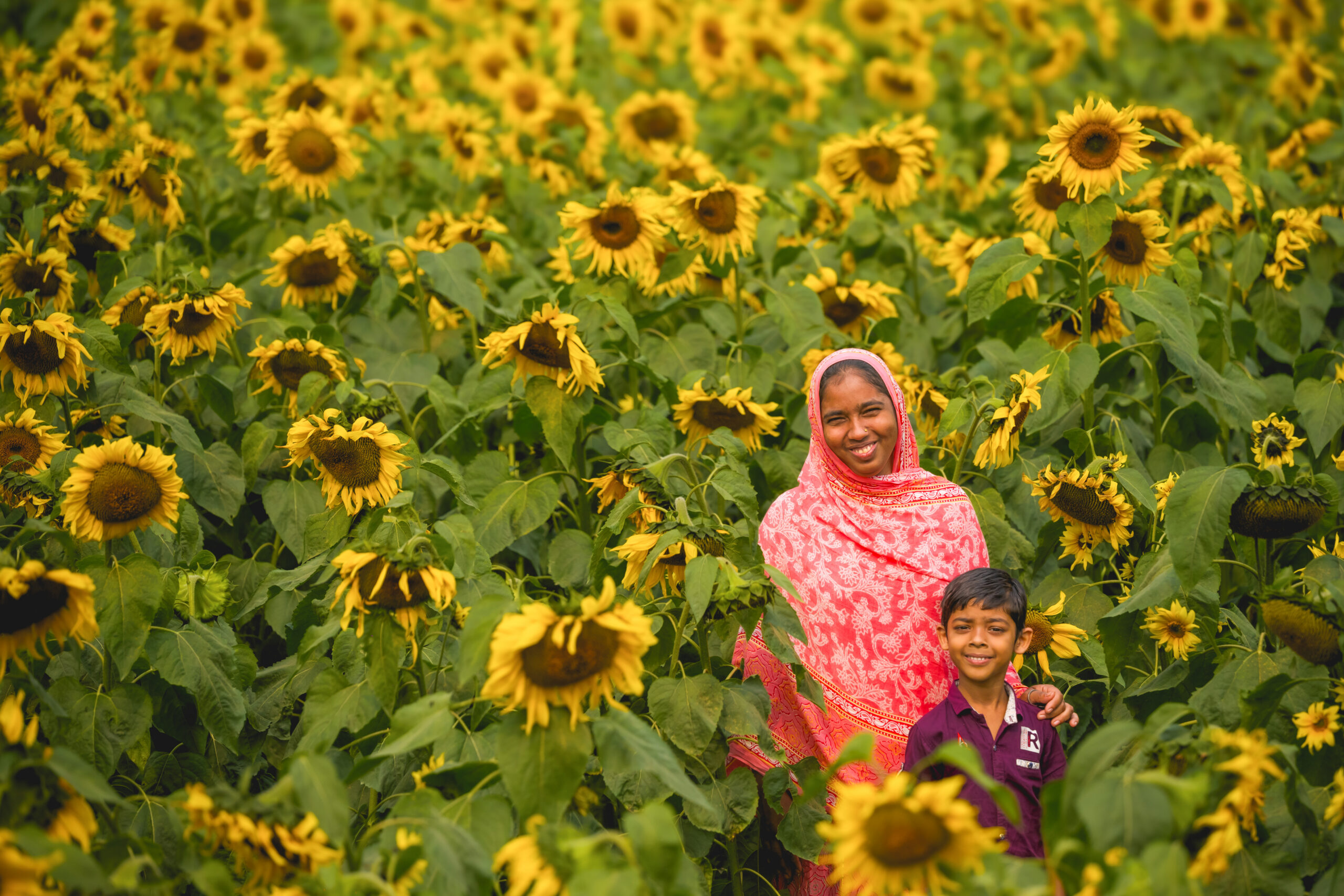
Photo: Shaila and her younger son, Shihab, in a sunflower garden near their home in Mirzapur, five years after remediation transformed a formerly lead-contaminated site into a safer environment for the community.
For other countries facing similar challenges, the Bangladesh experience suggests that coordinated, sustained action can create momentum on complex environmental health problems like lead which require cooperation across sectors and levels of government. However, achieving population-level impact requires patience, resource commitments, and adaptation to local contexts.
The fight for a lead-free Bangladesh is far from over. The challenge of transforming a vast economy and embedding these changes into national policy remains immense. Yet, this story is a testament to the fact that even the most daunting environmental challenges can be met when people unite around a common purpose: a future where every child in Bangladesh has the chance to reach their full potential, free from lead poisoning.
Special thanks to Mitali Das, Country Director, Pure Earth Bangladesh; Jesse Rothman, external consultant; Aftab Uz Zaman Khan, Senior Program Manager, Pure Earth Bangladesh; and Soadekin Rishan, Communications Manager, Pure Earth Bangladesh for their contributions to this case study.